On April 28, 2004, William “Bill” McGuire called friends with good news: he and his wife had completed the purchase of a home. He also called to transfer the gas account. Later that evening, the calls stopped. For a man who regularly used his phones and BlackBerry for work and friends, the silence was unusual. [1]
Case brief
Woodbridge / Atlantic City, New Jersey · 2004
- Recorded outcome
- Melanie McGuire convicted April 23, 2007; sentenced July 19, 2007 to life plus five years. Verdict and sentence affirmed March 16, 2011.
Key moments
People in this case
- Melanie McGuire
Convicted of murdering William McGuire
Photo at source · CBS News · case photographs
In May, three matching suitcases recovered near Virginia’s Chesapeake Bay Bridge-Tunnel revealed that he had been killed. The investigation led back to New Jersey, where prosecutors assembled a case involving an affair, a gun purchase, computer searches, toll records and the manufacturing marks on plastic bags. [1]
The trial also contained substantial limits and disputes. No trace of a killing was found in the apartment. The gun was never recovered. A defense chemist challenged the state’s bag comparison. The jury convicted Melanie McGuire of murder and other charges, but acquitted her of a separate group of charges concerning anonymous communications. Both halves of that result belong in the account. [1]
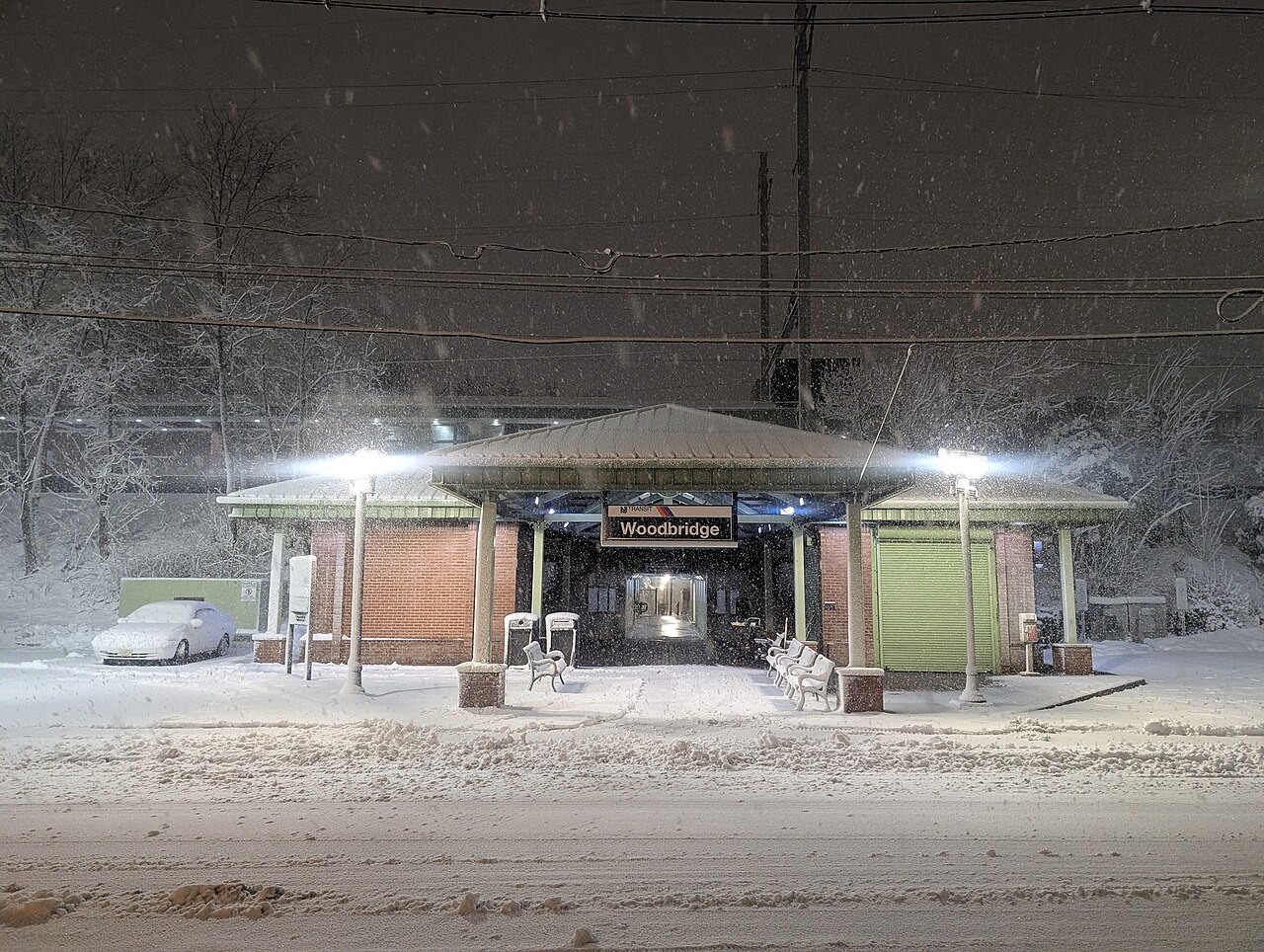
Olegnaumov · Image source · CC0 · Geographic context; not authentic crime evidence. The building or landscape is public geographic context; no event is assigned to it.

A purchase at the edge of a marriage
Bill worked as a computer analyst for a Newark college. Melanie was a nurse at a medical practice in Morristown. They had married in 1999 and had two sons. At the time they bought the house, Melanie was having an affair with Dr. Bradley Miller, a partner at the practice. Miller testified that the relationship had begun in 2002 and included discussions of a possible future together. [1]
The state argued that Melanie wanted to end her marriage without the costs and risks of divorce. She had told others that Bill might take the children if she left. That was part of the motive evidence presented, rather than a proven explanation of every decision inside the marriage. An affair alone did not establish murder. The prosecution relied on its asserted connection with preparation and subsequent conduct. [1]
Two days before the closing, Melanie bought a Taurus .38-caliber revolver in Pennsylvania. Records and testimony documented the transaction. Investigators later recovered bullets consistent with that caliber and with weapons made by several manufacturers, including Taurus. The actual gun was never found, so this was not a unique match between a recovered weapon and a fatal bullet. [1]
The sedative evidence and its limits
On the morning of April 28, a prescription for chloral hydrate was filled at a Walgreens in Edison. It bore the name of a patient at Melanie’s workplace. The patient testified that she had not received that prescription and had not visited the pharmacy. Miller denied writing it. A handwriting expert could neither identify Melanie as the writer nor exclude her. [1]
The bottle was later found in Bill’s car. Computer evidence included searches for sedatives and other topics related to weapons and poisoning. The state argued that Melanie obtained the drug, sedated Bill and then shot him. But toxicology did not establish drugs in his body. The proposed drugging remains the state’s reconstruction, not a laboratory-confirmed step that can be narrated without qualification. [1]
That difference matters because several pieces of suspicious evidence can support a theory without proving each detail of it separately. The purchase and prescription records had documented dates. The precise method by which Bill was incapacitated, if he was, was an inference the prosecution asked the jury to draw. [1]
An account of an abrupt departure
Melanie told friends and investigators that Bill had assaulted her during an argument early on April 29 and then left. She visited the courthouse to seek a restraining order and ultimately obtained one on April 30. Statements made under oath during that proceeding later supported her perjury conviction. [1]
She also traveled to Atlantic City. After news of surveillance surfaced, she told Miller that she had found Bill’s car at a casino and moved it to a motel out of spite. The explanation acknowledged conduct that she had not initially disclosed to the Virginia detective. Investigators examined the car, the available surveillance and records of the journey. [1]
The motel film showed when the car was parked, but it was too grainy to identify the person who parked it. Another vehicle had features resembling Melanie’s Pathfinder. Those are qualified observations, not a clear video identification. Her own explanation for moving the car supplied a separate part of the evidence. [1]
Forty-five-cent tolls with larger consequences
Phone and toll records became important because of the movements Melanie described. A call from Bill’s phone to the apartment on May 2 followed a toll record associated with the transponder kept in her vehicle. The state argued that calls without messages were attempts to suggest Bill was alive and traveling. The records established transactions and calls; their intended purpose was the prosecution’s inference. [1]
After a detective asked about E-ZPass, Melanie contacted customer service to challenge two small charges near Atlantic City. The state argued that she had tried to avoid an electronic trail by paying cash and was alarmed when charges remained. The defense argued that she feared being falsely implicated and pointed to other trips Bill had apparently made without corresponding toll records. [1]
The prosecution also proposed a later trip toward Virginia to dispose of the suitcases. There was no eyewitness to the killing or the disposal, and no complete electronic route established every mile. The map therefore identifies documented locations and the qualified theory without drawing a supposedly verified drive from the apartment to a particular bridge point. [1]
Hudconja · Image source · CC BY-SA 4.0 · Geographic context; not authentic crime evidence. This historic courthouse is county context, not identified as the trial venue.

Objects recovered far from home
The suitcases were recovered on May 5, 11 and 16. The medical examination established that Bill had been shot. A hospital-supply blanket found with the remains came from a supplier serving many medical facilities, including Melanie’s workplace. That connection established possible access, not an exclusive source available only to her. [1][2]
Investigators also examined hairs and material on adhesive tape. DNA comparisons associated some traces with the McGuires. The state argued that household grooming debris had become attached during wrapping. A biological association does not independently establish when or how an item arrived, so the inference depended on the larger setting and other evidence. [1]
Extensive later searches found no trace evidence of a killing or dismemberment in the Woodbridge apartment. The absence was a real limitation in the state’s reconstruction. The prosecution argued that a sufficiently careful cleanup and the other circumstantial evidence still supported the case. It was not entitled to describe an actual recovered apartment scene that investigators had not found. [1]
Plastic bags become a courtroom dispute
After Bill disappeared, Melanie packed some of his clothing in industrial-type garbage bags. An acquaintance helping with the move kept those bags. Police later compared them with bags recovered from the suitcases. That preserved comparison material became one of the prosecution’s most important physical links. [1]
State witnesses Frank Ruiz and Thomas Lesniak examined manufacturing characteristics, including lines produced during the extrusion process. Ruiz also described chemical and thermal testing. The state argued that the sets came from the same manufacturing source and production period. It used that conclusion to link the wrapping material with bags from the apartment. [1]
Defense polymer chemist Sally Ginter disagreed. She challenged the interpretation and testified that the results did not establish the match the state claimed. The appellate court ultimately upheld admission of the state testimony. That legal ruling did not make the comparison a unique fingerprint identifying a particular purchaser or erase the defense expert’s disagreement. [1]
The jury did not accept every charge
Melanie was arrested in June 2005. The original indictment charged murder, a weapons offense, desecration of remains and perjury. A later indictment added charges involving anonymous communications that pointed toward other suspects. The prosecution alleged that Melanie or someone acting for her was responsible for those communications. [1]
During the 2007 trial, the state called sixty-four witnesses and the defense sixteen. After twenty-three days of testimony, the jury convicted her on the original four charges and acquitted her of the charges in the second indictment. Anonymous letters and calls therefore must not be presented as additional crimes proved by that verdict. [1]
The verdict was returned April 23. On July 19, the court imposed life for murder, with a consecutive five-year perjury sentence and a concurrent term for desecration. The weapons count merged. The Attorney General’s release explains the separate parole-ineligibility components; it is inaccurate to treat a life sentence and the additional term as interchangeable labels for one simple number. [2]

Kevin Coles from USA · Image source · CC BY 2.0 · Geographic context; not authentic crime evidence. This public bridge view is regional context, not a verified disposal viewpoint or route.

The appeal and the unfinished reconstruction
On March 16, 2011, the Appellate Division affirmed the verdict and sentence. It considered the bag testimony, other evidence rulings, publicity and sentencing arguments. The decision recounted both the state’s substantial circumstantial case and its limitations, including the absence of a recovered gun and apartment traces. [1]
Some of the state’s proposed details remained theories, including the precise drugging sequence and the possibility of an unidentified accomplice. No uncharged relative or colleague is assigned guilt here. The conviction established Melanie’s criminal responsibility; it did not require that readers accept every speculative detail as separately demonstrated. [1]
Bill’s last ordinary calls concerned a new house. The later case was built from what remained after those calls stopped: transactions, movements, objects and the disputed interpretations of small traces. Following each item at its actual strength makes the investigation more understandable than treating the suitcases as if they arrived with a complete explanation inside.
Look closer · 9 visuals
Inside the evidence.
Open a visual to explore what it contributed to the case—and the limits of what it shows. Photographs, historical reproductions and original illustrations are individually labeled. Open the notes for each image’s source, credit, and limitations; setting photographs do not depict crime scenes.
The purchase was not the weapon match
Original editorial illustration — not an actual evidence photograph or exhibit.
Read the evidence notes
The caliber and manufacturer evidence supported an inference, not a unique firearm identification.
No actual murder weapon photograph is available here.
The sedative theory had limits
Original editorial illustration — not an actual evidence photograph or exhibit.
Read the evidence notes
The state alleged sedation, but toxicology did not establish it.
Handwriting evidence did not uniquely identify Melanie as the writer.
Two tolls and a contested explanation
Original editorial illustration — not an actual evidence photograph or exhibit.
Read the evidence notes
The state used ordinary account records to challenge the disappearance account.
No complete disposal route is drawn.
Plastic bags under dispute
Original editorial illustration — not an actual evidence photograph or exhibit.
Read the evidence notes
The state connected bag manufacture; the defense chemist disputed the interpretation.
A bag comparison is not a unique fingerprint of a buyer.
Small traces, limited inferences
Original editorial illustration — not an actual evidence photograph or exhibit.
Read the evidence notes
Trace testimony helped the state connect objects and household material.
A DNA association alone does not specify when or how a trace arrived.
Keep both halves of the verdict
Original editorial illustration — not an actual evidence photograph or exhibit.
Read the evidence notes
The jury did not convict on the anonymous-communication indictment.
Those alleged communications must not be narrated as proven acts.
Woodbridge railway station in New Jersey
Context photograph — not an actual crime exhibit. The building or landscape is public geographic context; no event is assigned to it.
Read the evidence notes
Woodbridge railway station in New Jersey. Geographic context photograph; not a crime-scene photograph or an original evidence exhibit. The building or landscape is public geographic context; no event is assigned to it.
Geographic context; not authentic crime evidence. The building or landscape is public geographic context; no event is assigned to it. The source and reuse terms are linked below.
Olegnaumov · Image source · CC0
The former Middlesex County Courthouse in New Brunswick
Context photograph — not an actual crime exhibit. This historic courthouse is county context, not identified as the trial venue.
Read the evidence notes
The former Middlesex County Courthouse in New Brunswick. Geographic context photograph; not a crime-scene photograph or an original evidence exhibit. This historic courthouse is county context, not identified as the trial venue.
Geographic context; not authentic crime evidence. This historic courthouse is county context, not identified as the trial venue. The source and reuse terms are linked below.
Hudconja · Image source · CC BY-SA 4.0
An aerial view of the Chesapeake Bay Bridge-Tunnel
Context photograph — not an actual crime exhibit. This public bridge view is regional context, not a verified disposal viewpoint or route.
Read the evidence notes
An aerial view of the Chesapeake Bay Bridge-Tunnel. Geographic context photograph; not a crime-scene photograph or an original evidence exhibit. This public bridge view is regional context, not a verified disposal viewpoint or route.
Geographic context; not authentic crime evidence. This public bridge view is regional context, not a verified disposal viewpoint or route. The source and reuse terms are linked below.
Kevin Coles from USA · Image source · CC BY 2.0
★ Key evidence used in a conviction · ✓ Exclusion or reversal · ◇ Disputed evidence · ⊘ Excluded at retrial · ◆ Identity / investigative finding, not a conviction. A symbol does not mean one item proved the whole case.
Follow the locations
Put the story on the map.
Follow the dated entries, then select an event to find its regional setting. Shared-location pins open a group of events. Evidence symbols identify important findings and their limitations.
Open the map in its own window ↗Sources & further reading
- State v. McGuire — New Jersey Appellate DivisionDetailed trial record, admitted evidence, limitations, defense, bag-comparison dispute, mixed verdicts and affirmance.
- Melanie McGuire sentenced — New Jersey Attorney GeneralOfficial verdict and sentencing dates, broad investigation and precise parole-ineligibility calculation. Prosecution account distinguished from judicial analysis.
Editorial review: 2026-10-14 · 1544 words