Mike Williams’s boat and vehicle could be found. Mike could not. He had gone to Lake Seminole in December 2000, and the search for a missing duck hunter began with an explanation that made sense to people familiar with the water. A drowning could separate a man from his boat. Years later a court record described another man on that trip, a plan that predated it and a killing that took place when the original plan went wrong. The Florida appeals court later reversed Denise Williams’s first-degree murder conviction and upheld her separate conviction for conspiracy to commit murder. [1] [2]
Case brief
Lake Seminole and Tallahassee, Florida · 2000
- Recorded outcome
- Denise Williams’s first-degree murder conviction reversed in 2020. Conspiracy conviction affirmed, with a thirty-year sentence reported in 2021.
Key moments
People in this case
- Mike Williams
Murder victim
Photo at source · CBS News · Tallahassee Democrat photograph 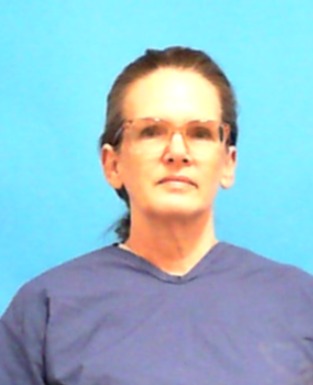
Denise Williams Conspiracy conviction upheld; first-degree murder conviction reversed
Corrections photograph · Florida Department of Corrections · U.S. public domain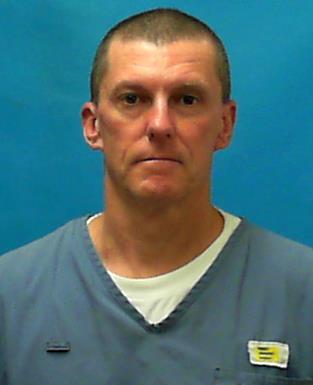
Brian Winchester Admitted killing Mike; convicted in a separate kidnapping case
Corrections photograph · Florida Department of Corrections · U.S. public domain
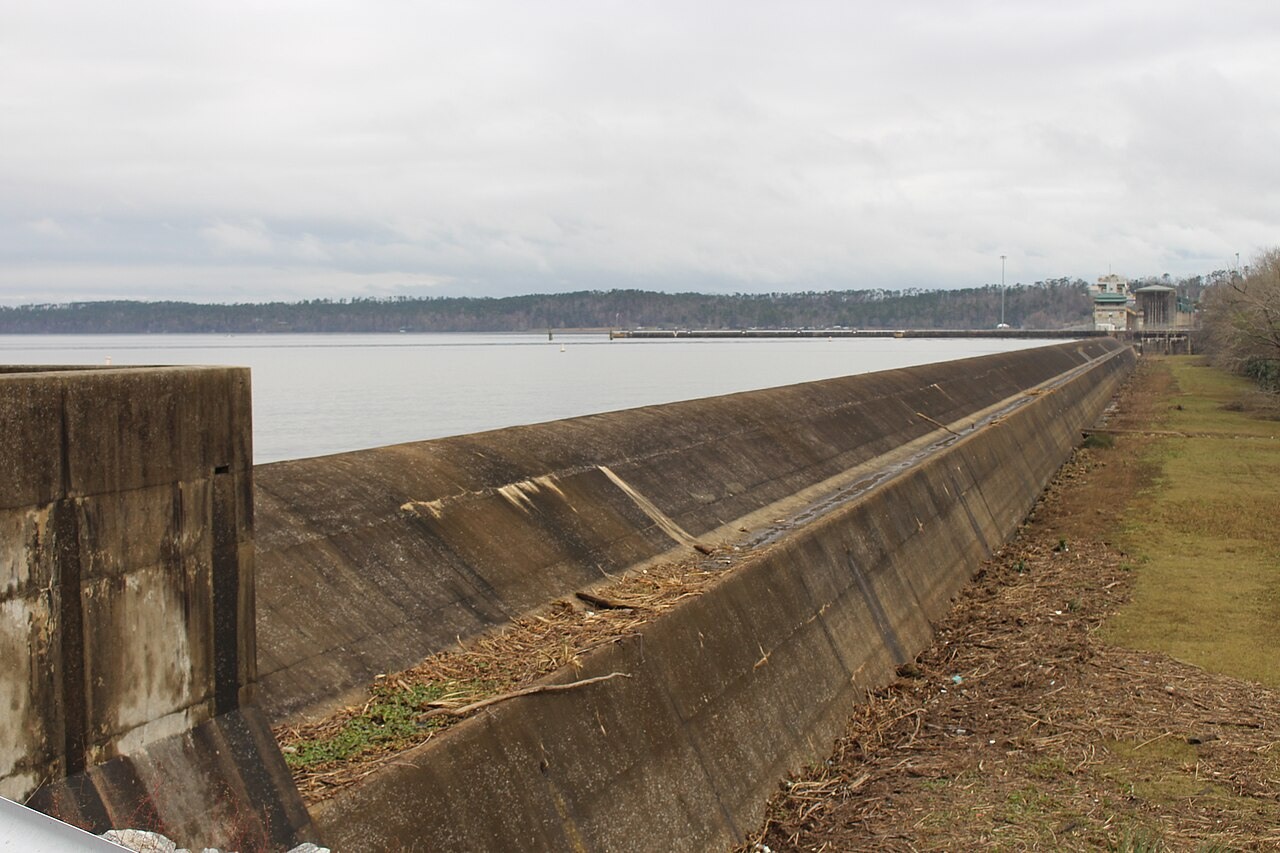
Michael Rivera · Image source · CC BY-SA 4.0 · Geographic context; not authentic crime evidence. The building or landscape is public geographic context; no event is assigned to it.

A December morning at Lake Seminole
Jerry Michael Williams was known as Mike. December 16, 2000, was the day he disappeared. The boat and vehicle associated with the trip helped fix where to look, but did not reveal whether anyone had accompanied him. A theory of an accident fit what searchers knew at the time. A missing body gave room for speculation about the lake and its wildlife. No physical finding in the reviewed record established that an alligator took him. [1] [2]
The original interpretation also influenced the questions that people asked. Searchers looking for a drowned hunter needed to decide where water, weather and the position of equipment might have carried him. Detectives investigating an intentional disappearance would need to ask who knew about the trip, who expected him to return and who could account for their own movements. The eventual recovery of evidence supporting a homicide did not make the first hours of the search unreasonable. It changed the job from locating a missing person in water to reconstructing a crime whose original participants had years to give their accounts. [1] [2]
Investigators recovered waders during the extended search effort, according to the case record. Equipment in or near a lake may tell a searcher where to concentrate and still give little information about the moment when it left its owner. The later testimony portrayed some of the scene as staged. That interpretation depended on what the witness said he did as well as what searchers found. Looking at a lake photograph today cannot settle that difference, and the map uses a regional reference for the lake rather than a plotted hunting route. [1]
What Winchester said had been planned
Brian Winchester knew Mike and his wife Denise. At Denise’s trial he described an affair that began years before the disappearance and conversations about killing Mike. He said life insurance and the prospect of being together figured in the discussions. In the court’s account of the testimony, the two considered how a death might be passed off as a hunting accident. Winchester also described a proposed date earlier in December that did not result in a killing. The jury could consider this evidence of agreement. Winchester was describing his own conduct and the conduct of someone he had a reason to blame, which made the terms of his cooperation and the other evidence important. [1]
The insurance policies helped explain why the state examined the finances. They were contracts with documented consequences after Mike was declared dead. They were not instructions to kill. It was Winchester’s testimony about particular discussions and plans, read alongside the other facts, that allowed the state to make an agreement case rather than asking the jury to infer an agreement from a payout alone. A policy can be a financial motive or a routine precaution. The context determines what inferences the evidence can bear. [1]
According to Winchester, the two men went out together on December 16. He pushed Mike into the water, expecting him to drown. Mike reached a tree or stump and held on. Winchester then shot him and later concealed the body. The shot mattered legally because the killing that occurred departed from the anticipated drowning. It mattered as evidence because a participant’s account gave investigators a way to look for a body that searches of the lake had not recovered. No photograph here reconstructs the encounter. The account is attributed to the man who testified that he carried it out. [1]
Urbantallahassee · Image source · CC BY-SA 4.0 · Geographic context; not authentic crime evidence. The building or landscape is public geographic context; no event is assigned to it.

A second crime changes the investigation
Winchester and Denise later married. Their relationship eventually broke down. In 2016 Winchester kidnapped Denise in a separate crime, and he later received a prison sentence for that conduct. The crime was distinct from the disappearance and killing. Its importance in this case was that it put Winchester in a new relationship with investigators and prosecutors. When he supplied information about Mike, the terms under which he gave it mattered. The record describes immunity for his cooperation relating to the death. A prison sentence for kidnapping cannot be presented as a murder conviction or a homicide sentence. [1]
An account from a person facing a long sentence is useful only to the extent that it can be checked. Winchester had incentives to cooperate and a history with both Mike and Denise. Investigators could compare what he said with facts he would be expected to know if he had handled the body. The Florida Department of Law Enforcement announced in December 2017 that human remains had been identified as Mike’s. This development put an end to the explanation that depended on a drowned hunter whose body was never found. The announcement is the public date on the timeline. It should not be mistaken for the precise date of recovery. [1] [2]
The recovery gave the case a type of proof unavailable during the original search. It established that the victim’s disappearance could be investigated with a body identified to him. It supported the broad claim that he had been killed and his remains concealed. It did not answer where Denise was at the moment of the killing, what she communicated that morning or whether she performed an act that helped Winchester kill him. To answer those questions the prosecution still needed proof directed specifically at her conduct. [1] [2]
The jury returns two verdicts that survive differently
At Denise’s 2018 trial, the state presented the affair, the insurance and Winchester’s description of joint planning as parts of one story. A jury found her guilty of first-degree murder and conspiracy to commit first-degree murder. The charges required different findings. The conspiracy count concerned an agreement. The murder count, prosecuted on the theory that she was a principal, required evidence of an intent that the crime be committed and some act or word that assisted, encouraged, caused or procured the murder Winchester committed. [1]
The appellate judges reviewed the evidence with those separate questions in view. There was evidence from which jurors could find agreement to kill Mike. But the record did not show Denise at the lake, communicating with Winchester while he carried out the crime, or giving him the kind of assistance the state had to establish for the murder conviction to stand under the theory it presented. The appellate court did not erase the testimony about their earlier discussions. It ruled that the evidence of those discussions and the surrounding circumstances was insufficient to sustain the separate judgment of guilt for the actual murder as charged. [1]
That distinction is easy to lose because both counts arose out of the same death. A person can intend that a plan succeed and agree with another person to carry it out. A prosecution arguing principal liability also has to show a form of participation recognized by the law as applied in that case. An appellate court may find enough evidence for one conviction and too little for the other even when both jurors and judges are reading the same story about a relationship and a plan. That is what happened in the 2020 decision. [1]
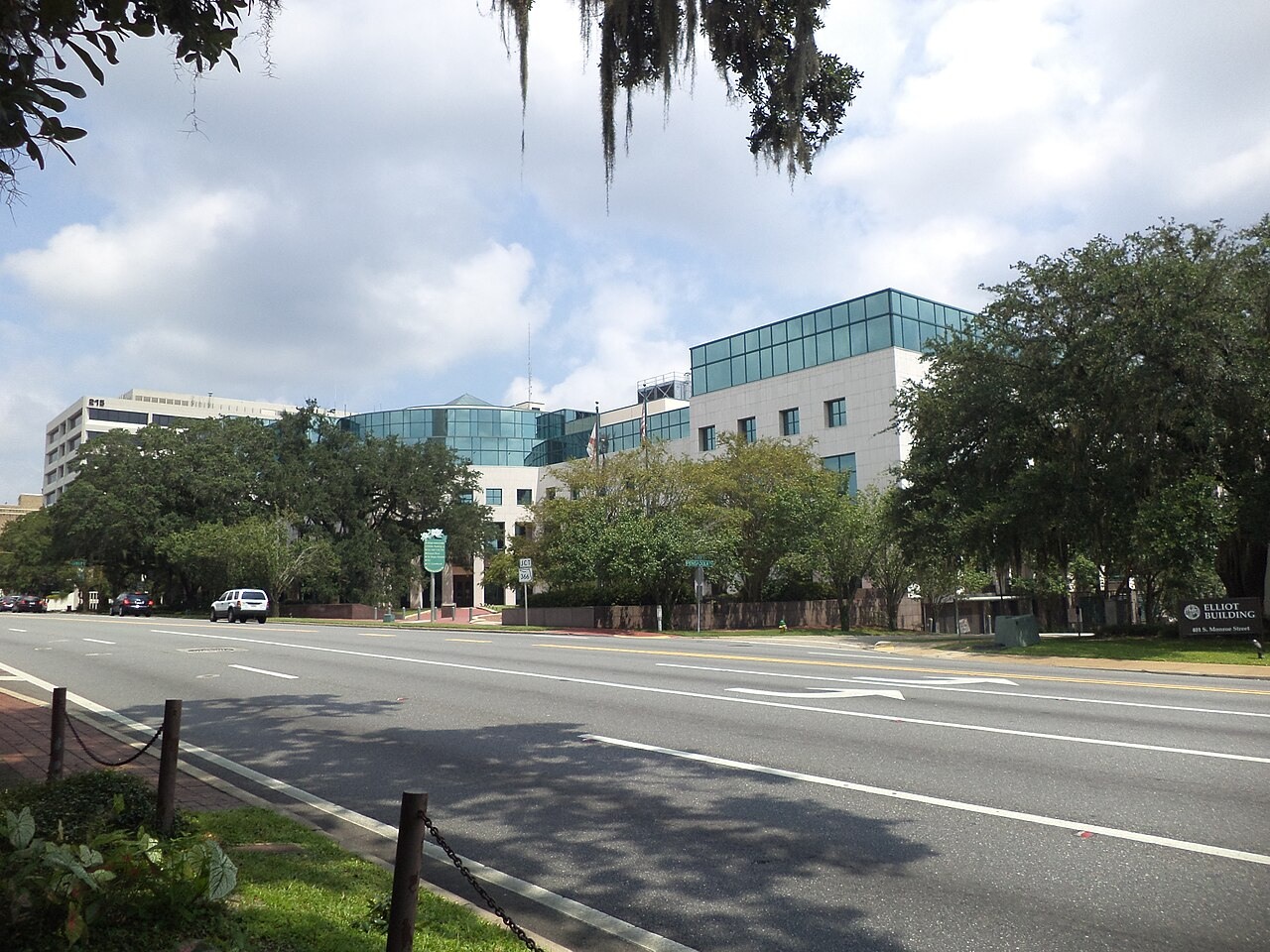
Michael Rivera · Image source · CC BY-SA 3.0 · Geographic context; not authentic crime evidence. The building or landscape is public geographic context; no event is assigned to it.

The conviction that remains in the record
Florida’s First District Court of Appeal reversed the first-degree murder conviction and affirmed the conspiracy conviction. Denise received a thirty-year prison term on the surviving conspiracy conviction in the proceedings reported in 2021. The revised outcome should be stated in full. Saying she was convicted of Mike’s murder leaves out the reversal. Saying she was cleared of plotting the killing leaves out the conviction that survived. The kidnapping sentence imposed on Winchester belongs to his own case. [1] [3]
The evidence gallery separates proof of Mike’s identity, testimony about the agreement and the two legal paths that followed the verdicts. The first closes the missing-person question. The second bears on what Denise and Winchester discussed. The third shows the limits an appellate court placed on treating that agreement as proof of legal responsibility for the act itself. A caption about a body recovery should not quietly move from identifying Mike to assigning guilt to anyone other than what the source establishes. [1] [2]
The case changed each time it encountered a fact that could be tested. The search found the things a hunter took with him but could not locate Mike. A participant eventually gave investigators a different account and pointed them toward evidence that confirmed a death. A jury accepted a theory that produced two convictions. The appellate court asked a narrower question about each. Mike’s death remained the same fact across those proceedings. What the record could establish about each other person changed with the evidence and the legal question being asked. [1] [2] [3]
Look closer · 9 visuals
Inside the evidence.
Open a visual to explore what it contributed to the case—and the limits of what it shows. Photographs, historical reproductions and original illustrations are individually labeled. Open the notes for each image’s source, credit, and limitations; setting photographs do not depict crime scenes.
Boat, vehicle and missing person
Original editorial illustration — not an actual evidence photograph or exhibit.
Read the evidence notes
The early evidence fit a search for a missing hunter.
It did not establish drowning or a wildlife encounter.
The insurance evidence
Original editorial illustration — not an actual evidence photograph or exhibit.
Read the evidence notes
The policies gave context to testimony about an agreement.
Financial benefit alone does not establish a plot.
Plan versus conduct
Original editorial illustration — not an actual evidence photograph or exhibit.
Read the evidence notes
Winchester’s account put the shooting outside the original plan.
The state still had to prove Denise’s legal participation.
Identification of the remains
Original editorial illustration — not an actual evidence photograph or exhibit.
Read the evidence notes
The recovery allowed investigators to identify Mike.
Identity is separate from proof of another person’s conduct.
The separate kidnapping
Original editorial illustration — not an actual evidence photograph or exhibit.
Read the evidence notes
The kidnapping put Winchester in a different relationship with authorities.
His kidnapping sentence was not for Mike’s murder.
The appeal split the verdicts
Original editorial illustration — not an actual evidence photograph or exhibit.
Read the evidence notes
The appeals court assessed each count separately.
The murder conviction cannot be cited as standing.
Lake Seminole in Jackson County, Florida
Context photograph — not an actual crime exhibit. The building or landscape is public geographic context; no event is assigned to it.
Read the evidence notes
Lake Seminole in Jackson County, Florida. Geographic context photograph; not a crime-scene photograph or an original evidence exhibit. The building or landscape is public geographic context; no event is assigned to it.
Geographic context; not authentic crime evidence. The building or landscape is public geographic context; no event is assigned to it. The source and reuse terms are linked below.
Michael Rivera · Image source · CC BY-SA 4.0
Tallahassee skyline in 2023
Context photograph — not an actual crime exhibit. The building or landscape is public geographic context; no event is assigned to it.
Read the evidence notes
Tallahassee skyline in 2023. Geographic context photograph; not a crime-scene photograph or an original evidence exhibit. The building or landscape is public geographic context; no event is assigned to it.
Geographic context; not authentic crime evidence. The building or landscape is public geographic context; no event is assigned to it. The source and reuse terms are linked below.
Urbantallahassee · Image source · CC BY-SA 4.0
Leon County Courthouse in Tallahassee
Context photograph — not an actual crime exhibit. The building or landscape is public geographic context; no event is assigned to it.
Read the evidence notes
Leon County Courthouse in Tallahassee. Geographic context photograph; not a crime-scene photograph or an original evidence exhibit. The building or landscape is public geographic context; no event is assigned to it.
Geographic context; not authentic crime evidence. The building or landscape is public geographic context; no event is assigned to it. The source and reuse terms are linked below.
Michael Rivera · Image source · CC BY-SA 3.0
★ Key evidence used in a conviction · ✓ Exclusion or reversal · ◇ Disputed evidence · ⊘ Excluded at retrial · ◆ Identity / investigative finding, not a conviction. A symbol does not mean one item proved the whole case.
Follow the locations
Put the story on the map.
Follow the dated entries, then select an event to find its regional setting. Shared-location pins open a group of events. Evidence symbols identify important findings and their limitations.
Open the map in its own window ↗Sources & further reading
- Williams v. State · Florida First District Court of AppealTrial testimony, evidence, separate counts and partial reversal.
- Florida Department of Law Enforcement · Mike Williams investigation updatePublic identification of the recovered remains.
- Associated Press reporting on resentencingThirty-year term for the surviving conspiracy count.
Editorial review: 2026-11-09 · 1530 words