Money was leaving a headphone company’s bank accounts, but the books were being adjusted to tell a different story. Personal credit-card bills were paid with corporate funds. Cashier’s checks financed purchases. Accounting entries then helped conceal why the cash available at Koss did not match the cash its records should have shown. [1][3]
Case brief
Milwaukee / Mequon, Wisconsin · 1999–2009
- Recorded outcome
- Sachdeva pleaded guilty to six wire-fraud counts in July 2010; sentenced November 17, 2010 to 132 months and $34 million restitution. Historical sentence only.
Key moments
People in this case
- Sujata Sachdeva
Pleaded guilty to wire fraud
Photo at source · Milwaukee Business Journal · courthouse photograph
Sujata “Sue” Sachdeva occupied a senior position inside the Milwaukee company. She was its vice president of finance, secretary and principal accounting officer. Her access was real, and so were the bank transactions. The deception concerned their purpose and the records meant to explain them. [2][3]
The resulting criminal case established approximately $34 million in embezzlement and an eleven-year sentence. A later civil lawsuit asked a different question: whether a bank could be held liable for processing transactions associated with the scheme. The criminal conviction and the civil ruling need to be understood separately. [2][4]

Michael Barera · Image source · CC BY-SA 4.0 · Geographic context; not authentic crime evidence. The building or landscape is public geographic context; no event is assigned to it.

The position that supplied access
The Securities and Exchange Commission’s order records Sachdeva’s service at Koss from 1992 until her termination in December 2009. The Wisconsin Supreme Court later described the embezzlement as extending roughly from 1999 to 2009. That longer period is different from the fiscal years covered by particular loss calculations and charging allegations. [2][4]
She was among the people authorized to conduct transactions on company accounts. The later civil record describes her ability to use other employees to carry instructions to the bank. Her authority helped make requests appear to be ordinary corporate activity even when the underlying use of the money was personal. [4]
Authority to act on an account is not ownership of its money. The distinction was basic to the fraud: funds belonging to Koss were diverted through channels a finance officer could access. A legitimate title and familiar banking process gave the transactions a plausible setting without making them legitimate company expenses. [3][4]
Company cash, personal spending
The January 2010 indictment announcement alleged that Sachdeva authorized transfers from Koss accounts to pay her American Express bills. It also described cashier’s checks used for personal expenses. Purchases included clothing, furs, purses, shoes, jewelry, vehicles, household furnishings and travel, along with home improvements and personal services. [3]
These were charging allegations when the release was issued. The subsequent guilty pleas and sentencing established criminal responsibility for the wire-fraud case. It is still useful to identify the stage of a source: a list of items sought in forfeiture is not automatically an inventory of property successfully sold or money returned to victims. [2][3]
The material side of the case can distract from its mechanics. The unusual feature was not simply that someone bought expensive goods. It was that a senior accounting official could direct corporate funds toward personal obligations and then influence the records intended to disclose what the business owned and owed. That second activity helped sustain the first. [1]
Two records that should have agreed
Once funds left a bank account, the company’s internal records needed an explanation for the lower balance. In the government’s sentencing memorandum, prosecutors described both temporary timing changes and longer-term ledger alterations. The filing was written to support a sentence, so its character as an adversarial government submission remains important. [1]
For temporary concealment, the filing described delayed recording of customer receipts and recording payments before they were actually made. Those timing changes could make the cash shown in the books appear lower for a period. They did not permanently solve the discrepancy because the underlying receipts and payments eventually had to be accounted for. [1]
The government then described erased sales and journal entries affecting different accounts. Some entries overstated expenses or costs; others altered assets, liabilities or sales. Balancing entries made the books internally consistent while obscuring the diversion. A set of accounts can balance arithmetically and still describe transactions dishonestly. [1]
The distinction between a bank record and an internal ledger was therefore consequential. One documented money moving. The other purported to explain what that movement meant for the company. Prosecutors argued that the concealment could not be understood merely as one employee taking cash from a till: it also affected the company’s financial statements. [1]
The scale becomes clearer
The January indictment alleged more than $31 million diverted during the period charged. Later records described an overall loss of approximately $34 million, and the restitution order used $34 million. Those figures are not interchangeable estimates of exactly the same stage of the investigation. A growing or differently defined loss figure does not by itself demonstrate an error. [1][2][3]
The sentencing memorandum argued that the fraud endangered Koss’s financial security. It discussed the amount stolen relative to the company’s size and earnings and described use of a line of credit. These were reasons the government offered for particular sentencing enhancements. The requested enhancements should not be reported as if they were separately imposed judgments merely because they appear in a filed memorandum. [1]
The same filing reported a concrete public consequence: NASDAQ trading was halted at the company’s request on December 21, 2009 and resumed on January 11, 2010. It also described the company’s disclosure that earlier annual reports could not be relied upon. The disruption reached beyond a private dispute over one executive’s spending. [1]
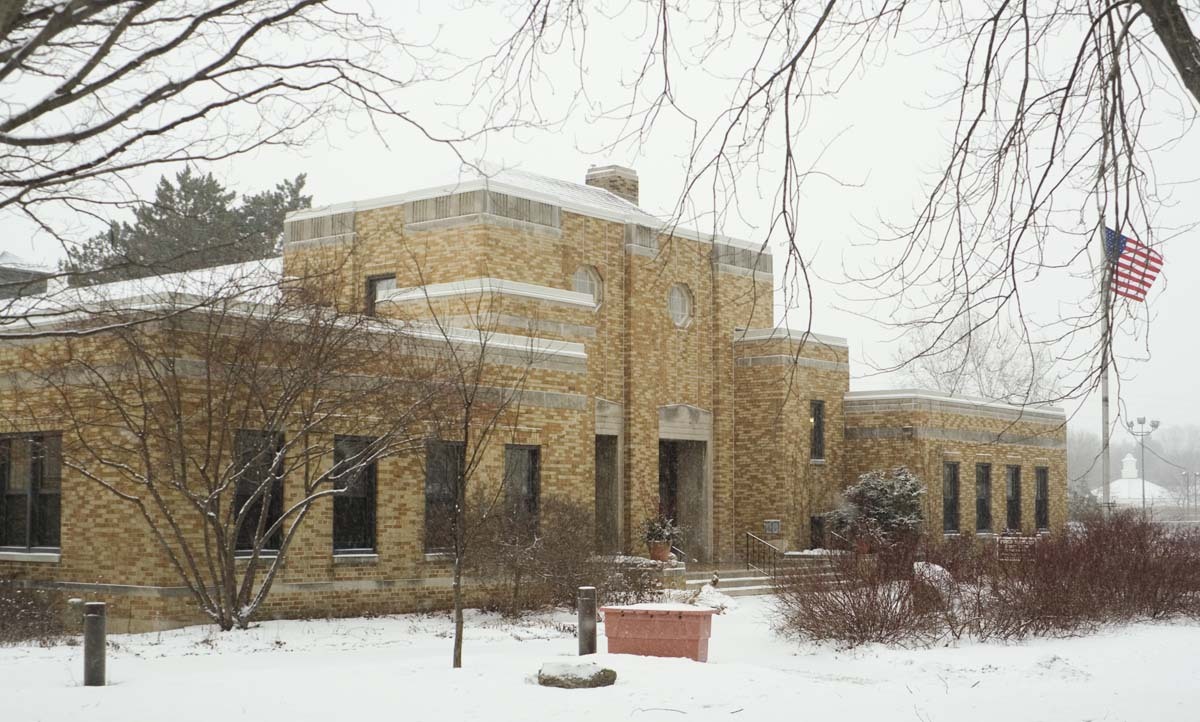
Freekee · Image source · Public domain · Geographic context; not authentic crime evidence. The building or landscape is public geographic context; no event is assigned to it.


Arrest, indictment and guilty pleas
Sachdeva was arrested and charged by complaint on December 21, 2009. Her employment ended two days later. On January 20, 2010, federal authorities announced a six-count wire-fraud indictment. Each count concerned a particular interstate transfer used to carry out the scheme. [1][2][3]
She pleaded guilty to all six counts in July 2010. The government’s sentencing memorandum and the later SEC order give different days within that month. Rather than selecting a day without the underlying plea transcript or docket, this account retains month-level precision. The existence and nature of the guilty pleas are consistent across the reviewed sources. [1][2]
That distinction between an uncertainty about a calendar detail and an uncertainty about criminal responsibility is important. The source conflict warrants a note and a targeted check. It does not make the later sentence disappear or convert admitted wire fraud back into an unproved allegation. [1][2]
The sentence the court actually imposed
Before sentencing, the government argued for an advisory guideline range of 188 to 235 months. The defense disputed aspects of the proposed calculation, including characterizing the conduct as sophisticated and the extent of its threat to the company. Those arguments framed the sentencing dispute; they were not the final prison term. [1]
On November 17, 2010, the court imposed 132 months—eleven years—followed by three years of supervised release. It also ordered $34 million in restitution. The SEC’s subsequent order records those imposed terms. Restitution established an obligation to repay; it did not mean the money had already been recovered. [2]
On March 8, 2011, the SEC suspended Sachdeva from appearing or practicing before it under the rule applicable to the felony conviction. That professional consequence was distinct from imprisonment, restitution and any property-forfeiture process. Different institutions addressed different effects of the same underlying misconduct. [2]
These are historical dispositions. The length of an original prison sentence should not be used on its own to announce where a person is today or what supervision terms remain. No current custody certification is supplied here.
Why Koss later sued a bank
The criminal prosecution did not answer whether Koss could recover from Park Bank. The company brought a civil claim under Wisconsin’s Uniform Fiduciaries Act, challenging the bank’s role in processing transactions. The Wisconsin Supreme Court’s January 29, 2019 decision examined that claim and affirmed dismissal. [4]
The opinion described cashier’s-check procedures, transaction authority and instructions conveyed by other employees. It considered what the bank knew and the legal standard governing its liability. Those questions were not identical to whether Sachdeva had stolen the money. Her guilty pleas and the amount embezzled formed part of the background to the civil dispute. [4]
The court’s result therefore must not be described as exonerating Sachdeva or as convicting the bank of assisting her. A business can suffer a proved theft and still fail to establish a particular civil claim against another institution. The legal standards and the people whose responsibility is being assessed are different. [4]
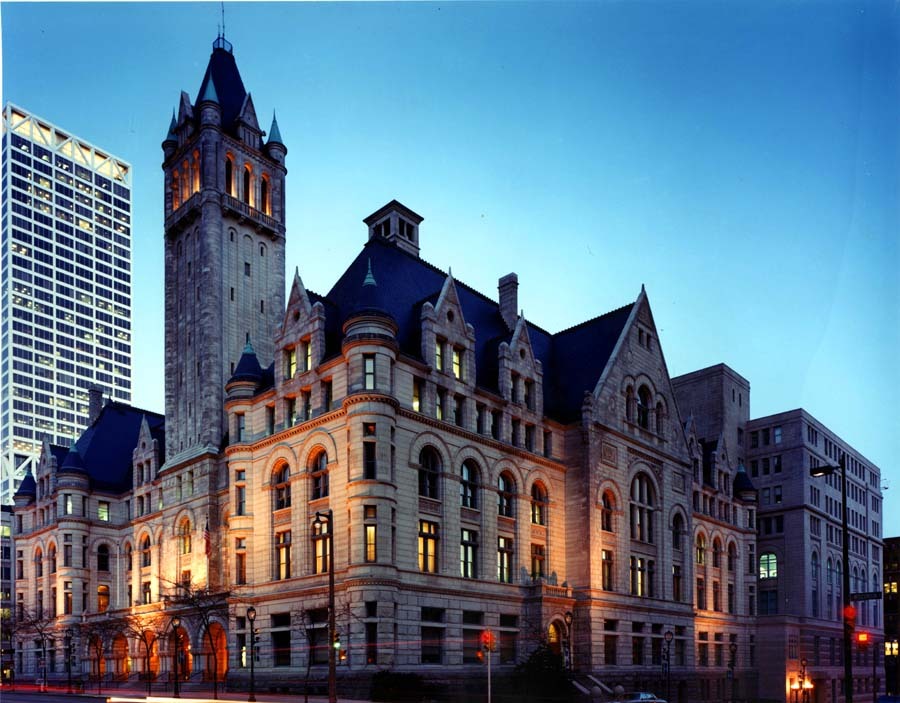
General Services Administration · Image source · Public domain · Geographic context; not authentic crime evidence. The building or landscape is public geographic context; no event is assigned to it.


The evidence behind the spending
The case’s most useful visual is not an invented pile of luxury goods. It is the relationship between three things: corporate money leaving accounts, personal obligations being paid and internal entries changing the apparent explanation. The evidence gallery illustrates those relationships and separates the indictment’s loss estimate from the later restitution figure. [1][2][3]
Milwaukee and Mequon photographs supply geographic context. They are not images of Sachdeva’s home, seized belongings or actual financial records. No synthetic bank statement or signature is presented as a document from the case.
What made the fraud possible was access to both money and its accounting explanation. What made it a criminal case was the documented diversion, the false recordkeeping described by prosecutors and the guilty pleas that followed. The spending was visible in the eventual list of purchases. For years, the more consequential work had been keeping the missing cash from appearing plainly in the books.
Look closer · 9 visuals
Inside the evidence.
Open a visual to explore what it contributed to the case—and the limits of what it shows. Photographs, historical reproductions and original illustrations are individually labeled. Open the notes for each image’s source, credit, and limitations; setting photographs do not depict crime scenes.
Money and books tell different stories
Original editorial illustration — not an actual evidence photograph or exhibit.
Read the evidence notes
The concealment sought to reconcile a shrinking bank balance with internal records.
No actual bank statement or account number is recreated.
A temporary timing fix
Original editorial illustration — not an actual evidence photograph or exhibit.
Read the evidence notes
The government described timing changes as a short-term concealment method.
This is an attributed sentencing account, not an audit of every entry.
The permanent accounting cover
Original editorial illustration — not an actual evidence photograph or exhibit.
Read the evidence notes
Prosecutors described multiple forms of bookkeeping concealment.
No employee other than Sachdeva is assigned criminal guilt here.
Why the dollar totals differ
Original editorial illustration — not an actual evidence photograph or exhibit.
Read the evidence notes
Charging estimates and later sentencing figures describe different stages.
Restitution ordered is not money already recovered.
Requested versus imposed sentence
Original editorial illustration — not an actual evidence photograph or exhibit.
Read the evidence notes
A prosecution guideline argument is not the sentence the court actually imposed.
No present custody or supervision claim is made.
Civil bank liability is another question
Original editorial illustration — not an actual evidence photograph or exhibit.
Read the evidence notes
The 2019 opinion addressed liability under the asserted civil claim.
A civil dismissal does not undo the criminal guilty pleas.
Milwaukee skyline in June 2022
Context photograph — not an actual crime exhibit. The building or landscape is public geographic context; no event is assigned to it.
Read the evidence notes
Milwaukee skyline in June 2022. Geographic context photograph; not a crime-scene photograph or an original evidence exhibit. The building or landscape is public geographic context; no event is assigned to it.
Geographic context; not authentic crime evidence. The building or landscape is public geographic context; no event is assigned to it. The source and reuse terms are linked below.
Michael Barera · Image source · CC BY-SA 4.0
Mequon Town Hall in 2009
Context photograph — not an actual crime exhibit. The building or landscape is public geographic context; no event is assigned to it.
Read the evidence notes
Mequon Town Hall in 2009. Geographic context photograph; not a crime-scene photograph or an original evidence exhibit. The building or landscape is public geographic context; no event is assigned to it.
Geographic context; not authentic crime evidence. The building or landscape is public geographic context; no event is assigned to it. The source and reuse terms are linked below.
Freekee · Image source · Public domain
The Federal Building and United States Courthouse in Milwaukee
Context photograph — not an actual crime exhibit. The building or landscape is public geographic context; no event is assigned to it.
Read the evidence notes
The Federal Building and United States Courthouse in Milwaukee. Geographic context photograph; not a crime-scene photograph or an original evidence exhibit. The building or landscape is public geographic context; no event is assigned to it.
Geographic context; not authentic crime evidence. The building or landscape is public geographic context; no event is assigned to it. The source and reuse terms are linked below.
General Services Administration · Image source · Public domain
★ Key evidence used in a conviction · ✓ Exclusion or reversal · ◇ Disputed evidence · ⊘ Excluded at retrial · ◆ Identity / investigative finding, not a conviction. A symbol does not mean one item proved the whole case.
Follow the locations
Put the story on the map.
Follow the dated entries, then select an event to find its regional setting. Shared-location pins open a group of events. Evidence symbols identify important findings and their limitations.
Open the map in its own window ↗Sources & further reading
- Government’s sentencing memorandum, United States v. SachdevaGovernment filing: accounting concealment, proceeds, trading halt, arguments over guideline enhancements and sentencing factors; advocacy identified.
- SEC administrative order concerning Sujata SachdevaConviction, original role, imposed 132-month sentence, supervision, $34 million restitution and professional-practice suspension.
- Former Koss executive charged — U.S. Attorney/FBI archiveCharging-stage allegations of more than $31 million, wires and cashier’s checks, purchase categories and forfeiture.
- Koss Corporation v. Park Bank — Wisconsin Supreme CourtCivil litigation about bank liability, account authority, cashier’s checks and affirmance of dismissal; not a criminal conviction of a bank.
Editorial review: 2026-10-14 · 1505 words