The drinking straw was left behind after a meal in Manchester, Iowa. Police had watched Jerry Burns use it. When he walked out, investigators collected it and sent it to a laboratory. The result did not end the investigation in one step. It supplied a reason to obtain a warrant for a direct mouth swab—and that sample connected a man in 2018 to blood preserved from Michelle Martinko’s killing in 1979. [1]
Case brief
Cedar Rapids / Manchester, Iowa · 1979–2020
- Recorded outcome
- Jerry Burns convicted February 24, 2020 and sentenced August 7, 2020. Iowa Supreme Court affirmed March 31, 2023; amended opinion June 7, 2023.
Key moments
People in this case
- Michelle Martinko
Murder victim
Photo at source · Iowa Cold Cases
For decades, the case had contained evidence without a name. The name emerged through improved DNA testing, a family-tree investigation and separate comparisons that excluded other possibilities. The distinction between those stages became important both at trial and in a divided Iowa Supreme Court decision about genetic privacy. [1]
At the center was an eighteen-year-old high-school senior who had gone from a choir banquet to a shopping mall. The long wait for an identification should not eclipse the ordinary evening that preceded her death. [1]
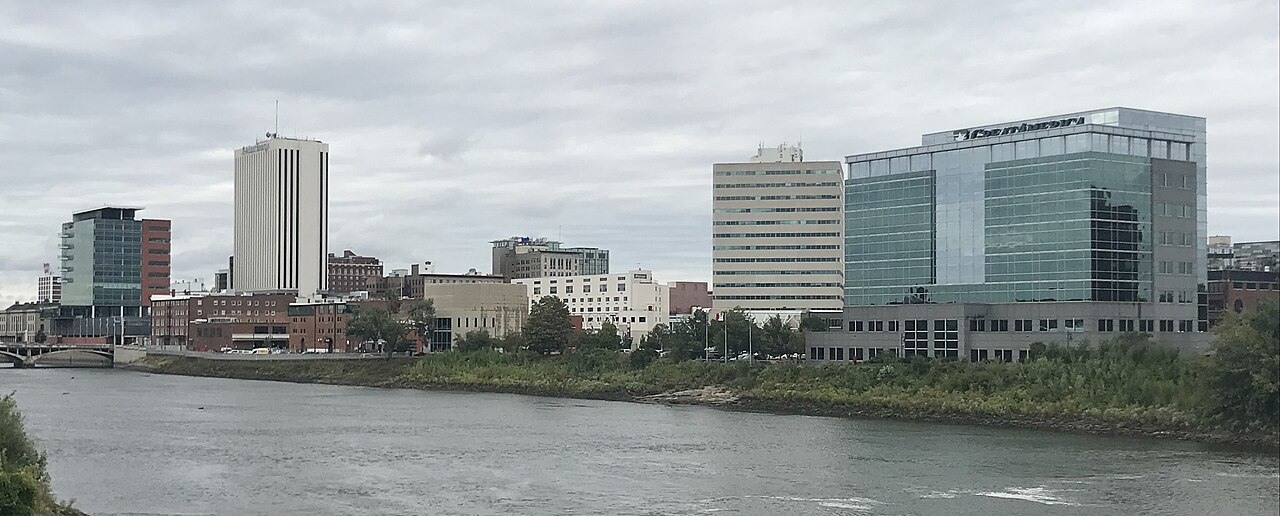
WeaponizingArchitecture · Image source · CC BY-SA 4.0 · Geographic context; not authentic crime evidence. The building or landscape is public geographic context; no event is assigned to it.

The Buick outside the mall
On December 19, 1979, Martinko attended a choir banquet at the Sheraton Hotel in Cedar Rapids. She wore a black dress. Afterward, she drove her large 1972 Buick to the recently opened Westdale Mall, where she spoke with friends. Witness observations placed her leaving alone sometime between 9 and 10 p.m. [1]
Later that night, an assistant manager at a nearby store noticed the Buick standing by itself in the parking lot. Shortly after 4 a.m., police were dispatched to look for it. They found Martinko’s body inside. The autopsy documented a fatal knife attack and injuries consistent with a struggle. Investigators thought the assailant could also have been cut. [1]
The car provided limited physical evidence. Police found glove impressions rather than identifiable fingerprints on several operating surfaces. They collected blood samples from the steering wheel and gearshift and preserved Martinko’s dress. The investigation did not immediately produce a viable suspect. [1]
Those preservation decisions mattered long after the first investigators had exhausted the tests available to them. Material that could not identify someone in one decade could be examined differently in another. The evidence did not change into a new object; the ability to distinguish contributors improved. [1]
A male profile without a match
The unsolved killing also produced a separate civil case. Martinko’s father, acting for her estate, sued the mall’s owners and operators over security. In September 1986, the Iowa Supreme Court affirmed summary judgment against the estate, with dissenting justices disagreeing. That decision addressed the asserted duty to protect a customer from third-party crime; it did not identify the killer or determine anyone’s criminal guilt. [4]
DNA work began in the late 1990s, but early tests were limited. Subsequent testing in 2002 and 2003 developed Martinko’s profile and a mixed profile from the gearshift sample that included male and female contributors. In 2005, analysts tested additional places on the dress. One stain, designated F5, yielded a partial male profile. [1]
Police submitted that profile to CODIS, the criminal-justice DNA database. It produced no match. Investigators also compared samples from more than one hundred possible suspects and eliminated them. Other people were excluded on grounds such as being in custody when the killing occurred. The case advanced through exclusions as well as promising leads. [1]
The unidentified profile was significant, but it was not a person’s name. Nor was the absence of a database match evidence that a killer had somehow escaped every possible comparison forever. It meant that this search, using the available profiles and methods, had not supplied an identification. The next breakthrough came from a different investigative approach. [1]
Family relationships narrow the search
In 2018, investigators used Parabon’s kinship and genetic-genealogy services. The court record describes use of GEDmatch and investigation of descendants of several ancestral couples. A relative voluntarily provided a sample. That work led investigators toward three brothers who had grown up in Manchester: Donald, Kenneth and Jerry Burns. [1]
A family-tree lead is different from a direct forensic match. It can identify a relationship worth investigating, but it does not mean that every relative is a suspect who committed the crime, much less an accomplice. Police still needed separate samples and conventional investigative work to test the possibilities. [1]
Investigators collected a discarded straw used by Kenneth and a toothbrush from Donald’s rubbish. Laboratory comparisons excluded both men as contributors to the dress stain. Those exclusions should be stated clearly. Their appearance in the investigative history is not an accusation that either participated in Martinko’s death. [1]
Jerry Burns remained. Police followed him to a Pizza Ranch restaurant in Manchester and sat nearby. They saw him drink soda through a clear plastic straw. After he and his son left, investigators collected the cup and packaged the straw for testing. [1]
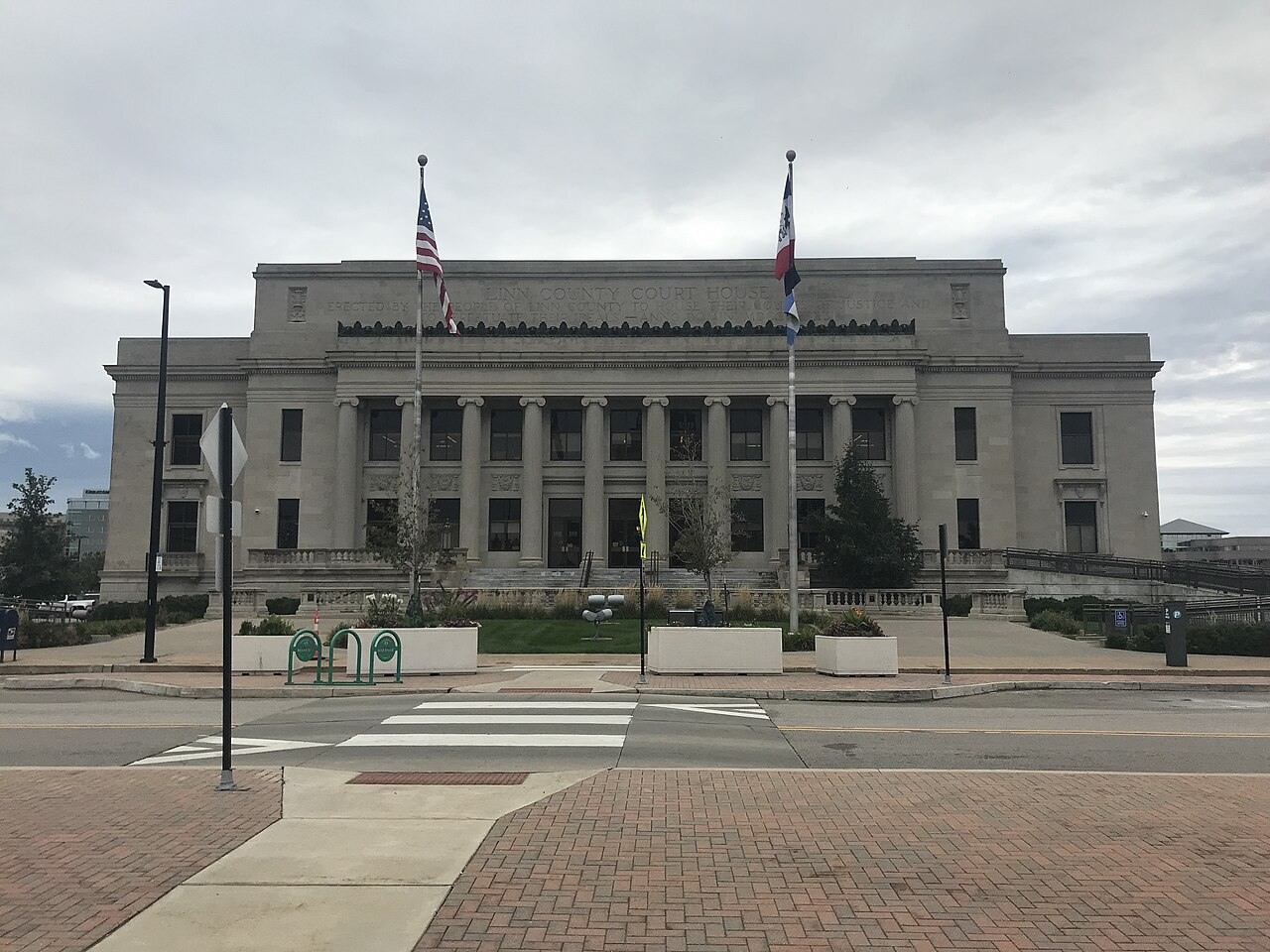
WeaponizingArchitecture · Image source · CC BY-SA 4.0 · Geographic context; not authentic crime evidence. The building or landscape is public geographic context; no event is assigned to it.

The comparison after the restaurant
The laboratory reported that the weak male profile from the straw could not be eliminated as the major contributor to the earlier profile from the dress. The report also indicated that a known sample could permit further interpretation. That qualification is essential: the straw result was an investigative bridge, rather than the final direct sample used to confirm the comparison. [1]
Police obtained a warrant to swab Burns’s mouth. The resulting profile matched the F5 profile. The laboratory reported that fewer than one in one hundred billion randomly selected unrelated people would share that profile. A separate laboratory also found Burns consistent with the male contribution to the gearshift sample, with a much less discriminating statistic for that mixture. [1]
The two results should not be collapsed into one number. Each concerned particular evidence and a particular comparison. Likewise, the strong statistic for the dress profile was not the probability that Burns was innocent. A population-frequency estimate addresses how unusual a profile is among unrelated people, while a jury assesses all the evidence concerning an alleged crime. [1]
Burns denied firsthand knowledge of the murder when interviewed. Iowa Cold Cases records his arrest on December 19, 2018, the thirty-ninth anniversary of Martinko’s death. The appellate procedural history separately records a first-degree murder charge in January 2019. Those dates describe different procedural entries and should not be substituted for one another. [1][3]
The trial did not contain DNA alone
The jury also heard from Michael Allison, a federal detainee who had been housed near Burns before trial. Allison attributed incriminating remarks to him. Those were a witness’s account of conversations in custody, not a recording of the 1979 attack. The defense was entitled to challenge that testimony and its credibility. [1]
The case also raised the possibility of secondary DNA transfer. Evidence that someone’s biological material is present does not, in the abstract, identify every circumstance in which it arrived. The prosecution argued that the nature and location of the samples, the comparisons and the other trial evidence supported the charged killing. The appellate court later assessed the sufficiency of that combined record. [1]
On February 24, 2020, the jury found Burns guilty of first-degree murder. The trial judgment dated August 7, 2020 imposed the life sentence reflected in the filed appendix. The verdict answered the criminal charge. It did not establish an independently verified motive or justify associating Burns with unrelated disappearances and crimes. [1]
A discarded object and genetic privacy
Burns’s appeal challenged the warrantless analysis of DNA on the straw under both the federal and Iowa constitutions. The contested issue was not simply whether police could physically pick up a discarded object. It concerned what constitutional protection, if any, continued to apply to the biological information left on that object. [1]
A five-justice majority upheld the search and affirmed the conviction. The decision included a separate concurrence and dissents addressing the privacy implications of DNA analysis. The dissenting positions did not amount to findings that the forensic comparison was wrong or that Burns had been acquitted. They disputed how constitutional protections should apply to the evidence-gathering method. [1]
The majority also rejected challenges involving a requested jury instruction and the sufficiency of the evidence. The decision was filed March 31, 2023 and amended June 7. The amended opinion, the separate writings and the trial documents are preserved together in the Supreme Court filing used for this account. [1][2]
This legal disagreement belongs alongside the investigative achievement. A method can help solve a serious crime and still prompt difficult questions about government access to personal information. Reporting the ruling accurately means identifying the controlling outcome while also explaining what the judges disagreed about. [1]
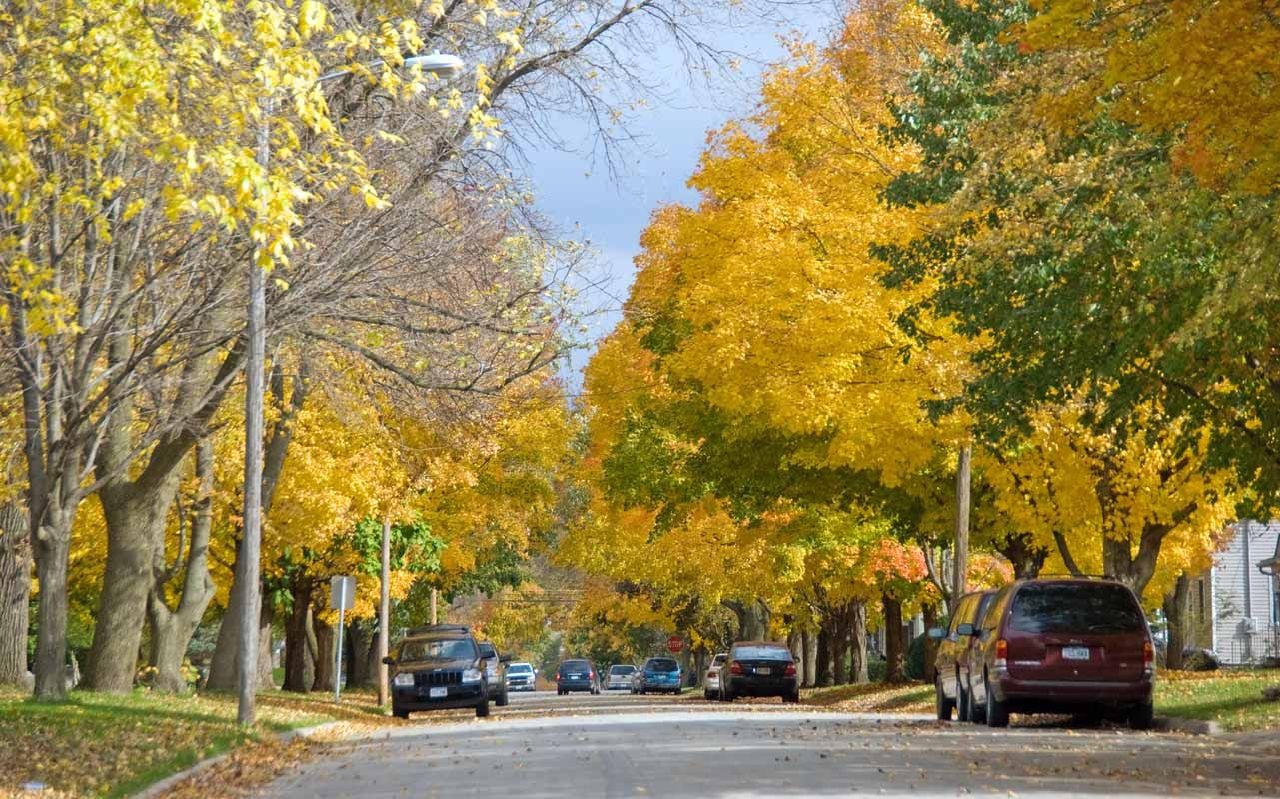
Dirk DBQ · Image source · CC BY 2.0 · Geographic context; not authentic crime evidence. The building or landscape is public geographic context; no event is assigned to it.

What finally supplied a name
Martinko’s case did not turn on genealogy magically identifying a murderer. Preserved evidence first yielded an unknown male profile. Genealogy suggested relationships. Comparisons excluded two men. A discarded straw supported a warrant. A direct sample confirmed the match, and a jury considered that evidence with the remainder of the case. [1]
Each step had its own role and limits. The interactive evidence sequence separates them for that reason. The context photographs show Cedar Rapids and Manchester, not the actual dress, restaurant straw or crime scene. No portrait or exhibit has been invented to fill a gap in the visual record.
The long delay was not resolved by discovering a missing confession or an eyewitness to the attack. It was resolved through repeated examination of material investigators had retained after a young woman failed to come home from the mall. The dress had held an unidentified contributor’s profile for years. Eventually, a careful series of comparisons supplied the name that the original investigation could not.
Look closer · 9 visuals
Inside the evidence.
Open a visual to explore what it contributed to the case—and the limits of what it shows. Photographs, historical reproductions and original illustrations are individually labeled. Open the notes for each image’s source, credit, and limitations; setting photographs do not depict crime scenes.
The evidence waited for technology
Original editorial illustration — not an actual evidence photograph or exhibit.
Read the evidence notes
Preserved material could be retested as techniques improved.
No DNA sequence or laboratory image is fabricated.
A lead is not a DNA identification
Original editorial illustration — not an actual evidence photograph or exhibit.
Read the evidence notes
Genealogy narrowed a search; direct comparisons tested its possibilities.
Relatives were investigative leads, not accomplices.
Why the discarded straw mattered
Original editorial illustration — not an actual evidence photograph or exhibit.
Read the evidence notes
The straw result supported obtaining a warrant for a direct sample.
The straw is illustrated, not an image of the actual item.
A second sample strengthens the chain
Original editorial illustration — not an actual evidence photograph or exhibit.
Read the evidence notes
A direct, warranted sample confirmed the reported DNA match.
The lab statistic is not the probability that the defendant is innocent.
Two men excluded
Original editorial illustration — not an actual evidence photograph or exhibit.
Read the evidence notes
The opinion describes comparisons that excluded two brothers.
An exclusion here does not allege involvement in any other crime.
The privacy question divided the court
Original editorial illustration — not an actual evidence photograph or exhibit.
Read the evidence notes
The court disagreed over constitutional treatment of DNA from discarded material.
A constitutional dissent is not a finding of factual innocence.
Cedar Rapids skyline in 2022
Context photograph — not an actual crime exhibit. The building or landscape is public geographic context; no event is assigned to it.
Read the evidence notes
Cedar Rapids skyline in 2022. Geographic context photograph; not a crime-scene photograph or an original evidence exhibit. The building or landscape is public geographic context; no event is assigned to it.
Geographic context; not authentic crime evidence. The building or landscape is public geographic context; no event is assigned to it. The source and reuse terms are linked below.
WeaponizingArchitecture · Image source · CC BY-SA 4.0
Linn County Courthouse in Cedar Rapids
Context photograph — not an actual crime exhibit. The building or landscape is public geographic context; no event is assigned to it.
Read the evidence notes
Linn County Courthouse in Cedar Rapids. Geographic context photograph; not a crime-scene photograph or an original evidence exhibit. The building or landscape is public geographic context; no event is assigned to it.
Geographic context; not authentic crime evidence. The building or landscape is public geographic context; no event is assigned to it. The source and reuse terms are linked below.
WeaponizingArchitecture · Image source · CC BY-SA 4.0
Tirrill Park in Manchester, Iowa
Context photograph — not an actual crime exhibit. The building or landscape is public geographic context; no event is assigned to it.
Read the evidence notes
Tirrill Park in Manchester, Iowa. Geographic context photograph; not a crime-scene photograph or an original evidence exhibit. The building or landscape is public geographic context; no event is assigned to it.
Geographic context; not authentic crime evidence. The building or landscape is public geographic context; no event is assigned to it. The source and reuse terms are linked below.
Dirk DBQ · Image source · CC BY 2.0
★ Key evidence used in a conviction · ✓ Exclusion or reversal · ◇ Disputed evidence · ⊘ Excluded at retrial · ◆ Identity / investigative finding, not a conviction. A symbol does not mean one item proved the whole case.
Follow the locations
Put the story on the map.
Follow the dated entries, then select an event to find its regional setting. Shared-location pins open a group of events. Evidence symbols identify important findings and their limitations.
Open the map in its own window ↗Sources & further reading
- State v. Burns — amended Iowa Supreme Court opinion and trial appendicesFiled opinion, concurrence, dissents, trial verdict and sentence; evidence history, genealogy, straw, warrant and constitutional analysis.
- State v. Burns, 988 N.W.2d 352 — opinion mirrorOriginal published decision as cross-check; the filed amended opinion controls, and mirrors are not independent corroboration.
- Solved cases: Michelle Martinko — Iowa Cold CasesIndependent nonprofit chronology of December 19, 2018 arrest and later verdict; limited derived material.
- Martinko v. H-N-W Associates — Iowa Supreme CourtEarlier estate lawsuit about mall security; summary judgment affirmed, with dissent. Separate from killer identification.
Editorial review: 2026-10-14 · 1567 words