The paintings are absent, but the frames remain. In Boston’s Isabella Stewart Gardner Museum, the empty frames mark part of what two men took on March 18, 1990. They left with thirteen objects, including paintings by Rembrandt and Vermeer. A security system recorded movement through parts of the building. It did not follow the art outside. The later investigation has had to work across that divide, with a known set of missing objects and an uncertain account of where they went. [1] [2]
Status reviewed
Where the case stands
- Established
- Two men posing as police entered the museum in March 1990. The museum and FBI document 13 missing objects. [1]
- Still open
- Where are the works, and who moved or held them after the theft?
- Latest development
- The museum and FBI still list the missing objects. The museum offers up to $10 million for information leading to their safe return in good condition. [2]
Case brief
Boston, Massachusetts · 1990
Key moments
People and case photographs
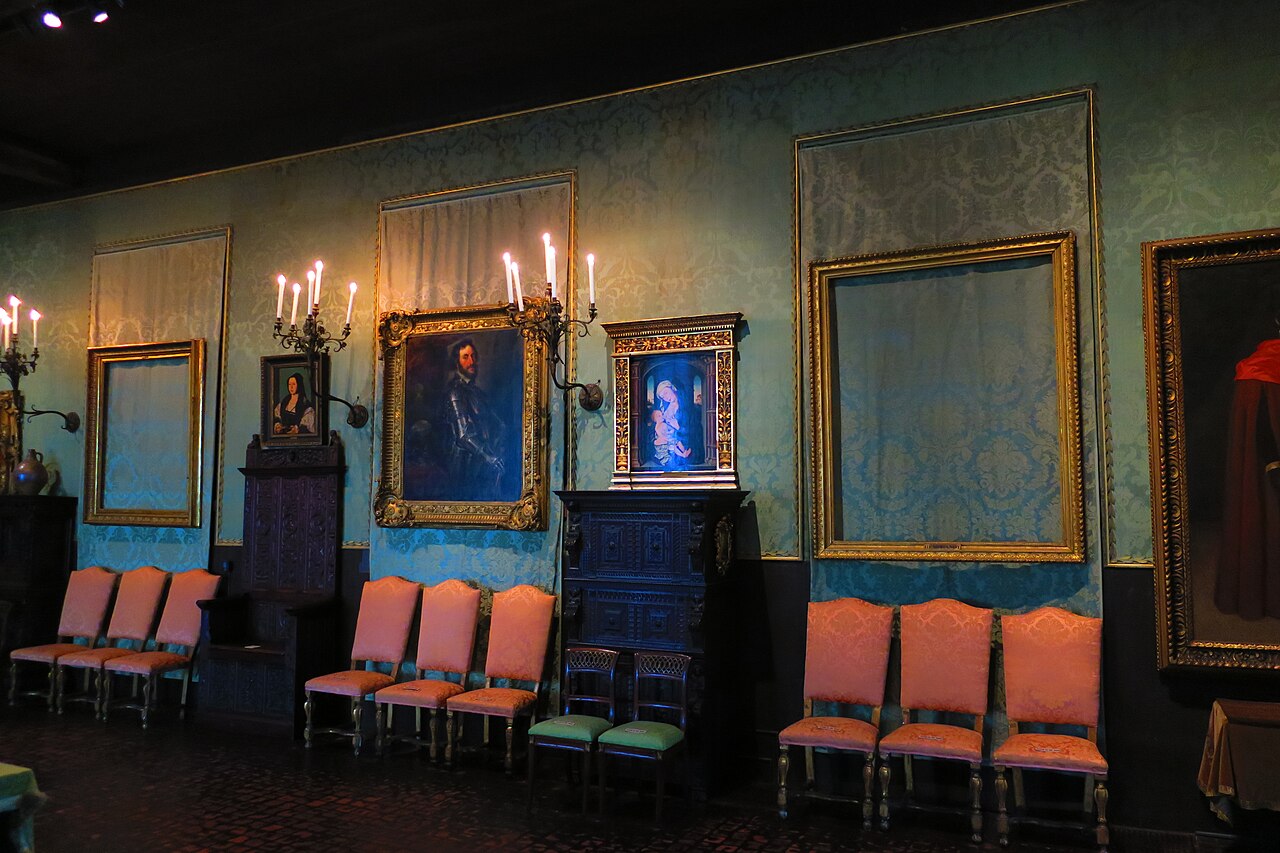
The empty Rembrandt frames A 2018 photo of the Dutch Room shows the empty frames for A Lady and Gentleman in Black and Christ in the Storm on the Sea of Galilee.
Museum photograph · Chris Dignes · Public domain dedication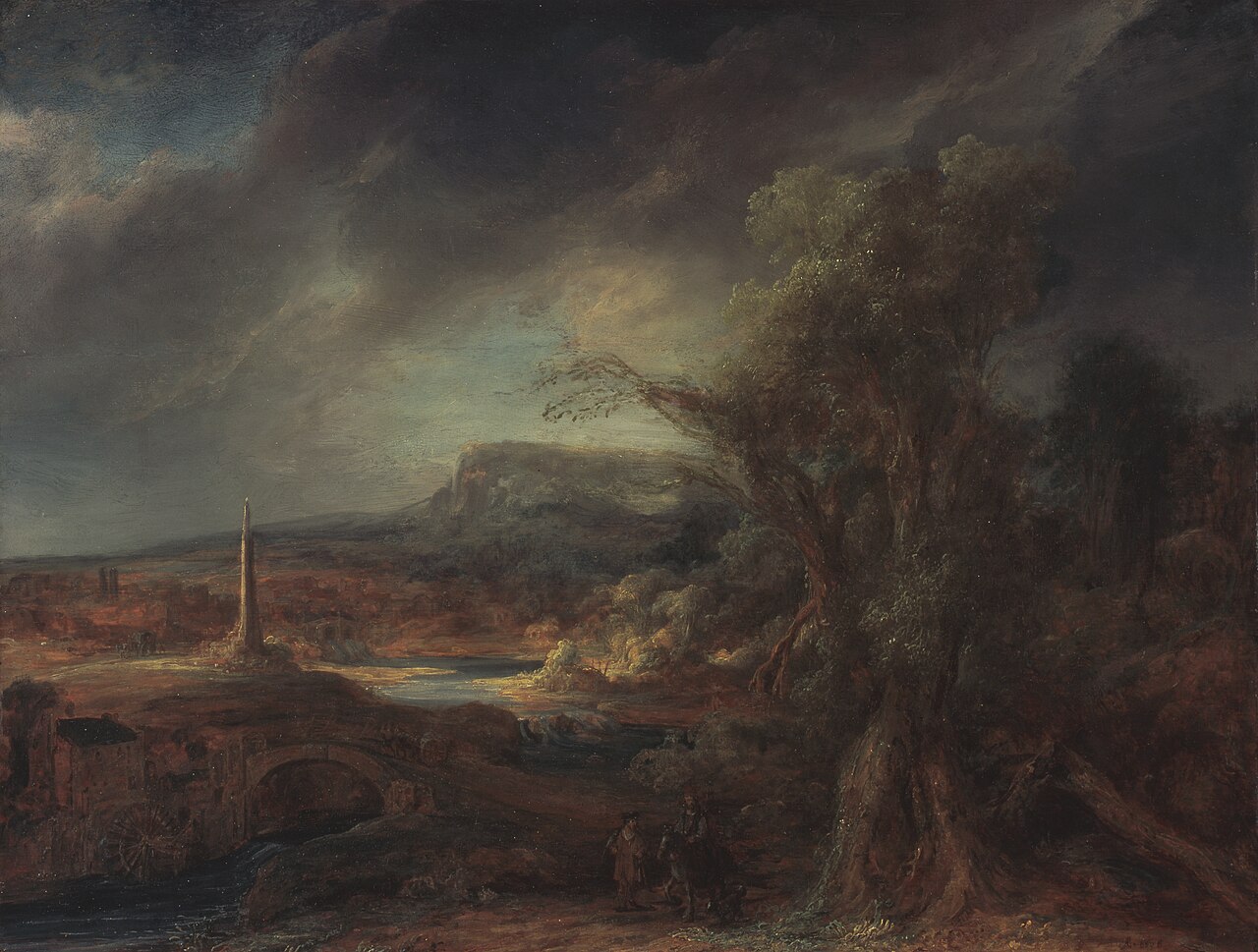
Landscape with an Obelisk Govaert Flinck’s 1638 painting was taken from its frame in the Dutch Room during the 1990 theft.
Photographic reproduction · Govaert Flinck · Isabella Stewart Gardner Museum via Wikimedia Commons · U.S. public domain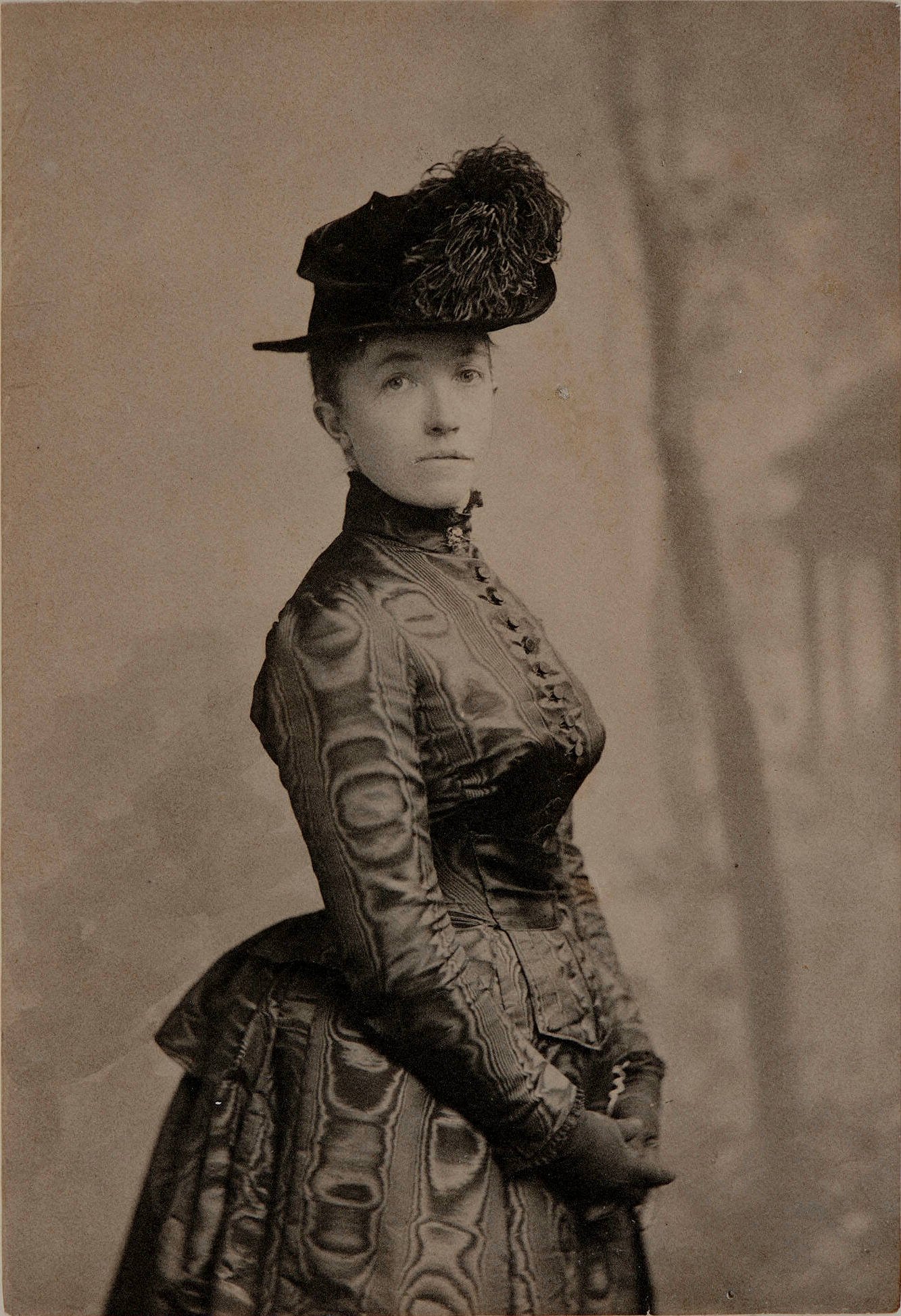
Isabella Stewart Gardner The museum’s founder, photographed in London in 1888.
Archival portrait · John Thomson · Isabella Stewart Gardner Museum · U.S. public domain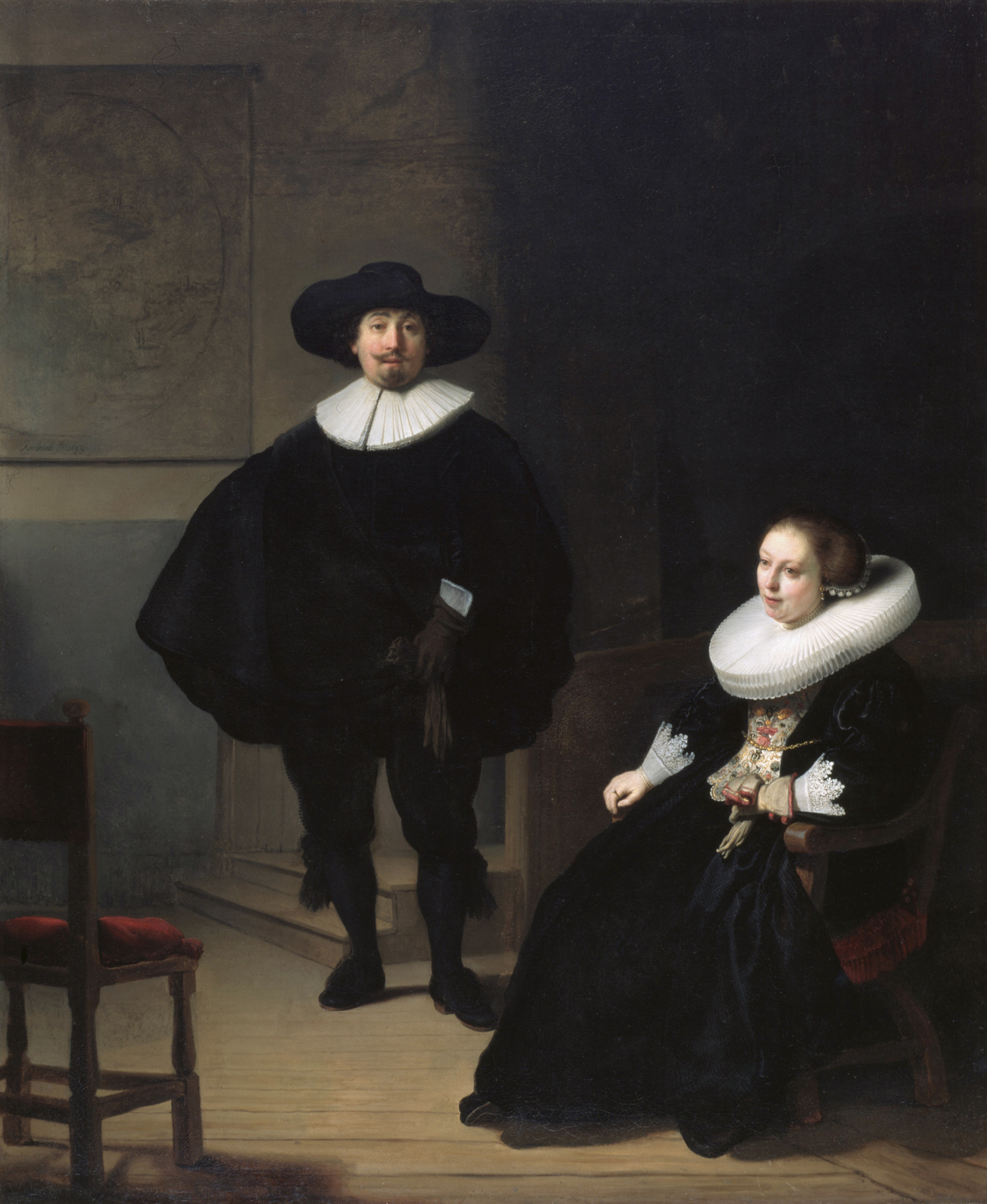
A Lady and Gentleman in Black Rembrandt’s 1633 painting was among the works stolen from the museum in 1990.
Photographic reproduction · Rembrandt van Rijn · Isabella Stewart Gardner Museum via Wikimedia Commons · U.S. public domain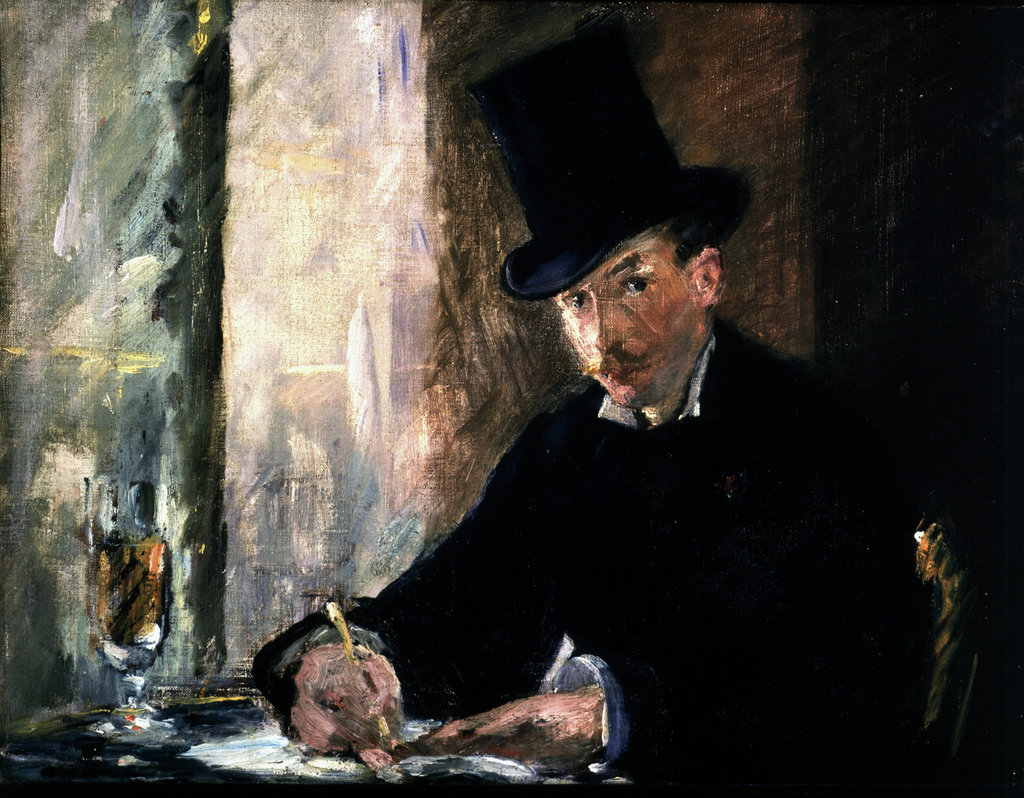
Chez Tortoni Édouard Manet’s café painting was among the works stolen from the museum in 1990.
Photographic reproduction · Édouard Manet · via Wikimedia Commons · U.S. public domain- Stolen Gardner Museum works
Reference images of the 13 works reported stolen
Photo at source · FBI · stolen artwork notice
P. Hughes · Image source · CC BY 4.0

An intercom call in the early hours
The men wore clothing that made them appear to be police officers. They told a guard that they were responding to a disturbance. The guard let them through the employee entrance, contrary to museum procedure. Once inside, the men got him away from the security desk and restrained him and a second guard. They left the two in the basement while they moved through the building. [1] [2]
The uniforms mattered because they provided a reason to admit people who would ordinarily be kept outside. There was no legitimate police response to verify in the account given by the intruders. The evidence for what happened inside came from the guards’ reports, the building’s records and what was found after the men left. The guards could describe the people who entered and what was done to them. A sensor could record a signal from a place where there was movement. The two kinds of evidence supplied different parts of the chronology. [1] [2]
What the security record can reconstruct
The employee entrance, the desk and the basement matter to the chronology because they establish how the two guards were separated from their work. The museum’s account describes a request to respond to a disturbance and an instruction that brought the guard away from the desk. With both guards restrained, the people who might have challenged the intruders were out of the galleries. The museum reconstructs that sequence from its security record and accounts of the break-in. [1] [3]
The motion sensors tracked movement through parts of the building. A sensor can supply a time and place for activity within its coverage. The guards’ accounts can describe what they saw or heard before they were restrained. The missing inventory can establish which objects were gone when staff checked. Together these sources explain the overall sequence and the path through parts of the museum. They provide different kinds of evidence, with gaps between them. [1] [3]
The museum puts the thieves’ departure at about 2:45 a.m. and the arrival of police at 8:15 a.m. Between those times the men had left the building, and the guards remained restrained. The long interval matters because the investigation began after both the thieves and the objects had left. The inventory recorded the loss at the museum. Investigators then had to develop evidence about what happened elsewhere. [1]
The Dutch Room
Several of the missing objects came from the Dutch Room on the second floor. They included Rembrandt’s Christ in the Storm on the Sea of Galilee and A Lady and Gentleman in Black, and Johannes Vermeer’s The Concert. The thieves also removed Govaert Flinck’s Landscape with an Obelisk and took Rembrandt’s small self-portrait etching, Portrait of the Artist as a Young Man, and a Chinese bronze vessel known as a gu. Paintings that hung in frames and a vessel sitting on a table could be removed in different ways. The inventory records the resulting loss regardless of how each object was moved. [1] [2]
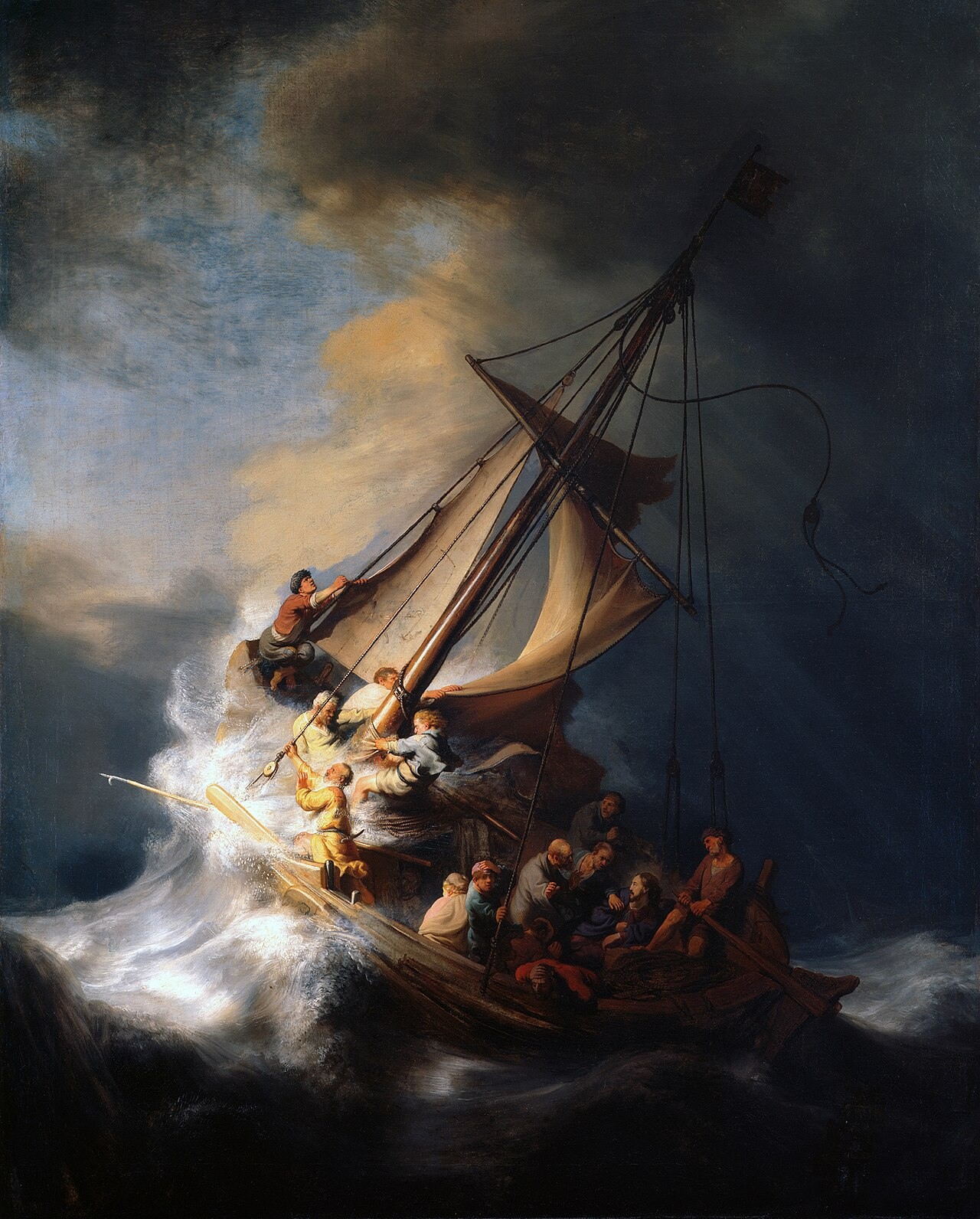
The Rembrandt storm painting presents a boat under pressure from waves, with figures spread across the deck and rigging. The surviving reproduction allows a reader to see the subject and composition. It is also evidence of how much the loss of the original matters. A reproduction cannot supply the scale, surface or material condition of a work that has been missing for decades. The gallery labels the image as a reproduction so its appearance cannot be mistaken for a photograph of a recovered canvas. [1] [2]
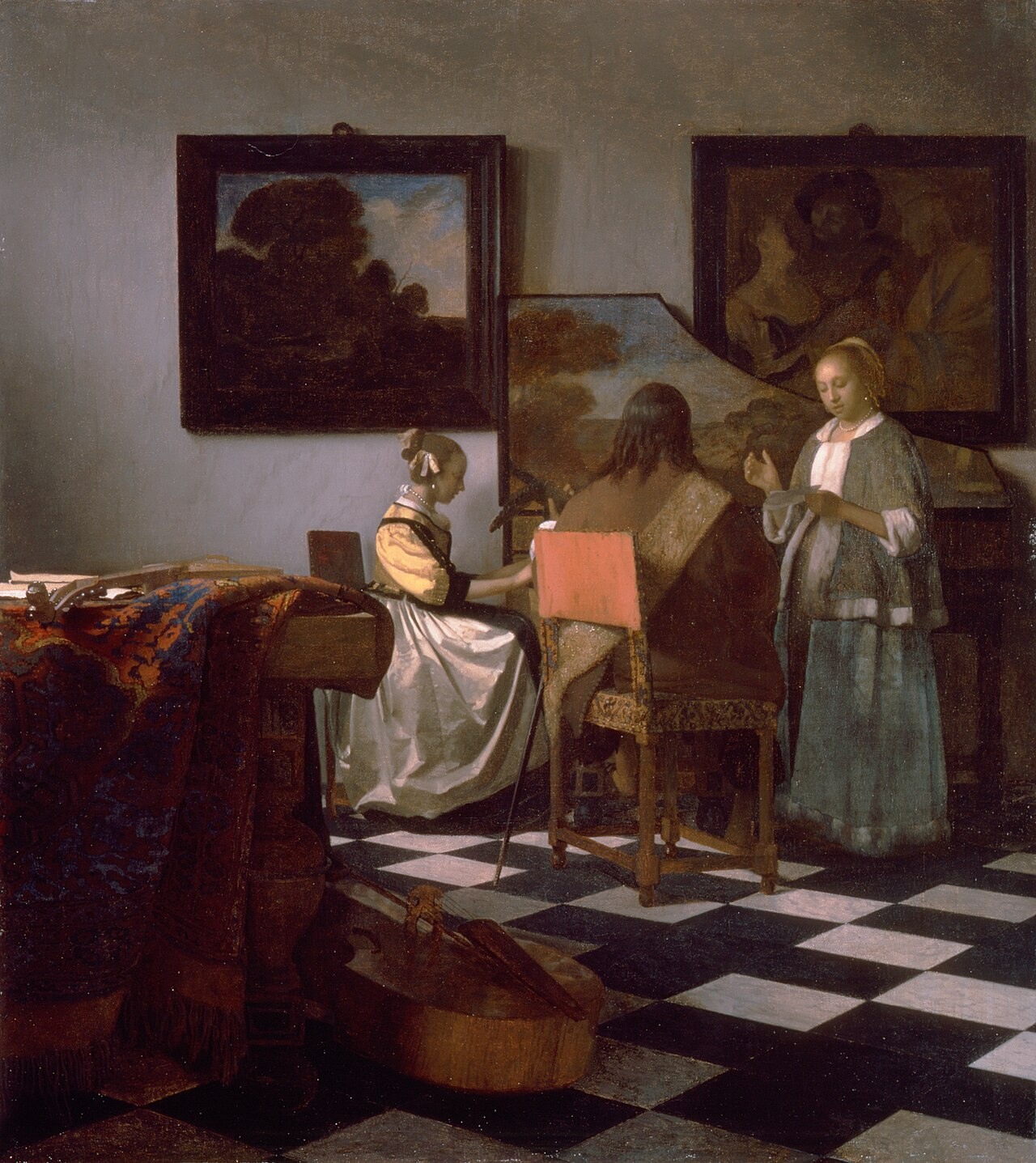
The Vermeer is quieter in subject. Three people are gathered around music in an interior. Because the museum can identify the painting by artist, image, dimensions and collection history, investigators can circulate more than a title. The object that would have to be authenticated if it surfaced is the specific painting formerly held by the museum. A copy, altered image or claim about a similar painting would need independent examination. [1] [2]
The names can matter in an investigation like this. The small Rembrandt taken from the Dutch Room was an etching, distinct from the two large paintings associated with him in the same room. A black-and-white reproduction of the etching and a reproduction of the storm painting describe very different physical objects. A description that mentions only a missing Rembrandt would be too imprecise to serve as a recovery record. The FBI’s notice presents separate identifying details for the works. [1] [2]
The works people are less likely to recognize
The five Degas works from the Short Gallery included two different drawings cataloged as Study for the Programme, along with Leaving the Paddock, Procession on a Road near Florence and Three Mounted Jockeys. The same room lost a bronze eagle finial from a historic flag display. Édouard Manet’s Chez Tortoni came from the Blue Room downstairs. Together with the six Dutch Room objects, these make up the museum’s inventory of thirteen missing works. The bronze, finial and works on paper are part of the same recovery effort. [1] [2]
The museum’s account describes movement sensors providing a guide to the thieves’ activity in much of the building. In the Blue Room, the absence of an expected signal complicates the account of the Manet’s removal. The museum’s audio walk describes the distinction as a puzzle. A gap in sensor data cannot show whether someone avoided a detector, moved an object at a different time or passed through a place that did not register the movement. The map identifies the missing Manet and that gap without inventing a route through the room. [1] [3]
The inventory, room by room
Six objects came from the Dutch Room. The four paintings were Rembrandt’s Christ in the Storm on the Sea of Galilee and A Lady and Gentleman in Black, Vermeer’s The Concert and Govaert Flinck’s Landscape with an Obelisk. The other two objects were Rembrandt’s small etching Portrait of the Artist as a Young Man and a bronze Chinese gu from the Shang dynasty. These objects have different physical forms. The size and medium of the etching and the vessel make a description of the missing paintings alone inadequate as a recovery list. [1] [8]
Six more objects came from the Short Gallery. Five were by Edgar Degas: Leaving the Paddock, Procession on a Road near Florence, Three Mounted Jockeys, and two distinct studies for the Programme de la Soirée artistique du 15 juin 1884. The sixth was a bronze eagle finial associated with a Napoleonic military standard. The duplicate title in the inventory identifies two drawings. The Justice Department’s list distinguishes them by the paper and degree of finish. [1] [8]
The thirteenth object was Édouard Manet’s Chez Tortoni, a small oil painting from the Blue Room. The museum describes the theft of the Manet alongside a gap in the movement record for that room. The gallery’s photographic reproductions help readers see some of the works before they were taken. The museum and Justice Department inventories are the references for identifying the complete set. [1] [3] [8]
Rembrandt · Image source · Public domain


Departure and discovery
The museum places the men’s departure at about 2:45 a.m. It says they made two trips carrying works to their car. The guards remained restrained until police arrived in the morning. That left an interval between the departure and the beginning of the response in which the works could have been moved. The record establishes the interval. It does not establish how far the car went or what happened to each item once it left the museum. [1]
An inventory was essential because a scene with empty frames does not automatically describe the whole loss. A small item may be missing from a surface rather than an obvious hanging space. An object may have been taken out of its frame while the frame remained behind. By comparing the galleries with the collection record, staff could identify what was gone and provide a description usable by investigators. The modern reproductions and inventory are presented separately from the explanatory diagrams. [1] [2]
The museum’s account places the activity inside at about eighty-one minutes. That estimate fixes a span between entry and departure. It does not give the same precision for each piece. The Dutch Room and Short Gallery can be named from where the missing objects belonged. The Manet loss is documented even though the museum describes a gap in the corresponding movement record. The frames and the sensor chronology are independent ways to orient a visitor, with different amounts of detail. [1] [3]
A possible lead from the preceding day
In 2015 the FBI released security footage taken before the burglary. It showed a vehicle near a rear entrance and an unidentified man being let inside. Agents said the car fit a general description associated with the later event. They requested assistance identifying the man and vehicle. The earlier footage and the theft were separate events. A similar car and a visit to the same entrance can justify a request for information without establishing that the person in the video was one of the thieves. [4]
The FBI also made public assessments about the investigation in 2013, including its belief that art had moved through Connecticut and the Philadelphia area. Those were investigative assessments. The consulted record does not document a recovered object at either place. A map pin can show an agency’s stated area of interest, but it would be misleading to draw a verified path out of Boston from those statements. The entries use regional context and link to what the FBI actually said. [5]
That 2013 announcement also illustrates why the date of a lead matters. The agency was describing a view formed years after the theft, using information gathered during an investigation. It did not issue a tracking record dated to the moment the car left the museum. The 2015 release pursued a different question by asking people to identify a visitor and vehicle seen before the theft. The two announcements can coexist without the earlier footage proving the later geographic assessment or vice versa. [4] [5]
What the FBI has disclosed about movement after Boston
In 2013 the FBI said it believed it knew who the original thieves were and that some of the art had moved through Connecticut and the Philadelphia area. The announcement also described information that some pieces had been offered for sale in Philadelphia. Those statements report what agents believed their investigation had established by that point. A place mentioned in an agency briefing carries a different kind of certainty from an object documented as recovered there. [5]
The FBI’s later public notice describes the works as separated after the robbery and potentially located far from Boston. In the FBI’s podcast, investigators also discuss leads concerning Maine and other locations. The agency continues to ask for help identifying the works. The statements can be read as snapshots of the search, rather than combined into a single documented route for all 13 objects. A canvas, a sheet of paper and a bronze object can circulate independently. [2] [7]
The 2015 release of the prior night’s security footage likewise had a limited purpose. Agents wanted help identifying an earlier visitor or the car shown with him. The release describes the footage as low resolution. The potentially useful comparison concerns the entrance and the general description of a vehicle. Identification of a person in the earlier footage would be one lead for investigators to assess. The chronology leaves that visit in its own time slot. [4]
What the reward is for
The museum offers a reward of up to ten million dollars for information leading to the recovery of the works in good condition. It describes a share for information resulting in the return of individual works or groups. The reward is intended to make it possible to act on information about a single object even if a tip cannot account for the entire theft. The FBI continues to list the stolen works. No reviewed announcement establishes that any of the thirteen has been recovered. [1] [2]
The trustees’ January 2018 statement places the current offer in a longer history. It says the museum raised the reward from one million to five million dollars in 1997, and that the board voted to extend the ten-million-dollar offer in 2018. A reward announcement documents the terms of a recovery effort. It does not establish the sale value of a missing work or a payment to someone who supplied a lead. [6]
In a case with so much public attention, a name attached to a theory can be easier to repeat than the facts underlying it. The publicly established evidence supports a reconstruction of the entry, the restraint of the guards, the loss of the works and some movements inside the building. It supports investigative leads beyond the museum. The identity of the men and the current location of the works remain unresolved in the record used here. [1] [2] [4] [5]
The empty frames do something the first inventory could not. They let later visitors see where a work belonged in the collection, even though the work itself is absent. The gallery pairs the present-day setting with reproductions of two missing paintings. The map follows documented events and marked leads. A reader can see what was taken without mistaking the certainty of the inventory for certainty about where the objects went. [1] [2] [3]
Johannes Vermeer · Image source · Public domain


What would count as a recovery
A lead about a missing work could begin with a photograph or an account of how it changed hands. For investigators, the important question is whether the object can be authenticated and returned safely. A familiar subject or title alone has little value because there are reproductions, related works and other objects of the same type. The museum’s inventory supplies images and descriptions that allow a lead to be compared with a particular missing object. The inventory makes this distinction concrete. Two separate Degas studies share the same title. [1] [2] [8]
The FBI public notice lists a museum reward of up to $10 million for information leading to the safe return of the works in good condition. The museum describes apportioned rewards for individual works and a separate $100,000 offer for information leading to return of the eagle finial. The FBI makes clear that the museum administers the terms. The museum provides a direct contact channel for information about the objects. [1] [2] [7]
The empty frames on view today give the investigation a visible reference point. The photograph on this page shows them in 2018, well after the police response. A frame records where a painting once belonged in the room. A recovery would establish something entirely different: that a specific work had been found and authenticated. As of this review, the museum’s public list still contains all 13 works. [1] [2] [7]
Look closer · 10 visuals
Inside the evidence.
Open a visual to explore what it contributed to the case—and the limits of what it shows. Photographs, historical reproductions and original illustrations are individually labeled. Open the notes for each image’s source, credit, and limitations; setting photographs do not depict crime scenes.
Entry under false authority
Original editorial illustration — not an actual evidence photograph or exhibit.
Read the evidence notes
The uniforms helped the men gain admission.
The reconstruction stops at what guards and records can support.
The Dutch Room inventory
Original editorial illustration — not an actual evidence photograph or exhibit.
Read the evidence notes
The room lost works in several media.
The diagram is an inventory aid, not a photograph.
What sensors can show
Original editorial illustration — not an actual evidence photograph or exhibit.
Read the evidence notes
Sensors supported the chronology in much of the museum.
A gap cannot establish a precise route.
Other missing objects
Original editorial illustration — not an actual evidence photograph or exhibit.
Read the evidence notes
The search extends beyond the best-known paintings.
Each object would need to be authenticated if found.
The earlier security footage
Original editorial illustration — not an actual evidence photograph or exhibit.
Read the evidence notes
Agents released footage from before the theft.
A similar vehicle does not identify a thief.
A lead versus a recovery
Original editorial illustration — not an actual evidence photograph or exhibit.
Read the evidence notes
FBI statements describe possible movement.
No reviewed source establishes an object recovered along that route.
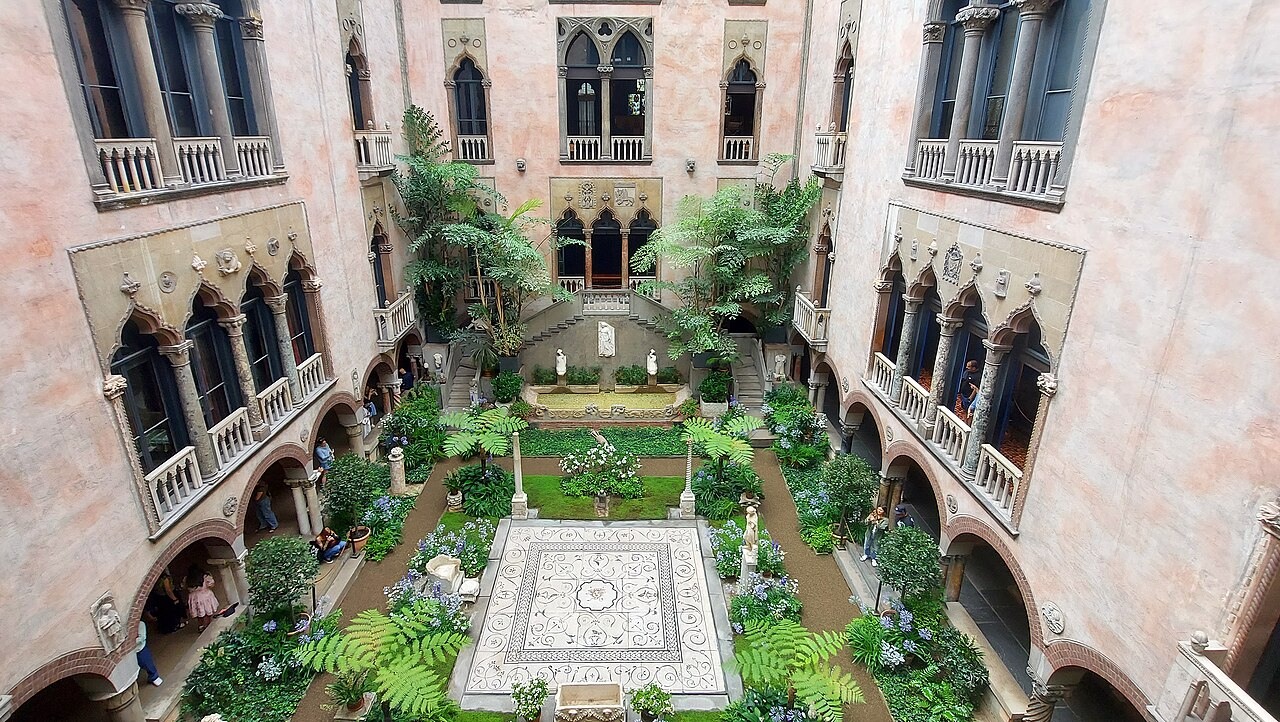
The interior courtyard at the Isabella Stewart Gardner Museum
Setting photograph for geographic context.
Read the evidence notes
The interior courtyard at the Isabella Stewart Gardner Museum. The image does not depict the crime or an evidence exhibit.
The image does not depict the crime or an evidence exhibit. The source and reuse terms are linked below.
P. Hughes · Image source · CC BY 4.0
Rembrandt’s Christ in the Storm on the Sea of Galilee
Public-domain reproduction of the missing painting.
Read the evidence notes
Rembrandt’s Christ in the Storm on the Sea of Galilee. A digital reproduction of the historical artwork. The original remains missing.
A digital reproduction of the historical artwork. The original remains missing. The source and reuse terms are linked below.
Source 1 ↗ · Rembrandt · Image source · Public domain
Johannes Vermeer’s The Concert
Public-domain reproduction of the missing painting.
Read the evidence notes
Johannes Vermeer’s The Concert. A digital reproduction of the historical artwork. The original remains missing.
A digital reproduction of the historical artwork. The original remains missing. The source and reuse terms are linked below.
Source 1 ↗ · Johannes Vermeer · Image source · Public domain
The empty Rembrandt frames
Photograph taken in the Dutch Room in 2018.
Read the evidence notes
The frame at left held A Lady and Gentleman in Black. The frame at right held Christ in the Storm on the Sea of Galilee.
The image shows the frames as displayed years after the theft.
Source 1 ↗ · Chris Dignes · Image source · Public domain dedication

★ Key evidence used in a conviction · ✓ Exclusion or reversal · ◇ Disputed evidence · ⊘ Excluded at retrial · ◆ Identity / investigative finding, not a conviction. A symbol does not mean one item proved the whole case.
Follow the locations
Put the story on the map.
Follow the dated entries, then select an event to find its regional setting. Shared-location pins open a group of events. Evidence symbols identify important findings and their limitations.
Open the map in its own window ↗Sources & further reading
- Isabella Stewart Gardner Museum · Theft recordTheft chronology, inventory, recovery status and reward.
- FBI · Stolen museum artwork noticeOfficial list and continuing public notice.
- Gardner Museum · Theft audio walk transcriptMuseum interpretation, sensor limits and empty frames.
- FBI · release of historical security footageFootage from before the burglary and unidentified person and vehicle.
- FBI · 2013 investigation updateAgency’s stated geographic leads, without documented recovery.
- Gardner Museum trustees · reward extensionReward history and extension.
- Inside the FBI · The Isabella Stewart Gardner Museum HeistFBI and museum officials discuss the recovery investigation, the empty frames and reward terms. Lead assessments are attributed.
- U.S. Attorney’s Office · Stolen artwork inventoryIdentification, media and dimensions context for the 13 missing works.
Editorial review: 2026-11-11 · 2520 words