A winning piece could be genuine and still have been taken out of the game before any customer had a chance to find it. That was the central fact behind the federal investigation into several McDonald’s promotions. Jerome Jacobson, the contractor’s security director, pleaded guilty. In a separate appeal, the Eleventh Circuit vacated four other defendants’ convictions and ordered acquittals because the government failed to prove they joined the charged conspiracy. Possessing a genuine winning piece could establish what someone held. The prosecution still had to show what that person knew and agreed to do. [1] [2] [3] [5]
Case brief
Jacksonville and Lawrenceville, Florida · 2001
- Recorded outcome
- Jerome Jacobson pleaded guilty and received 37 months. In Chandler, the Eleventh Circuit vacated four other convictions and directed acquittals.
Key moments
People in this case
- Jerome Jacobson
Pleaded guilty in the promotional prize fraud
Photo at source · Milwaukee Journal Sentinel via Imagn Images and Reuters Connect
The Bushranger · Image source · CC BY-SA 4.0

The contractor entrusted with the pieces
McDonald’s used games to draw customers to its restaurants. Customers collected pieces distributed through the promotions. Some pieces were worth modest prizes, while rarer pieces represented substantial awards. Simon Marketing operated the promotions for McDonald’s. Jerome Jacobson worked in security for Simon and had responsibilities involving distribution of high-value pieces. That position gave him access to pieces before they were supposed to reach the public. [1] [2]
For the promotion to work as advertised, the rare pieces needed to enter the ordinary distribution system. Authentic printing and a valid claim form could verify that a piece was meant to win. They could not by themselves show that the piece had been found on food packaging or obtained through another authorized channel. The fraud exploited that difference. Someone could bring the company a real ticket and a false story about how it came into their hands. [1] [2]
The piece and the claim traveled separately
Federal authorities alleged that Jacobson diverted high-value pieces and passed them through intermediaries. A recruiter could find someone to present a piece and claim the prize. Part of the money could then move back to the recruiter and Jacobson. The person at the beginning of the chain had a reason to avoid appearing repeatedly as a winner. A claimant might see only a piece and the person supplying it. Whether the claimant also knew it was stolen became a central question when some cases went to trial. [1] [2]
Following the path of one piece was a different investigative task from proving a single conspiracy involving everyone. The government could trace the end of the chain through a claim and prize payment. It could examine testimony or records suggesting who supplied the piece or shared in the prize. A common source could explain similarities among claims. To establish that a person joined the conspiracy charged, prosecutors also had to show a knowing agreement rather than merely a connection to the same source. [1]
Operation Final Answer becomes public
In August 2001 the FBI and Justice Department announced arrests in a case they called Operation Final Answer. They alleged that more than thirteen million dollars in high-value prizes had been corruptly claimed in the conduct described at that stage. This was the government’s initial account and dollar figure, not a final calculation of loss against every person investigated. The investigation concerned multiple promotions, including Monopoly and other games run through the same contractor. [2] [3]
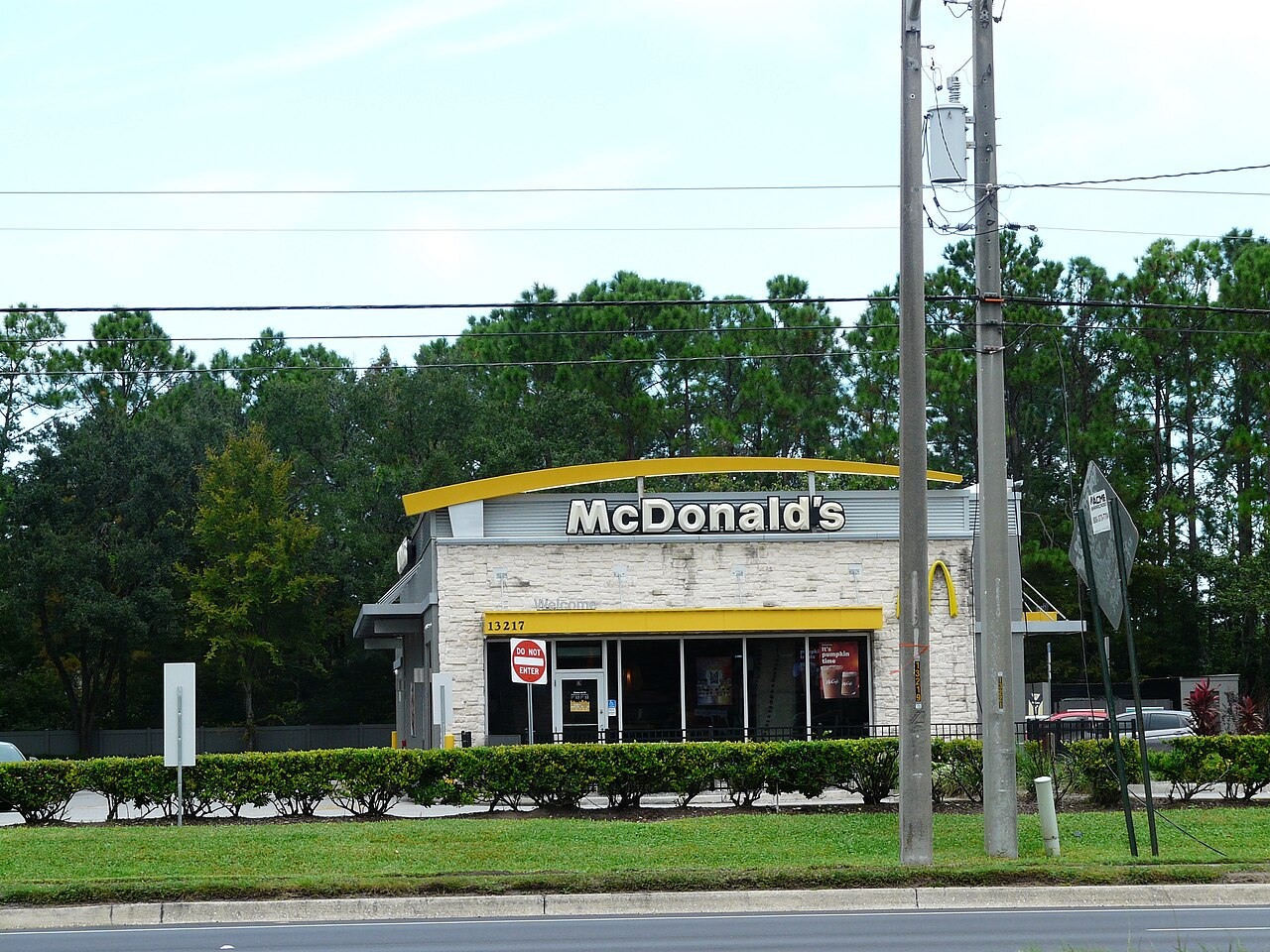
The Jacksonville division of the U.S. Attorney’s Office handled the criminal case. In December a grand jury there returned an indictment naming forty-three defendants. The allegations described nationwide distribution and claims. Jacksonville is marked as the court venue. The fact that prosecutors brought the case there does not make a particular Jacksonville restaurant a location where any piece was diverted or claimed. The restaurant photograph supplies setting only. [1] [2]
The early federal account identified Simon’s office in Lawrenceville, Georgia, where Jacobson worked. It also distinguished the company that hired the contractor from the people accused of diverting the prizes. McDonald’s could make payments on facially genuine claims without those payments explaining how a piece arrived at the claimant. Investigators could compare where pieces were supposed to go with the connections among people who submitted them. The government’s theory concerned what happened before the piece reached the ordinary promotion, then how the later claim completed the alleged transaction. [1] [2] [3]
PicoOrdinalo · Image source · CC BY-SA 4.0

Jacobson’s plea
Jacobson pleaded guilty in April 2002 to conspiracy and mail fraud, as the later federal appellate record describes. He received thirty-seven months in prison in the sentencing reported in January 2003. That disposition establishes his own criminal responsibility under the plea. It did not determine what each person downstream had understood about a particular ticket. Prosecutors still had to prove the required elements against people who went to trial. [4] [5]
The fact that Jacobson worked for the contractor rather than an individual restaurant was central to how the conduct affected the game. The relevant access came before an ordinary customer encountered the promotion. A customer might carefully follow the rules and have no way to know whether a prize advertised as available was already diverted. A person who accepted a piece through an intermediary had a different problem: knowing the person who handed over the piece did not automatically tell them who first took it. [1] [2]
Four verdicts come under review
George Chandler, Jerome Pearl, Kevin Whitfield and John Henderson were convicted of conspiring to commit mail fraud. The government had argued that the defendants misrepresented themselves as legitimate winners and that it need not show they knew the pieces were stolen. The defense challenged that theory. The game rules were important to eligibility for a prize. The court of appeals distinguished those private rules from the elements of a federal conspiracy offense. [1]
Late in the trial the jury was instructed that it would need to find that the defendants knew the pieces were stolen or unlawfully acquired. By then much of the evidence had been offered under the earlier theory. On appeal the judges concluded that the evidence did not establish the knowledge and agreement necessary for the conspiracy charged. The court also considered whether the proof showed one common scheme or a series of separate transactions involving a common person. [1]
One dispute concerned the contest’s published instructions. Prosecutors identified channels such as a food purchase or a request for a game piece. The defense pointed out that the terms did not expressly forbid receiving one from another person and that pieces were publicly traded. Whether a transfer made someone ineligible for a payout was different from whether that person knew the piece was stolen. The appeals court’s analysis made the legal consequences depend on the agreement and knowledge alleged in the criminal case, rather than on how the government interpreted a contest term. [1]
The question of one conspiracy can be illustrated by a set of people who each deal with the same supplier. Each may have a reason to complete a transaction. One person’s success does not necessarily help another’s, and each may know nothing of the others. A common supplier explains how the transactions are connected from the supplier’s point of view. It does not establish that everyone downstream agreed to the same enterprise. The court found the proof of a common agreement insufficient as to the appellants. [1]
The Eleventh Circuit vacated the convictions and directed entry of judgments of acquittal for those four people. That outcome did not invalidate Jacobson’s guilty plea. It meant the verdicts against the four appellants could not be sustained on the indictment and evidence in their case. A timeline that ends at the jury verdict would leave readers with four convictions the court directed to be replaced. [1] [4]

Quintin Soloviev · Image source · CC BY 4.0

A different case brought by a competitor
A Burger King franchisee later sued McDonald’s, alleging that advertising about the chance to win diverted business from its restaurants. In 2007 the Eleventh Circuit affirmed dismissal of the franchisee’s false-advertising claim under the standing analysis used in that case. The suit concerned competition and a claimed commercial injury. It was a different proceeding from the prosecution of Jacobson and the four defendants’ appeal. Its description of the alleged losses and scheme should be read in that procedural setting. [4]
The competitor’s theory required it to connect an advertising claim to its own economic injury. That placed the legal emphasis on who was positioned to sue and how directly the alleged conduct affected the party bringing the claim. In the criminal appeal, the central question was what the four appellants knowingly agreed to do. The same promotion appears in both opinions, but the judges were evaluating different relationships and different remedies. [1] [4]
The civil opinion describes additional allegations about the promotions and uses a different figure for the value of diverted prizes. The dollar amounts differ in part because the records were compiled for different proceedings and at different times. The batch’s timeline identifies the thirteen-million-dollar figure as part of the initial federal announcement. It does not convert the figures into a verified estimate of what every customer collectively lost. [2] [4]
The underlying scheme and the overturned convictions belong in the same story because they answer different questions about the same chain. Jacobson’s position supplied access to real pieces, his plea resolved charges against him, and the company made prize payments on claims it received. The government’s attempt to establish what four particular people knew produced a different result. The evidence gallery follows a piece from authorized distribution to a contested claim, and follows the verdicts through the court that reviewed them. [1] [2] [4]
Look closer · 9 visuals
Inside the evidence.
Open a visual to explore what it contributed to the case—and the limits of what it shows. Photographs, historical reproductions and original illustrations are individually labeled. Open the notes for each image’s source, credit, and limitations; setting photographs do not depict crime scenes.
The point of diversion
Original editorial illustration — not an actual evidence photograph or exhibit.
Read the evidence notes
The contractor handled the high-value pieces.
A genuine piece may still have an unlawful source.
A piece and its proceeds
Original editorial illustration — not an actual evidence photograph or exhibit.
Read the evidence notes
Authorities described pieces and money moving through intermediaries.
The chain does not establish what every participant knew.
The government’s early total
Original editorial illustration — not an actual evidence photograph or exhibit.
Read the evidence notes
The 2001 announcement described its initial estimate.
The figure is not a final restitution total.
Proof of an agreement
Original editorial illustration — not an actual evidence photograph or exhibit.
Read the evidence notes
The court distinguished separate links from agreement to one conspiracy.
Acquiring a piece does not alone prove knowledge of theft.
Two criminal outcomes
Original editorial illustration — not an actual evidence photograph or exhibit.
Read the evidence notes
The Chandler decision affected the four appellants.
It did not undo Jacobson’s plea.
The franchisee’s claim
Original editorial illustration — not an actual evidence photograph or exhibit.
Read the evidence notes
The 2007 civil case concerned a competitor’s claimed injury.
It did not adjudicate each customer’s loss.
A McDonald’s restaurant on Atlantic Boulevard in Jacksonville
Setting photograph for geographic context.
Read the evidence notes
A McDonald’s restaurant on Atlantic Boulevard in Jacksonville. The pictured restaurant is unrelated to the documented fraud.
The pictured restaurant is unrelated to the documented fraud. The source and reuse terms are linked below.
The Bushranger · Image source · CC BY-SA 4.0
The Bryan Simpson United States Courthouse in Jacksonville
Setting photograph for geographic context.
Read the evidence notes
The Bryan Simpson United States Courthouse in Jacksonville. The present courthouse provides city context. The building postdates the original trial.
The present courthouse provides city context. The building postdates the original trial. The source and reuse terms are linked below.
PicoOrdinalo · Image source · CC BY-SA 4.0
Jacksonville’s skyline and the St. Johns River
Setting photograph for geographic context.
Read the evidence notes
Jacksonville’s skyline and the St. Johns River. The image does not depict the crime or an evidence exhibit.
The image does not depict the crime or an evidence exhibit. The source and reuse terms are linked below.
Quintin Soloviev · Image source · CC BY 4.0
★ Key evidence used in a conviction · ✓ Exclusion or reversal · ◇ Disputed evidence · ⊘ Excluded at retrial · ◆ Identity / investigative finding, not a conviction. A symbol does not mean one item proved the whole case.
Follow the locations
Put the story on the map.
Follow the dated entries, then select an event to find its regional setting. Shared-location pins open a group of events. Evidence symbols identify important findings and their limitations.
Open the map in its own window ↗Sources & further reading
- United States v. Chandler · Eleventh CircuitIndictment, trial, knowledge and agreement issues, vacatur and acquittal orders.
- FBI · promotional prize case arrest announcementInitial allegations, Simon office, federal venue and prize estimate.
- U.S. Justice Department · Operation Final Answer remarksCharging stage explanation of alleged chain and case announcement.
- Phoenix of Broward, Inc. v. McDonald’s Corp. · Eleventh CircuitCivil action, criminal plea history and dismissal of the franchisee’s claim.
- Los Angeles Times · Jacobson sentencing reportThirty-seven-month sentence in Jacksonville.
Editorial review: 2026-11-09 · 1528 words