In 1986, detectives in Los Angeles thought Sherri Rasmussen had surprised burglars. Stereo equipment had been moved toward a door, a car was gone, and there were signs of a struggle. A criminalist swabbed an injury on Rasmussen’s arm. Years later, the lab developed a DNA profile from saliva on that swab. The profile gave detectives a way to compare biological samples. More than two decades later, they obtained a sample from a cup and straw discarded by a detective who worked in their own department. [1]
Case brief
Van Nuys and Los Angeles, California · 1986
- Recorded outcome
- Stephanie Lazarus convicted of first-degree murder and sentenced to 27 years to life. Judgment affirmed in 2015. An October 2026 parole denial was reported.
Key moments
People in this case
- Sherri Rasmussen
Murder victim
Photo at source · Oxygen · case photograph - Stephanie Lazarus
Convicted of first-degree murder
Photo at source · CBS News · Associated Press courtroom photograph

Platinummedia · Image source · CC BY-SA 4.0

The morning she stayed home
Sherri worked as a nurse at a Glendale hospital and lived with her husband, John Ruetten, in the San Fernando Valley. On February 24, 1986, John left for work shortly after seven. Sherri called in sick. John and Sherri’s sister tried calling during the day and could not reach her. A neighbor noticed the garage open that morning. When John returned in the evening, Sherri’s BMW was gone and glass from a broken patio door was on the driveway. Inside he found Sherri dead. [1]
The investigation began with events that could be placed in time and some that could not. The family’s calls helped establish when Sherri stopped answering. The neighbor’s account established that the garage stood open well before John came home. Neither observation showed who entered the residence. The car was found in March a short distance away with its keys still in the ignition. It had not been stripped. That was consistent with someone taking it for transportation or to alter the scene, as well as with an interrupted theft. [1]
Detectives saw stereo components stacked near the garage and a drawer emptied in the living room. Other valuables remained undisturbed. The original burglary theory was a way to explain those facts, alongside the struggle and the missing car. Years later a prosecution analyst argued that the disruption was arranged to look like theft. That interpretation, too, had to be tested. A stack of equipment shows what was moved. It does not by itself tell a detective why it was moved or who moved it. [1]
An injury that preserved biological material
The medical examination established that Sherri had been shot. It also documented an apparent bite injury on her forearm. The pathologist’s examination indicated that the injury occurred around the time she died. A criminalist collected swabs at the scene. Material from the injury went into storage with evidence that included fingernail material and samples from other places in and around the residence and vehicle. The sample’s significance would depend on both what a future lab could find and the quality of the record showing where the swab came from. [1]
The eventual trial used biological testing of the material, not an identification based on comparing tooth shapes. A forensic dentist discussed the appearance of the injury, and subsequent testing detected a saliva-associated enzyme on a swab. The DNA comparison focused on cells in material collected from the area. Those findings answered different questions. The enzyme supported the presence of saliva. The genetic markers allowed a comparison with a known sample. The timing of the injury, assessed medically, helped explain why a DNA association there could have particular significance. [1]
The crime scene contained other biological material. Testing of the car and items inside the home did not simply produce the same profile everywhere. Some samples matched or were consistent with Sherri, some were mixtures, and some could not be attributed to a known person. The value of the arm sample depended on its specific relationship to the injury, rather than on a general claim that every mark in the room belonged to one assailant. [1]
A female profile and an unsuccessful database search
One part of the relationship evidence placed Lazarus and Sherri in the same setting before the murder. The court recounts testimony about Lazarus confronting Sherri at the Glendale hospital where Sherri worked. John’s history with Lazarus and the testimony about his engagement gave the state a reason to revisit the encounter. The meeting did not place Lazarus at the condominium on February 24. It supplied context the burglary theory had not accounted for, while the scene swab supplied an independent means of testing the new focus. [1]
In 2005, a criminalist developed a major profile from the swab. It was female. A lesser component was consistent with Sherri’s profile, though there was not enough material for a complete comparison of that component. Investigators submitted the major profile to a national database and did not obtain a match. This was an investigative lead with a limit. A profile can be suitable for comparison even when the relevant person is absent from a searchable database. [1]
By 2009, investigators were considering particular women who might have had a reason to harm Sherri. Stephanie Lazarus had known John before his marriage. She had joined the Los Angeles Police Department before the murder and was a detective by the time the investigation came back to her. Testimony about her earlier relationship with John gave police a reason to examine a name. It did not establish that she had been in Sherri’s home or committed the shooting. The swab gave detectives a way to test that possibility. [1]
They obtained a discarded cup and straw and developed a partial profile from them. At the locations where the lab obtained a reading, the profile matched the major profile from the injury swab. That comparison was important, but investigators did not treat it as the endpoint. They later obtained a known mouth swab from Lazarus and compared it with the preserved sample. The known sample allowed a more complete comparison than the discarded items. [1]
Skyfox11 at English Wikipedia · Image source · Public domain


The comparison grows stronger
The known swab matched the injury profile at all thirteen locations the first lab had tested from the scene material. An independent laboratory used the second swab from the injury and obtained a matching profile at fifteen locations. A defense representative was present for the testing described in the appellate record. The results gave prosecutors a way to show that the earlier comparison was not merely a coincidence at a few locations where the cup sample yielded useful readings. [1]
The independent lab also found some partial profiles under Sherri’s fingernails consistent with Lazarus. That evidence did not have the same specificity as the complete comparison from the injury. A small amount of material can transfer through ordinary contact or by touching an object. An account that combines every consistent profile into a single claim of certainty would conceal an important difference between the samples. The jury could consider the fingernail results without assigning them the weight of the principal DNA evidence. [1]
Firearms evidence supplied a different kind of connection. The ammunition was consistent with a type used by LAPD officers at the time. The prosecution also offered evidence about a revolver Lazarus reported stolen after the murder. The opinion describes class characteristics rather than a unique match to a recovered weapon. The ammunition could help a jury assess opportunity and the state’s account of the shooting, while still fitting more than one firearm. [1]
A detective is questioned at work
On June 5, 2009, detectives interviewed Lazarus and arrested her. The interview gave prosecutors her answers about John, Sherri, and events that had happened many years earlier. It also produced a legal dispute about whether she was in custody during the questioning and whether the tape could be played. The defense challenged the way investigators brought her to the interview location and argued that the circumstances should have triggered Miranda protections. The appellate court upheld the admission under its assessment of the record. [1]
Jurors convicted Lazarus of first-degree murder in March 2012. She received twenty-seven years to life. On appeal she challenged the decades of delay, searches, the interview, part of the DNA testimony, and limits on evidence about another burglary. The court affirmed in 2015. The decision did not say an old case is immune from a delay challenge. It considered what prejudice the defense could show and the reasons the prosecution could give for charging when it did. The development of the DNA evidence mattered to that analysis. [1] [2]

Amin Eshaker · Image source · CC BY-SA 3.0

A later decision about release
Parole proceedings occurred long after the conviction. Reporting describes Lazarus acknowledging the killing at a 2023 hearing, after the trial and direct appeal. That year a panel recommended release, and the board later blocked the grant. A panel denied parole in 2025 and another denied it in October 2026. A panel recommendation is not a release from custody, and the later admission was not evidence heard by the jury. [3] [4]
The map puts the burglary theory, the recovery of the car, the first useful profile and the subsequent comparisons in sequence. Sherri’s murder could appear to belong to a series of burglaries when all investigators had were the disturbed room and missing car. A swab collected the same day preserved another possibility. The location where the biological material was collected, and the later samples that matched it, gave a jury a way to assess a relationship between a particular person and the struggle. [1]
Look closer · 9 visuals
Inside the evidence.
Open a visual to explore what it contributed to the case—and the limits of what it shows. Photographs, historical reproductions and original illustrations are individually labeled. Open the notes for each image’s source, credit, and limitations; setting photographs do not depict crime scenes.
The burglary interpretation
Original editorial illustration — not an actual evidence photograph or exhibit.
Read the evidence notes
The scene initially appeared to suggest theft.
Those features could not independently establish a burglar’s identity.
The preserved sample
Original editorial illustration — not an actual evidence photograph or exhibit.
Read the evidence notes
Testing years later yielded a major female profile.
The evidence is biological, separate from any comparison of tooth shapes.
Comparing three samples
Original editorial illustration — not an actual evidence photograph or exhibit.
Read the evidence notes
The discarded items supplied a partial comparison; a known sample allowed fuller comparisons.
The first profile had fewer readable markers.
Nail samples versus saliva
Original editorial illustration — not an actual evidence photograph or exhibit.
Read the evidence notes
The two kinds of DNA findings had different specificity.
Partial consistency is not a unique identification.
The firearm evidence
Original editorial illustration — not an actual evidence photograph or exhibit.
Read the evidence notes
The evidence supported a firearm class and comparison.
It did not establish a unique match to a recovered gun.
Verdict and release decisions
Original editorial illustration — not an actual evidence photograph or exhibit.
Read the evidence notes
The conviction and parole process have separate dates.
A panel recommendation does not establish release.
Van Nuys Airport and the San Fernando Valley in 2021
Setting photograph for geographic context.
Read the evidence notes
Van Nuys Airport and the San Fernando Valley in 2021. The image does not depict the crime or an evidence exhibit. The airport provides neighborhood context only.
The image does not depict the crime or an evidence exhibit. The source and reuse terms are linked below.
Platinummedia · Image source · CC BY-SA 4.0
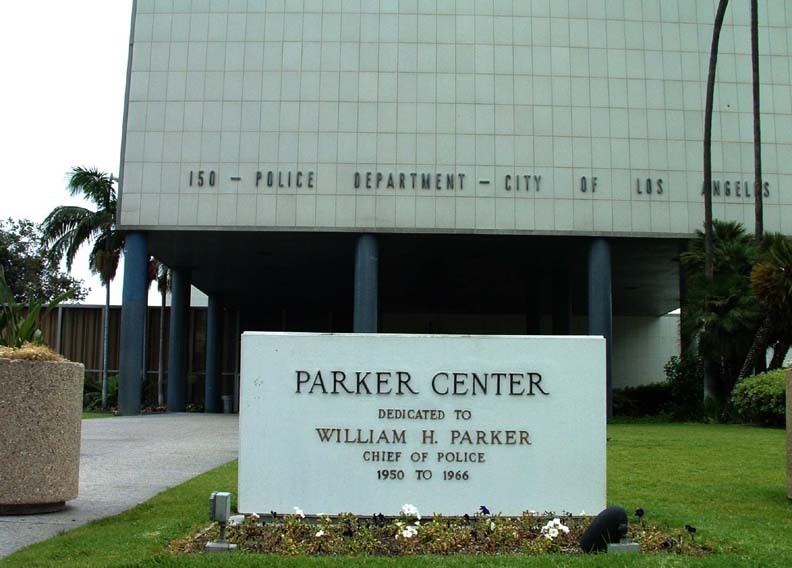
Parker Center, the former LAPD headquarters, in 2004
Setting photograph for geographic context.
Read the evidence notes
Parker Center, the former LAPD headquarters, in 2004. The image does not depict the crime or an evidence exhibit.
The image does not depict the crime or an evidence exhibit. The source and reuse terms are linked below.
Skyfox11 at English Wikipedia · Image source · Public domain
The Clara Shortridge Foltz Criminal Justice Center in Los Angeles
Setting photograph for geographic context.
Read the evidence notes
The Clara Shortridge Foltz Criminal Justice Center in Los Angeles. The image does not depict the crime or an evidence exhibit.
The image does not depict the crime or an evidence exhibit. The source and reuse terms are linked below.
Amin Eshaker · Image source · CC BY-SA 3.0
★ Key evidence used in a conviction · ✓ Exclusion or reversal · ◇ Disputed evidence · ⊘ Excluded at retrial · ◆ Identity / investigative finding, not a conviction. A symbol does not mean one item proved the whole case.
Follow the locations
Put the story on the map.
Follow the dated entries, then select an event to find its regional setting. Shared-location pins open a group of events. Evidence symbols identify important findings and their limitations.
Open the map in its own window ↗Sources & further reading
- People v. Lazarus · California Court of AppealInvestigation, trial evidence, DNA and affirmance.
- Los Angeles Times · first-degree murder verdictVerdict and victim name as reported.
- Los Angeles Times · parole grant blockedEarlier panel grant and board reversal.
- MyNewsLA · further parole denialReported October 2026 decision.
Editorial review: 2026-11-09 · 1515 words