The day after Sara Tokars was murdered, her cousin went looking for documents. Sara had copied records connected to her husband’s business and placed them with her sister. Now Mary Rose Taylor retrieved the papers, made another set of copies, and delivered them to police. Among them were records of offshore accounts and a banking license issued by Montserrat. Sara could no longer explain what she had discovered. The documents could still be examined. [1]
Case brief
Cobb County / Atlanta, Georgia · 1992
- Recorded outcome
- Federal convictions and life sentences affirmed in 1996; state murder conviction in 1997. Tokars’s death in custody was reported in May 2020.
Key moments
Case photographs
- Sara Tokars’s funeral
Archival photograph of the December 1992 service
Photo at source · Digital Library of Georgia · Atlanta Journal-Constitution archive
That small act of preservation would sit inside a much larger investigation: an Atlanta attorney, nightclub money, a middleman with his own criminal exposure, and a killing arranged while the husband was in another state. But the story begins with Sara’s attempt to leave a marriage and protect her relationship with her children. According to testimony later summarized by the federal appeals court, she feared that Fred Tokars would use his influence against her in a custody fight. [1]
On November 29, 1992, Sara was killed after returning to the family’s Cobb County home from Thanksgiving in Florida. Her two young sons were in the vehicle. The subsequent prosecutions established that their father had arranged her murder. The evidence, however, was more complicated than a single confession or an insurance policy: prosecutors had to connect instructions, intermediaries, movements, telephone calls, and the financial world Sara had begun to uncover. [1][3]
John Phelan · Image source · CC BY 4.0 · Original file; no edits.

A lawyer who understood the investigators
Fred Tokars had worked as an assistant district attorney before entering private practice. He also taught law-enforcement officers about money laundering. Those credentials mattered because his later prosecution concerned precisely the kind of hidden ownership and illicit money he could explain to an investigative audience. The director of the Georgia Police Academy testified about the courses he taught. A former office colleague described a booklet Tokars had written about offshore investment arrangements. [1]
The federal case did not accuse him merely of representing people charged with crimes. Lawyers routinely do that. Witnesses described his participation in their financial activities: organizing businesses, discussing the concealment of money, and helping put an apparently legitimate structure around proceeds from cocaine dealing. Those allegations became part of the criminal case on which jurors returned guilty verdicts. Keeping the distinction clear prevents a client’s wrongdoing from being treated as proof against a lawyer by association. [1]
Nightclubs formed part of the background. Prosecutors presented evidence that people with criminal records used others as the visible owners of businesses. James Mason, tried alongside Tokars in the federal case, was associated with several clubs. Witnesses described drug dealers supplying investment money while ownership documents and licensing arrangements presented a different picture. By 1992, investigators and civil litigants were asking questions about the same companies and assets. [1]
These overlapping demands were consequential. A business could be described one way to a creditor and another way to federal agents, but the explanations could eventually be compared. In August 1992, a major cocaine seizure led investigators toward a club called Diamonds and Pearls. An assistant U.S. attorney warned Tokars that his role in incorporating the club could create a conflict if the government sought its assets. His own paperwork was becoming relevant to investigations of his clients. [1]
What Sara knew—and what the record actually says
Sara had worked on accounts receivable in her husband’s office. A neighbor, Sarah Suttler, testified that Sara talked about divorce and, in the fall of 1992, believed she had found financial information that could help her keep her sons. Her sister Christine Ambrusko described Sara’s request that the copied documents be kept safe and given to police if something happened to her. These are witnesses’ accounts of Sara’s words, rather than a surviving interview in which Sara laid out every conclusion herself. [1]
That distinction matters because the papers and the statements performed different evidentiary jobs. A bank record could be examined for what it showed. A relative’s recollection could explain why the record had been copied, where it was kept, and why it reached investigators. Neither should be inflated into a claim that Sara had independently solved the entire federal case. She had preserved material that she considered important, and other people honored her instructions. [1]
The insurance evidence supplied another strand. In August 1989, Tokars had increased coverage on Sara from $250,000 to $1.75 million. An insurance increase years before a death would not by itself establish a murder plan. Its significance here came from Eddie Lawrence’s testimony that Tokars later offered him $25,000 and a share of insurance proceeds to have Sara killed. The policy amount and the alleged offer were related pieces of evidence, not interchangeable facts. [1]
The intermediary
Lawrence was a construction businessman who had become involved in counterfeiting and money laundering. He met Tokars through another associate while the Secret Service was investigating counterfeit currency. At trial, Lawrence described a relationship that extended beyond legal representation into businesses used to launder money. His own exposure gave the defense an obvious reason to scrutinize his account. [1]
According to Lawrence, Tokars began asking about killing someone in the summer of 1992 and specifically sought Sara’s death that September. Lawrence testified that Tokars resented what a divorce could cost him and kept pressing for the killing. He described threats against his own business if he did not cooperate. This was evidence attributed to a participant, tested in an adversarial proceeding; it was not a journalist’s access to Tokars’s private thoughts. [1]
Lawrence then approached Curtis Rower and offered him $5,000. That created a crucial separation between the person commissioning the crime and the person sent to the house. Physical distance could make Tokars look absent from the attack while leaving the question of who organized it untouched. The prosecution’s task was to establish the connection across those layers. [1]
Thanksgiving, two states, and a short meeting
Sara and the children drove to Florida for Thanksgiving. Tokars also traveled there, then returned before them. On the Sunday of Sara’s return, he met Lawrence at his law office and, according to Lawrence, discussed when she would arrive home. Tokars then checked into a hotel in Montgomery, Alabama, leaving his contact number with his answering service. Telephone evidence placed numerous calls among phones associated with the participants and the hotel that day. [1]
In Montgomery, Tokars visited Wilbert Humphries, a jailed client. Humphries later testified that he was surprised by the Sunday visit and that the meeting lasted about ten minutes. A real visit can still form part of an alibi arranged around a crime elsewhere. Prosecutors did not need to prove that the hotel stay or the jail meeting was imaginary; they argued that those verifiable movements fit the planning described by Lawrence. [1]
Back in Georgia, Lawrence took Rower to the Tokars residence. Sara arrived with the children. Rower forced her back into her vehicle, and she was shot. Lawrence and Rower later gave conflicting accounts about who handled the gun at the final moment. That disagreement should remain visible in a careful retelling, even though the broader prosecution established Tokars’s role in arranging the killing. [1]
The federal opinion records that the boys were present. Their presence explains the extraordinary harm without requiring a reconstruction of what they saw, imagined dialogue, or graphic detail. The evidentiary questions can be explained without turning the children’s experience into a suspense scene. [1]

Marc Merlin · Image source · CC BY-SA 4.0 · Original file; no edits.

The investigation moves inward
The copied documents reached police the following day. In early December, investigators interviewed Tokars in the presence of counsel. He discussed his clients, his business relationships, and Sara’s previous effort to seek a divorce. With his consent, police and federal agents searched the home and seized calendars covering several earlier years. The investigation was moving from the immediate attack toward the relationships and records surrounding it. [1]
Lawrence initially denied involvement when questioned. Police arrested Lawrence and Rower on December 23. Tokars’s relatives later testified about his reaction and his concern that investigators might make a deal with the men. Such recollections were one part of the record. An expression of fear is not a reliable standalone test of guilt, particularly during a murder investigation. Its significance had to be assessed alongside the documents, communications, and direct testimony about the plan. [1]
The case’s strength lay in that combination. Lawrence’s account identified the alleged instructions and payment arrangement. Telephone records supported contact during the relevant period. Humphries described the Alabama visit. Sara’s relatives explained the preserved papers. Business witnesses supplied the financial setting. Each strand answered a different question, and each had limitations. A call record, for example, does not disclose the words spoken on the call. [1]
Two prosecutions, separate records
A federal grand jury indicted Tokars and Mason in August 1993. The federal trial moved from Georgia to Birmingham, Alabama, because of pretrial publicity. Jurors convicted Tokars on the counts that remained after the trial judge dismissed some charges; he received concurrent life sentences on the racketeering, racketeering-related violence, and murder-for-hire counts. In September 1996, the Eleventh Circuit affirmed the convictions. [1]
The appeal addressed substantial disputes, including the admission of statements attributed to Sara, the handling of evidence, cross-examination, and the sufficiency of the government’s case. The appellate decision matters as a record of what was presented and how the convictions survived review. Its factual account is framed around the trial record, not a fresh investigation independently reinterviewing every witness. [1]
Georgia also prosecuted the murder. A 1994 state Supreme Court decision concerns the assignment of the judge in that capital case; it should not be mistaken for the final murder verdict. The Atlanta Journal-Constitution’s later reporting records Tokars’s state conviction in 1997. In May 2020, the newspaper reported that he had died in federal custody at 67, citing his attorney. Those later milestones belong beside the federal outcome rather than being compressed into one trial. [2][3]
The record Sara helped preserve
It is tempting to describe the offshore papers as the clue that solved everything. That would give a satisfying ending at the cost of accuracy. The records did not identify the gunman, record an order to kill, or erase the credibility questions surrounding participants who testified. What they did was preserve a part of Sara’s effort to understand and respond to the financial circumstances of her marriage. [1]
They also give her a place in the story beyond the moment of her death. Sara had sought information, confided in people she trusted, and arranged for material to survive her. Her family’s decision to take those instructions seriously brought the documents into an investigation that eventually exposed both a murder plan and the business relationships around it. The evidence gallery below separates those contributions, and the map follows the documented chronology without pretending to reconstruct the family’s private movements street by street. [1]
Look closer · 8 visuals
Inside the evidence.
Open a visual to explore what it contributed to the case—and the limits of what it shows. Photographs, historical reproductions and original illustrations are individually labeled. Open the notes for each image’s source, credit, and limitations; setting photographs do not depict crime scenes.
The papers Sara saved
Original editorial illustration — not an actual evidence photograph or exhibit.
Read the evidence notes
Sara’s sister and cousin described preserving and delivering offshore financial documents. The record gives Sara’s actions a place in the investigation.
The papers did not independently identify the gunman or prove every laundering allegation.
Three roles in the alleged plan
Original editorial illustration — not an actual evidence photograph or exhibit.
Read the evidence notes
Lawrence described instructions from Tokars and his own approach to Rower. The prosecution used participant testimony with other evidence.
The diagram shows the prosecution’s account of roles; it does not resolve every conflict between Lawrence and Rower.
A real trip, a disputed purpose
Original editorial illustration — not an actual evidence photograph or exhibit.
Read the evidence notes
The hotel stay and Humphries’s testimony about the short visit were evaluated against evidence of planning in Georgia.
Presence in another state did not answer whether Tokars commissioned a killing. This is not a route reconstruction.
What telephone records show
Original editorial illustration — not an actual evidence photograph or exhibit.
Read the evidence notes
Call records supported connections on the relevant day. Their significance came from the broader chronology.
A telephone log does not reproduce what was said or identify every person using a phone.
Insurance and the alleged offer
Original editorial illustration — not an actual evidence photograph or exhibit.
Read the evidence notes
The policy increase and Lawrence’s account of an offer including insurance proceeds formed separate strands of the state’s theory of motive.
An insurance policy alone is not proof of murder, and an offered sum is not proof of a completed payment.
Separate proceedings
Original editorial illustration — not an actual evidence photograph or exhibit.
Read the evidence notes
The federal verdict, federal affirmance and state murder trial belong to different proceedings.
The 1994 Georgia judge-assignment decision is not a murder verdict.
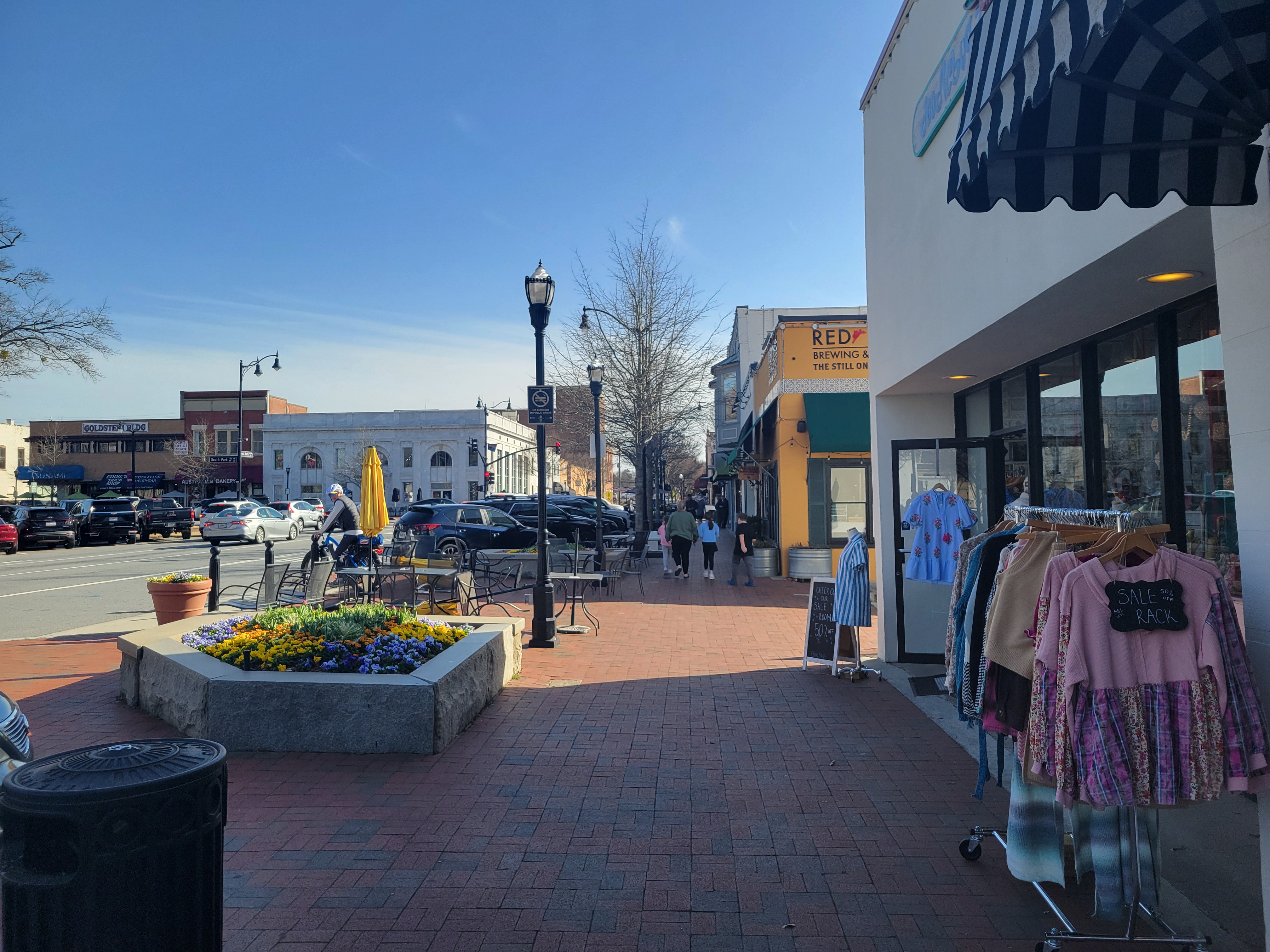
West Park Square in Marietta, Georgia
Geographic context photograph — not a crime-scene image.
Read the evidence notes
West Park Square in Marietta, Georgia. Present-day geographic context for Cobb County; not the Tokars home or a crime-scene photograph.
Original file; no edits. The source and reuse license are linked below.
John Phelan · Image source · CC BY 4.0
Atlanta skyline photographed in 2020
Geographic context photograph — not a crime-scene image.
Read the evidence notes
Atlanta skyline photographed in 2020. Geographic context for the law practice and financial investigation; not a view from the night of the murder.
Original file; no edits. The source and reuse license are linked below.
Marc Merlin · Image source · CC BY-SA 4.0
★ Key evidence used in a conviction · ✓ Exclusion or reversal · ◇ Disputed evidence · ⊘ Excluded at retrial · ◆ Identity / investigative finding, not a conviction. A symbol does not mean one item proved the whole case.
Follow the locations
Put the story on the map.
Follow the dated entries, then select an event to find its regional setting. Shared-location pins open a group of events. Evidence symbols identify important findings and their limitations.
Open the map in its own window ↗Sources & further reading
- United States v. Tokars, 95 F.3d 1520 — Eleventh CircuitTrial evidence, copied documents, calls, alibi, federal charges, sentences and affirmance.
- Tokars v. Superior Court of Cobb County — Georgia Supreme CourtJudicial-assignment dispute in the separate pending state murder prosecution; not the final verdict.
- Fred Tokars, lawyer who set up murder of his wife, dies in prison — AJCLater state-trial context, federal conviction year and death as reported by his attorney.
Editorial review: 2026-09-30 · 1782 words