The first time the man came to the house, he brought an envelope for the rabbi. Carol Neulander let him inside, allowed him to use the bathroom, and later discovered that the envelope was empty. Her daughter Rebecca knew about the encounter because she had been speaking to her mother on the telephone. One week later, during another call, Carol said the same visitor was back. [1]
Case brief
Cherry Hill, New Jersey · 1994
- Recorded outcome
- Fred Neulander convicted in 2002; conviction affirmed in 2006 and post-conviction denial affirmed in 2016. Death reported April 2024.
Key moments
People in this case
- Fred Neulander
Convicted in Carol Neulander’s contract killing
Photo at source · 6abc Philadelphia · published photograph
The two conversations became part of a murder prosecution that took years to reach a verdict. They also offered something the central prosecution witness could not supply on his own: another person's account of the visits he described. Leonard Jenoff admitted helping kill Carol. He had also spent much of his life inventing achievements and identities. The case against Carol's husband would require jurors to decide where his lies ended and his account of the killing began. [1]
Prshopgirl · Image source · CC BY-SA 4.0 · Commons-provided image; no content edits.

A life beyond the synagogue
Carol had been married to Fred Neulander for twenty-nine years. They had three children, Rebecca, Matthew, and Benjamin. Fred was the senior rabbi at Congregation M'Kor Shalom in Cherry Hill, New Jersey. Carol had established the Classic Cake Company, later selling the bakery while continuing to manage it. Her work had its own routines, including evening meetings with the bakery's management staff. [1]
Those routines acquired a terrible significance. According to testimony later summarized by the appellate court, Fred knew that Carol sometimes brought bakery cash home in a burgundy purse. He also knew that their son Matthew worked Tuesday nights as an emergency medical technician. A Tuesday evening could leave Carol at home while Fred was visibly present at the synagogue and Matthew was at work. [1]
Prosecutors argued that the crime was arranged around that knowledge. The apparently ordinary details of a household—work schedules, a purse, who would answer the door—became evidence of planning. But the account of how those details were communicated came largely from Jenoff, a participant whose reliability would be tested throughout the case. [1]
A relationship approaching its deadline
Fred's relationship with radio broadcaster Elaine Soncini began after her husband's death in December 1992. Neulander had visited the dying man and officiated at his burial. He then pursued a relationship with Soncini that developed into an affair. By the following year, according to her testimony, they were seeing each other frequently. [1]
Soncini eventually wanted a different life. In the summer of 1994, she told Fred she would move on by the beginning of 1995. Their relationship could not continue indefinitely in secret. Fred resisted losing her, but also said discovery of his adultery could cost him his position at the synagogue. Soncini testified that he promised they would be together by her birthday that December. [1]
At home, the marriage was deteriorating. Matthew described a heated exchange on October 30, two days before the murder. Carol asked whether Fred wanted to save the marriage, seek counseling, or divorce. According to Matthew, his father said the relationship was over. That testimony established conflict inside the family; the prosecution still had to prove the much larger allegation that Fred had arranged a killing. [1]
The man with an invented résumé
Jenoff first approached Neulander in June 1993 for counseling. His life was unsettled: a marriage had broken down, his home had faced foreclosure, and he struggled with his sense of worth. He presented himself as someone with impressive experience in policing and intelligence work. Those claims were false. He had not lived the professional life he described. [1]
Jenoff testified that the rabbi nevertheless became an enormously important figure to him. They met, talked, and walked together around the synagogue parking lot. Jenoff also attended Alcoholics Anonymous meetings there on Tuesday evenings. His desire for approval became part of his explanation for agreeing to a crime. [1]
According to Jenoff, Fred first approached the subject through talk of an enemy of Israel, then identified the intended victim as his own wife. Jenoff said Fred offered $30,000 and promised an intelligence-service job. These were Jenoff's descriptions of an inducement, not evidence that any intelligence organization was involved. The prosecution's allegation was a domestic murder plot wrapped in a story designed to appeal to him. [1]
Jenoff brought in his younger roommate, Paul Daniels. He testified that he offered Daniels $7,500 to assist, and later gave him part of an initial payment. The promised total, the alleged advance, and the money passed to Daniels were different sums. Their significance lay in the testimony about an agreement, rather than in a single recovered payment receipt. [1]
The empty envelope
On October 25, 1994, Jenoff and Daniels went to the Neulander home. Jenoff's account was that they intended to kill Carol that evening. He carried an envelope as a reason to approach her and enter the house. Once inside, however, he could not find the purse he had been told to take. He abandoned the attempt. [1]
Rebecca's testimony placed her on the telephone with Carol during the visit. Her mother said a man was delivering a letter for Fred and wanted to use the bathroom. After he left, Carol called Rebecca back and mentioned the empty envelope. Rebecca could describe what her mother told her; she had not witnessed the private planning conversations Jenoff later alleged. [1]
That distinction made the calls especially useful. They did not prove the whole conspiracy, but they supported the occurrence of a strange preliminary visit. Jenoff said Fred confronted him afterward, furious that Carol was still alive, and demanded that the killing happen the following Tuesday. The visitor now had a familiarity he had lacked on his first approach. [1]
Famartin · Image source · CC BY-SA 4.0 · Commons-provided image; no content edits.

A second Tuesday
On November 1, Jenoff again attended the synagogue meeting before leaving to meet Daniels. Fred remained at the synagogue, visiting a confirmation class and choir practice. Witnesses described the visits as unusual and his manner as conspicuous. The prosecution treated his presence there as consistent with the planned alibi Jenoff described. Being seen at the synagogue, by itself, did not establish why he was there. [1]
At the house, Carol was again on the telephone with Rebecca when the door interrupted their conversation. She recognized the man from the previous week and invited the visitors inside. Jenoff and Daniels later admitted attacking her with a pipe. Their accounts differed in some particulars, including their descriptions of the blows, but both acknowledged participating in the killing. [1]
Police responded to Fred's emergency call that night. There was no sign of forced entry. Carol's jewelry remained, and the house had not been generally ransacked. The prosecution argued that this selective scene fitted the instruction to make the killing resemble a robbery while disturbing little else. A missing purse was part of that account; a room left intact was another. [1]
Matthew heard the ambulance dispatch while working as an EMT. The address was his own home. When he arrived, colleagues stopped him at the entrance and carried him back down the driveway. The plan described at trial had counted on his Tuesday shift to keep him away. Instead, it placed him among the emergency responders called to his mother's death. [1]
The killer becomes an investigator
In the weeks after the murder, Fred pressed Soncini to conceal their affair. She initially did. After police told her about other relationships, she obtained her own lawyer, returned to investigators, and ended the affair. Her account of Fred's promises and instructions became a separate strand of evidence about motive and concealment. [1]
Jenoff meanwhile took on an extraordinary new role: he was paid to investigate Carol's death. The appellate account describes invoices and payments between March 1995 and October 1998. Jenoff said this arrangement allowed Fred to pay the balance owed for the killing through supposed detective work. The payments were real records; the criminal purpose assigned to them depended on the evidence surrounding them. [1]
Fred was arrested in September 1998. Jenoff did not confess until April 2000. He then cooperated with investigators, gave a detailed recorded statement implicating Fred, and pleaded guilty to aggravated manslaughter. Daniels also pleaded guilty, to aggravated manslaughter and robbery. Their cooperation changed the prosecution, but their plea agreements gave the defense an obvious subject for cross-examination: what did they expect to gain? [1]
Believing a witness who had lied
The first trial ended without a verdict in November 2001. The retrial opened in Freehold, in Monmouth County, the following October. The defense attacked Jenoff's credibility from several directions. Witnesses described his promotion of Fred's innocence, his interest in publicity, and statements inconsistent with his prosecution account. Other testimony challenged aspects of the alleged money transfers. The jury was not presented with an uncontested confession from a disinterested observer. [1][2][4]
The appellate record also discusses restrictions on questioning Jenoff about an investigation into another woman's death. That dispute concerned the permitted scope of impeachment. It does not establish that Jenoff committed that separate crime. In reviewing the case, the court emphasized the extensive opportunities the defense had to expose his dishonesty, inconsistent statements, and incentives. [1]
Against those weaknesses stood evidence from outside Jenoff's account: Rebecca's telephone conversations, Soncini's description of the affair and its deadline, testimony about Fred's remarks, and the circumstances of the two visits. Some other prosecution witnesses had also changed their accounts or faced credibility challenges. The central task was to assess the strands together without treating one person's plea as automatic proof of another person's guilt. [1]
David Keddie · Image source · CC BY-SA 4.0 · Commons-provided image; no content edits.

Two juries, two different decisions
On November 20, 2002, the second jury convicted Fred Neulander of murder and conspiracy. Two days later, it could not unanimously agree on a death sentence. He instead received life imprisonment with thirty years before parole eligibility. That outcome was neither a thirty-year fixed sentence nor life without any possibility of parole. [1]
The convictions survived the December 2006 appeal. In July 2016, an appellate panel also affirmed the denial of post-conviction relief, addressing claims about the defense representation and the earlier proceedings. The courts' decisions left the judgment standing without turning every challenged witness into an unimpeachable source. [1][2]
In April 2024, the Associated Press reported that Fred had died after being found unresponsive in the prison infirmary and taken to a Trenton hospital. He was 82. [3]
Carol's last two Tuesday calls remain among the most important details in the record. Neither was made to gather evidence. They were conversations between a mother and daughter, interrupted by someone at the door. Years later, those ordinary exchanges helped test a confessed killer's account of how he had been welcomed inside. [1]
Look closer · 9 visuals
Inside the evidence.
Open a visual to explore what it contributed to the case—and the limits of what it shows. Photographs, historical reproductions and original illustrations are individually labeled. Open the notes for each image’s source, credit, and limitations; setting photographs do not depict crime scenes.
Two calls, one returning visitor
Original editorial illustration — not an actual evidence photograph or exhibit.
Read the evidence notes
Rebecca’s testimony supported Carol’s encounters with the visitor described by Jenoff.
She did not hear the alleged private planning conversations.
The empty envelope
Original editorial illustration — not an actual evidence photograph or exhibit.
Read the evidence notes
The first visit supplied a point of comparison between Jenoff’s account and Rebecca’s recollections.
This drawing is not a recovered envelope or an original exhibit.
Promise, advance, later payments
Original editorial illustration — not an actual evidence photograph or exhibit.
Read the evidence notes
Jenoff described an offer and subsequent payments, including bills for investigating the murder he admitted committing.
Records establish payments; their alleged criminal purpose required other evidence.
A witness with incentives
Original editorial illustration — not an actual evidence photograph or exhibit.
Read the evidence notes
The defense challenged Jenoff’s history of lying, changed accounts, and expected benefits.
The conviction does not make every statement by a cooperating witness independently reliable.
The selective scene
Original editorial illustration — not an actual evidence photograph or exhibit.
Read the evidence notes
The scene and participant testimony supported the prosecution’s argument that robbery was staged.
Each circumstance is part of the combined case, not a standalone identification of the person who commissioned it.
A verdict is not a penalty
Original editorial illustration — not an actual evidence photograph or exhibit.
Read the evidence notes
The second jury convicted Fred but could not unanimously impose death.
Thirty years was the parole-disqualification period, not a guaranteed release date.
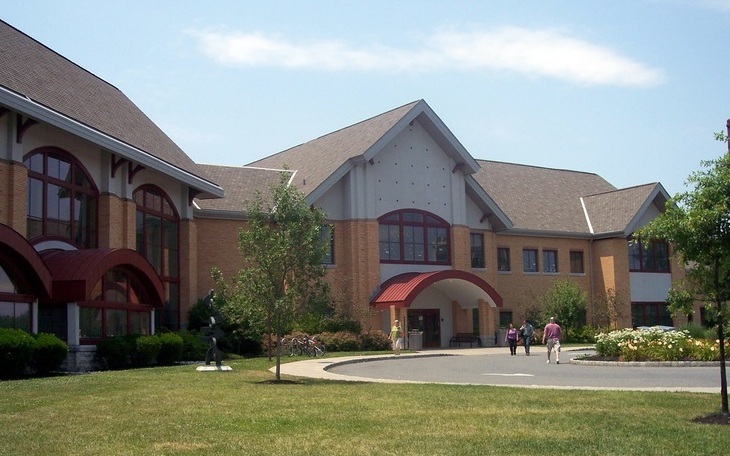
Cherry Hill Public Library
Geographic context photograph — not a crime-scene image.
Read the evidence notes
Cherry Hill Public Library. A later civic photograph gives geographic context; this is not the Neulander home or synagogue.
Commons-provided image; no content edits. The source and reuse license are linked below.
Prshopgirl · Image source · CC BY-SA 4.0
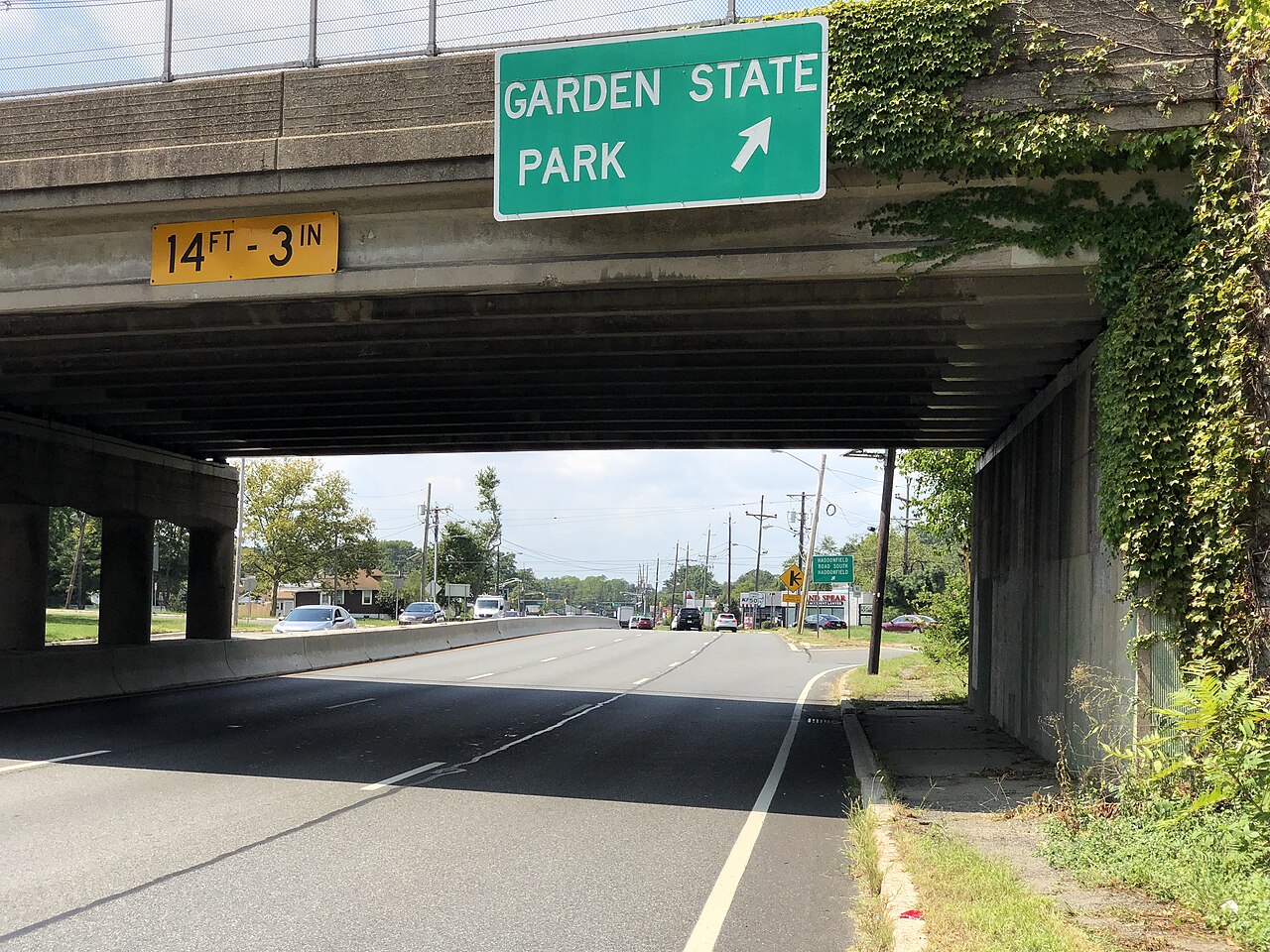
Route 38 in Cherry Hill Township, photographed in 2020
Geographic context photograph — not a crime-scene image.
Read the evidence notes
Route 38 in Cherry Hill Township, photographed in 2020. Regional context, not a documented route taken by the participants.
Commons-provided image; no content edits. The source and reuse license are linked below.
Famartin · Image source · CC BY-SA 4.0
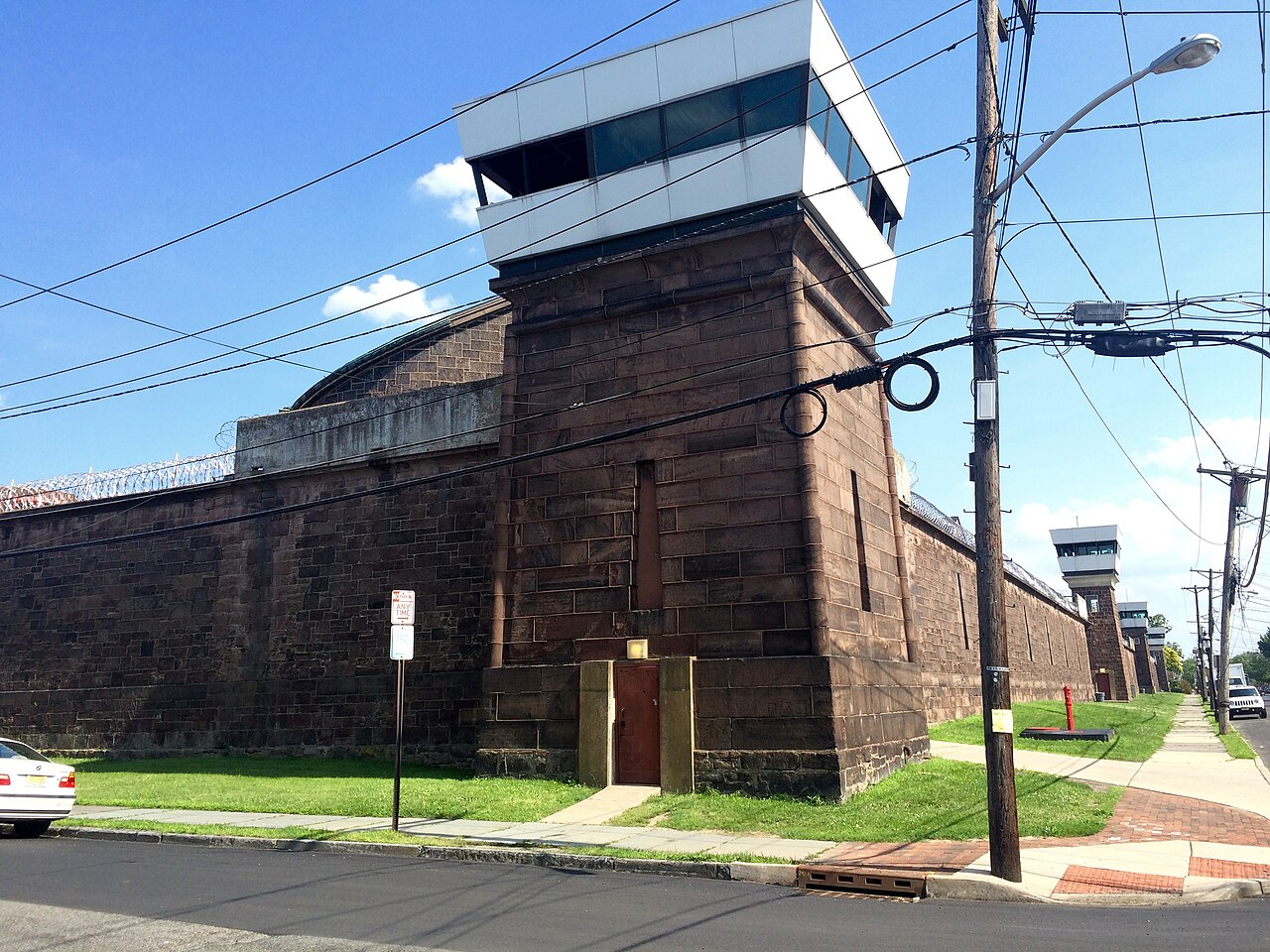
New Jersey State Prison in Trenton
Geographic context photograph — not a crime-scene image.
Read the evidence notes
New Jersey State Prison in Trenton. Institutional context for the later custody history; not a photograph of Neulander or his hospital room.
Commons-provided image; no content edits. The source and reuse license are linked below.
David Keddie · Image source · CC BY-SA 4.0
★ Key evidence used in a conviction · ✓ Exclusion or reversal · ◇ Disputed evidence · ⊘ Excluded at retrial · ◆ Identity / investigative finding, not a conviction. A symbol does not mean one item proved the whole case.
Follow the locations
Put the story on the map.
Follow the dated entries, then select an event to find its regional setting. Shared-location pins open a group of events. Evidence symbols identify important findings and their limitations.
Open the map in its own window ↗Sources & further reading
- State v. Neulander — New Jersey Appellate DivisionTrial record, visits, affair, participant testimony, physical circumstances, convictions and appeal.
- State v. Neulander — post-conviction appealProcedural history and affirmance of denial of post-conviction relief.
- Rabbi convicted of hiring men to kill wife dies — Associated PressReported death, hospital transfer and age.
- Rabbi again faces death penalty charges — JTARetrial opening and actual venue in Freehold, Monmouth County.
Editorial review: 2026-10-02 · 1743 words