One page was genuinely old. That was part of its usefulness. In the documentary trail supporting James Addison Reavis’s vast Arizona land claim, a historical page had been altered with a new page number and a connecting word. Elsewhere, a fabricated leaf had been inserted into a real volume. The fraud did not depend only on making fresh paper look antique. It also involved changing what authentic records appeared to say. [1]
Case brief
Tucson and central Arizona · 1883–1895
- Recorded outcome
- Land claim rejected; Reavis later criminally convicted and imprisoned. The story uses the contemporary 1898 investigator’s account and official archival sources.
Key moments
People and case photographs
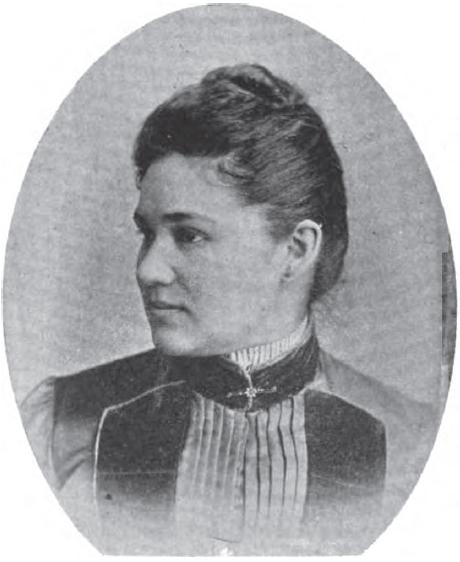
Sofia Peralta-Reavis Reavis’s wife, whom he claimed was the surviving heir to the purported land grant. Will M. Tipton’s 1898 account reproduced this portrait.
Archival portrait · Unknown photographer · The Land of Sunshine, 1898, p. 110 · U.S. public domain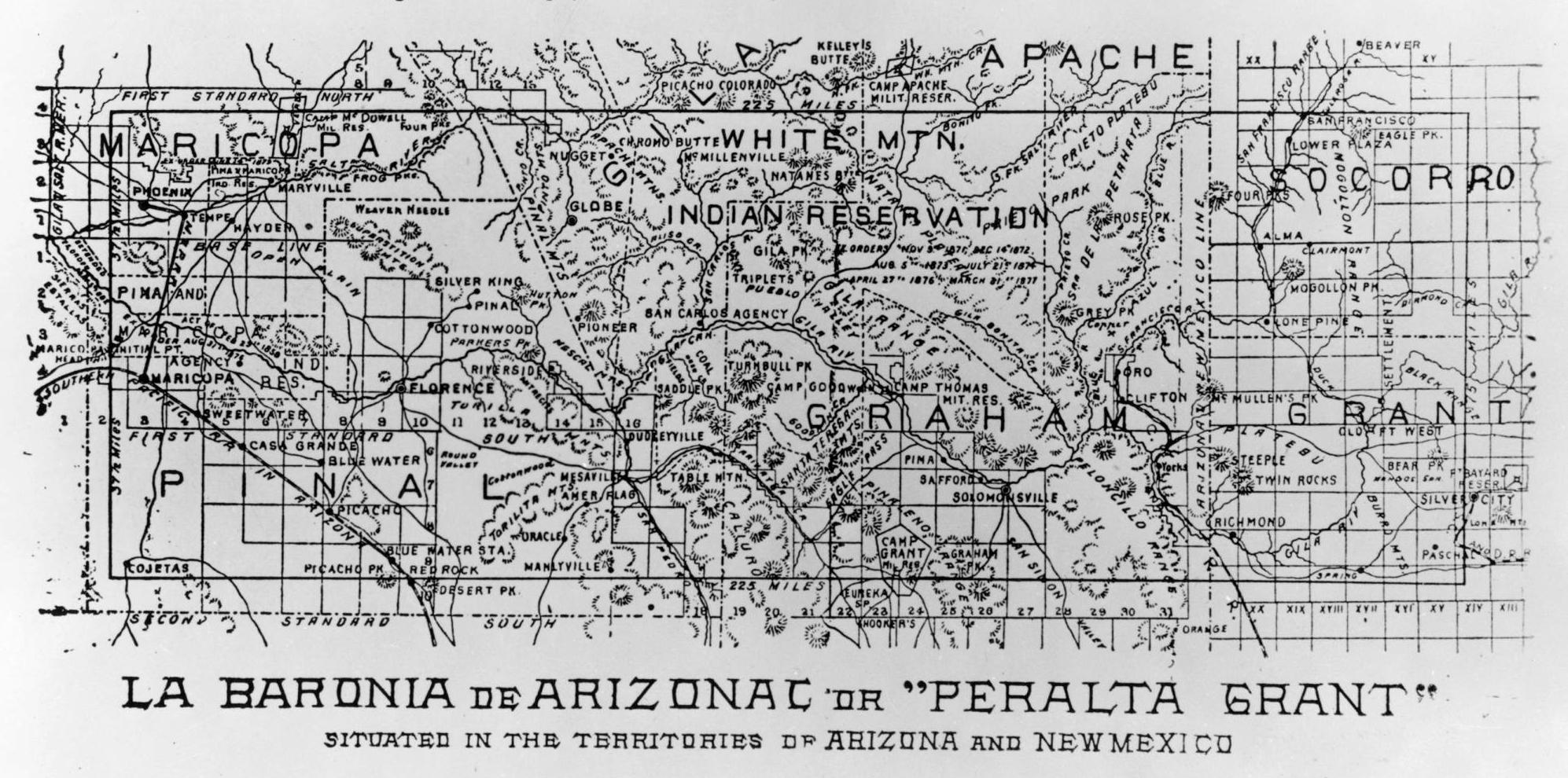
The claimed Peralta grant This map, published with Will M. Tipton’s 1898 account, shows the territory the fraudulent claim covered in Arizona and New Mexico.
Archival map reproduction · Unknown mapmaker · The Land of Sunshine, 1898, p. 108 · Arizona State Archives · U.S. public domain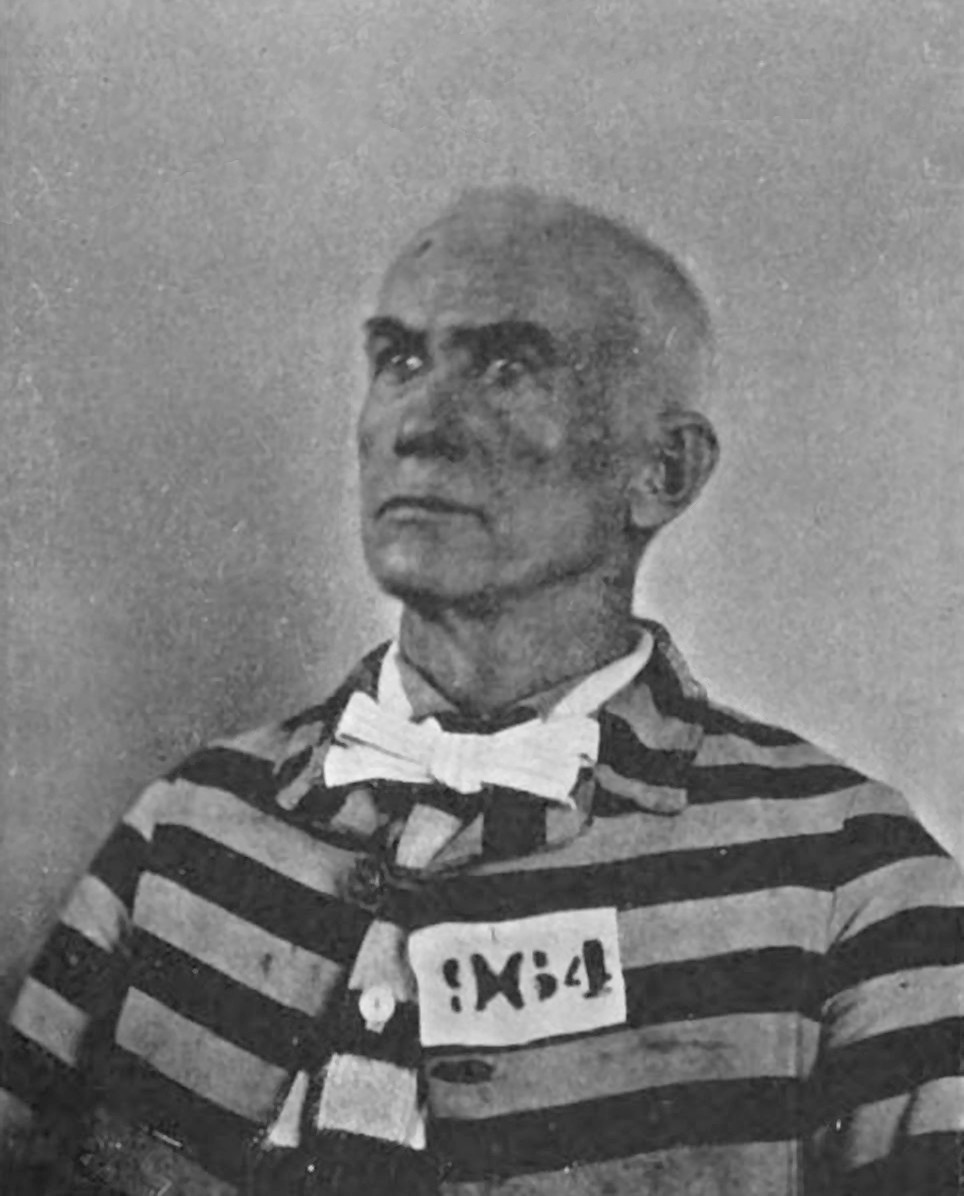
James Addison Reavis Convicted in the Peralta land fraud case
Archival portrait · Land of Sunshine Publishing Co. via Wikimedia Commons · U.S. public domain, published 1898
Reavis wanted recognition of a claim exceeding twelve million acres in Arizona and New Mexico. His supporting history included royal decrees, wills, probate proceedings, and a noble ancestry for his wife. Investigators eventually dismantled the claim by examining the supposed past at the level of individual words, pages, institutions, and witnesses. The story is large enough to cover a region, but some of its revealing evidence fits in the margin of a manuscript. [1]
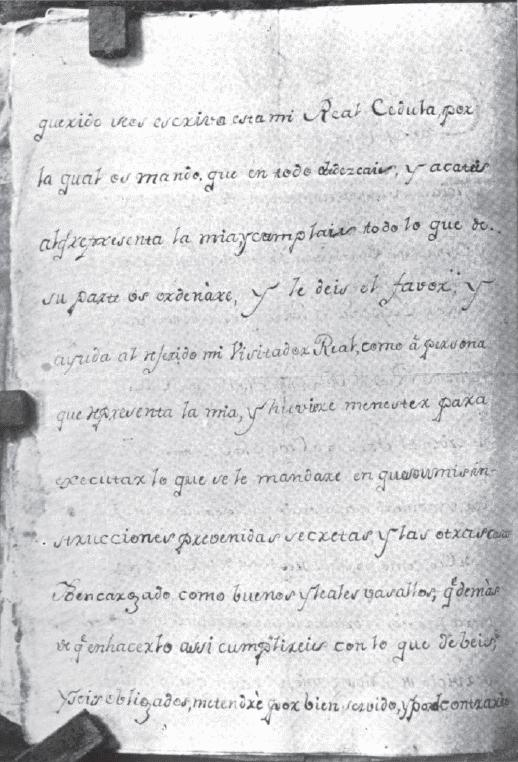
Unknown - Known forgery most likely produced by James Addison Reavis · Image source · Public domain in the United States (published 1898) · Historical reproduction supplied by Wikimedia Commons; no further content edits. Public-domain assessment is for the United States.


Why an old grant could matter
The legal setting gave the scheme its opening. After the Mexican-American War, the United States acquired territory containing Spanish and Mexican land claims. Questions about the validity of those grants and the rights of the people holding them remained politically and legally contentious. The Federal Judicial Center’s history explains that the United States undertook to recognize valid grants and adjudicate ownership, despite changes made to the treaty during ratification. [2]
That process was not inherently fraudulent. Individuals and communities had legitimate claims requiring examination. Reavis’s invented history exploited the importance of documentary proof within that system. If a valid earlier grant covered land later treated as public, people holding newer titles could face uncertainty about their homes, mines, and businesses. [1] [2]
Congress created the Court of Private Land Claims in 1891 to resolve remaining claims in the Southwest. Its five judges worked through disputes involving millions of acres, and its life was repeatedly extended until 1904. Reavis’s case entered that larger history; it did not define every claimant or every disputed grant. The distinction is particularly important when reading nineteenth-century accounts written from the victorious federal government’s side. [2]
The claim that grew
Reavis’s early connection to the scheme involved George M. Willing, who claimed an immense Arizona property. In his contemporary account, investigator Will M. Tipton described documents purporting to establish a Spanish royal grant and a later conveyance to Willing. Reavis worked on the claimed title and ultimately pursued recognition in his own right. [1]
Tipton’s description traces an expansion from roughly 1.3 million acres in an early version to nearly 12.5 million in the later claim. The exact boundaries and calculations shifted during the scheme. The accompanying map consequently locates the places involved in filing, promotion, and investigation; it does not present a modern surveyed polygon as the authoritative boundary of a grant that the government rejected as fraudulent. [1]
In 1883, Reavis petitioned the United States surveyor general for Arizona, claiming ownership through purchase. The asserted title was no abstract historical curiosity. Tipton reported that some people paid for quitclaim deeds or releases to protect their property from the supposed older ownership. Companies also made payments connected with rights of way and mining interests. The uncertainty could generate money before the claim ever succeeded in court. [1]
Tipton named a $50,000 Southern Pacific payment for a right of way and a $25,000 payment from the Silver King mining company for a release. Those figures come from his 1898 account and are attributed accordingly. They should not be treated as a complete audited total of the scheme’s proceeds. The full amount extracted was uncertain even to the contemporary writer. [1]
A new route through an heiress
The account did not remain a simple chain of purchases. Reavis later asserted that his wife, Sofia, was the surviving heir of the original grantee. A claimed genealogy could offer another route to ownership if conveyances in the earlier version failed examination. That shift made her supposed ancestry a crucial part of the case. [1]
The resulting family history was elaborate. It involved titled ancestors, journeys across the Atlantic, births and deaths in California, and witnesses who appeared to connect the young woman to the purported Spanish family. Reavis supported it with papers and testimony. The abundance of detail gave the appearance of separate corroboration, although the investigation would challenge how those details had been produced. [1]
Sofia’s role should be handled carefully. Tipton wrote as an investigator on the government’s side and used racist and demeaning language about her ancestry. This article does not repeat those characterizations or treat them as evidence of wrongdoing. The question was whether the claimed inheritance and the documents supporting it were authentic, not whether a person’s worth depended on descent from European nobility. [1]
The surveyor general says no
Royal A. Johnson’s adverse report challenged the claim before the final court proceedings. His published examination looked at the papers, their supposed origins, the legal requirements for a grant, and discrepancies within the asserted title. It was an official attack on the claim’s validity, not a criminal conviction by itself. [4]
Among the problems Johnson described was a shifting geographic starting point. Reavis had identified one location as the initial monument for the grant, then asserted a point eight miles farther south. A rock bearing markings became part of the later explanation. Johnson questioned how the change could be reconciled with the claimed historical documents. The issue was the coherence of the title’s evidence, not the mere existence of an old marked rock. [4]
Reavis continued. Around 1890, according to Tipton, he sued the United States in Washington’s Court of Claims for ten million dollars in alleged damage arising from the government’s disposition of land within his claim. In February 1893, he petitioned the newer Court of Private Land Claims for confirmation to himself and his wife. These were separate legal steps, and neither filing meant a court had accepted his ownership. [1]
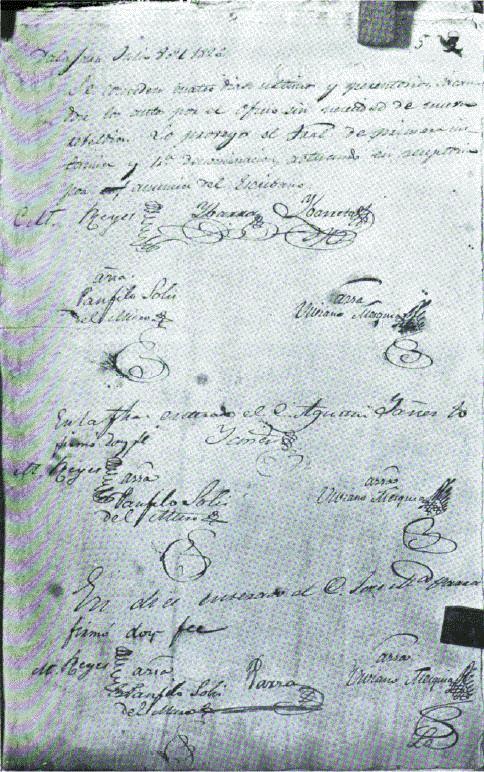
Unknown - Known forgery with several potential creators · Image source · Public domain in the United States (published 1898) · Historical reproduction supplied by Wikimedia Commons; no further content edits. Public-domain assessment is for the United States.


Looking beyond the certified copy
The government’s response involved attorney Matt G. Reynolds and investigators working in the United States, Mexico, and Spain. Severo Mallet-Prevost examined the records and institutional history invoked by the claim. Tipton’s account describes inquiries into aristocratic orders, wills, archives, and the physical construction of the documents. [1]
A certified copy could faithfully reproduce a record that had itself been tampered with. That was one of the scheme’s central problems for investigators. Establishing that a document appeared in an archive was not the same as establishing that it belonged there. They had to ask how it had entered the volume, whether its wording fit the date, and whether other records independently supported it. [1]
The answers exposed anachronisms. Tipton described a purported 1742 decree referring to an administrative office associated with a political arrangement not established until decades later. Another paper, dated 1758, referred to a legal proceeding he identified as belonging to the constitutional system introduced in 1812. The papers’ own language placed parts of them outside the times they claimed to represent. [1]
Three words under three other words
One investigation focused on a decree in a bound volume at Guadalajara. According to Tipton, its first leaf was a forgery inserted in place of a genuine page. The second leaf was largely authentic but contained three important alterations. Examining the underlying writing changed the document’s apparent meaning. [1]
The altered words presented an inspector, a baron, and Arizona. The original wording instead referred to a viceroy, a count, and Fuenclara. In Tipton’s account, the document had originally announced the appointment of the Count of Fuenclara as viceroy of New Spain. It had been repurposed to give the invented Baron of Arizona an official appointment. [1]
Another volume combined a few authentic leaves with thirty-five fabricated ones setting out the supposed genealogy. Its notarial certificate had also been altered: wording for a document of 169 leaves was changed to fit one of thirty-eight. A genuine certification had been made to appear to authenticate different contents. The visual gallery separates that mechanism from the simple idea of a forged signature. [1]
The witnesses had a past, too
Investigator L. A. Hughes examined the California portion of the family story. Tipton reported that church records had been altered, including entries connected with the claimed birth and baptism of twins. People identified as godparents denied knowledge of the supposed event. The investigation was testing the human links in the genealogy alongside the paper ones. [1]
One particularly damaging chronological problem involved John A. Treadway, whom the claim’s witnesses placed in a journey involving an infant in 1862. Hughes found evidence of his death in November 1861. In Tipton’s telling, that made the claimed later journey impossible. An ordinary record of a death challenged a carefully assembled inheritance narrative. [1]
These findings should remain attributed to the contemporary investigator’s account. Tipton was close to the prosecution and wrote with an unmistakable desire to celebrate its success. His article is valuable for its specific descriptions and reproduced documents, but its judgments about people and its dramatic flourishes are not neutral observations simply because they are old. [1]
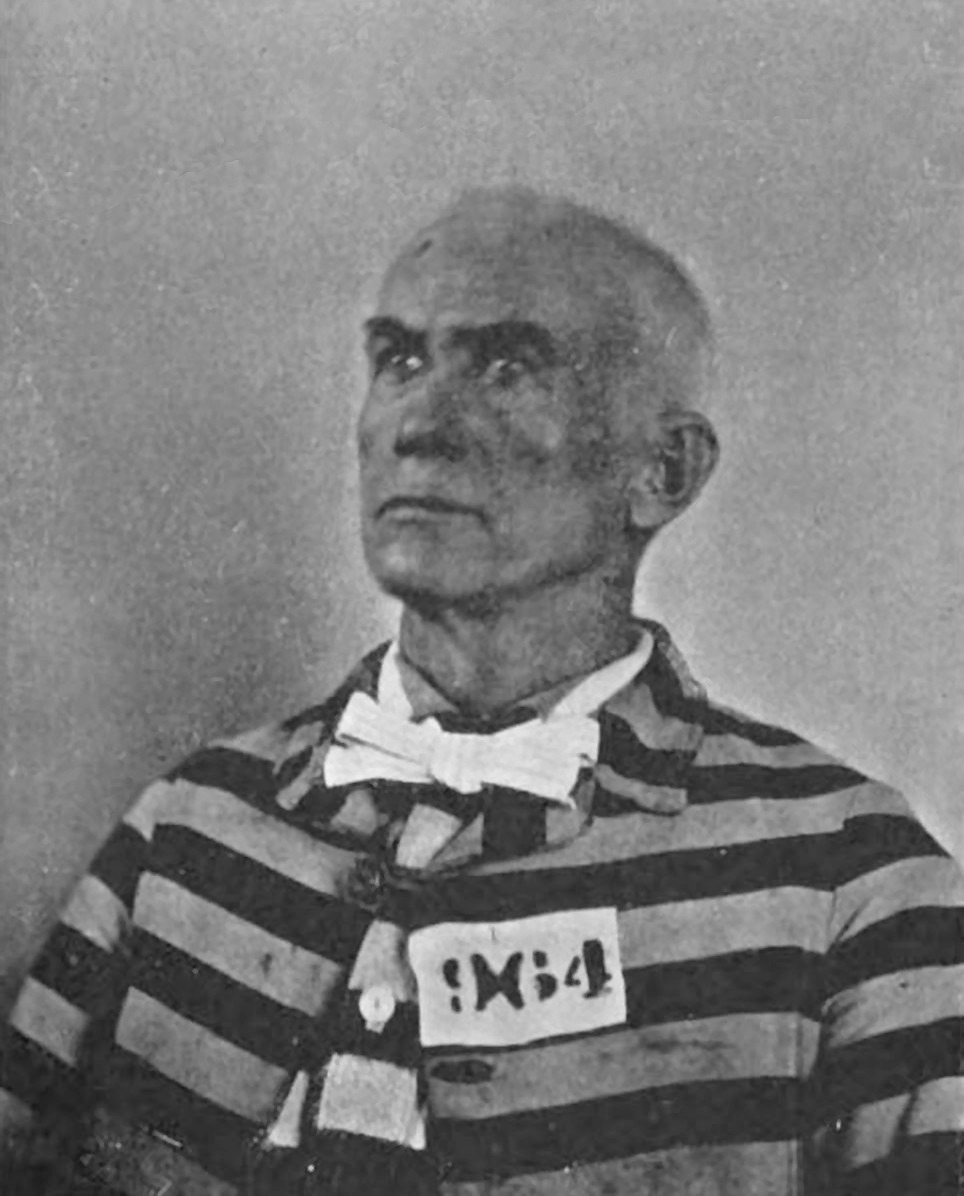
Land of Sunshine Publishing Co. · Image source · Public domain in the United States (published 1898) · Historical reproduction supplied by Wikimedia Commons; no further content edits. Public-domain assessment is for the United States.


A claim rejected, a record preserved
The Court of Private Land Claims rejected the grant. Tipton described a unanimous rejection followed by Reavis’s arrest, criminal prosecution for conspiracy to defraud the United States, conviction, and imprisonment at Santa Fe. The Arizona Historical Society’s collection description independently identifies the fraudulent claim and the related documentary material preserved from it. [1] [3]
The distinction between the civil claim and the criminal case matters. Refusing to recognize a land title and convicting someone of a crime are different legal acts. This account follows both without assigning an exact criminal sentencing date or punishment from conflicting later retellings. The cited contemporary narrative establishes imprisonment; more precise sentencing details require the original criminal judgment. [1]
Three historical images accompany the six original explanatory diagrams: a reproduced forged page, a reproduced altered page, and a prison portrait of Reavis. They were published in the nineteenth century and are identified individually. The documents are authentic historical reproductions of fraudulent material. They are not genuine royal grants, and the newly drawn diagrams are not court exhibits. [1]
The attempted land seizure worked by making fabricated details seem to confirm one another. Its undoing required checking them against evidence the claimant did not control: the chronology of institutions, the contents of bound books, the words beneath alterations, and the lives of supposed witnesses. A claim measured in millions of acres could collapse when a single page no longer belonged to the history written around it. [1]
Look closer · 9 visuals
Inside the evidence.
Open a visual to explore what it contributed to the case—and the limits of what it shows. Photographs, historical reproductions and original illustrations are individually labeled. Open the notes for each image’s source, credit, and limitations; setting photographs do not depict crime scenes.
The title had two routes
Original editorial illustration — not an actual evidence photograph or exhibit.
Read the evidence notes
Reavis shifted from purported conveyances to Sofia’s alleged ancestry as a route to ownership.
Both were asserted bases of a fraudulent claim, not recognized title.
A certified copy can preserve a fraud
Original editorial illustration — not an actual evidence photograph or exhibit.
Read the evidence notes
Investigators had to test the underlying record rather than accept the existence of a certified copy as proof of authenticity.
This explains the scheme; it is not a facsimile of an official certification.
Words from the wrong century
Original editorial illustration — not an actual evidence photograph or exhibit.
Read the evidence notes
Tipton described institutional and legal terms inconsistent with the dates the papers claimed.
Historical findings are attributed to the contemporary investigator’s account.
What lay beneath the altered words
Original editorial illustration — not an actual evidence photograph or exhibit.
Read the evidence notes
Tipton reported three alterations that repurposed a real appointment document to support the fabricated baron.
English explanatory labels, not the original handwriting or a new forensic analysis.
The book that changed its length
Original editorial illustration — not an actual evidence photograph or exhibit.
Read the evidence notes
A certificate from a genuine longer document was altered to appear to authenticate the fabricated genealogy.
Counts follow Tipton’s account; the diagram does not reproduce the full volume.
A witness chronology breaks
Original editorial illustration — not an actual evidence photograph or exhibit.
Read the evidence notes
Tipton reported Hughes finding evidence that Treadway died before a journey described by the claim’s witnesses.
The date conflict attacks the genealogy; it is not proof of Sofia’s personal knowledge of each forged record.
Forged royal-decree page reproduced in Tipton’s 1898 account
Historical reproduction of a fraud document — not a valid grant or a modern reconstruction.
Read the evidence notes
Historical reproduction of a forged page inserted into a royal decree, published with Will M. Tipton’s 1898 account. This is an actual reproduced fraud document, not a valid Spanish grant or modern reconstruction.
Historical reproduction supplied by Wikimedia Commons; no further content edits. Public-domain assessment is for the United States. The source and reuse terms are linked below.
Source 1 ↗ · Unknown - Known forgery most likely produced by James Addison Reavis · Image source · Public domain in the United States (published 1898)
Historical reproduction of a genuine page altered for the false Peralta claim
Historical reproduction of a fraud document — not a valid grant or a modern reconstruction.
Read the evidence notes
Historical reproduction of a genuine page altered for the false Peralta claim. Tipton’s caption identifies the added page number and catchword. The reproduction is historical; the land claim it supported was fraudulent.
Historical reproduction supplied by Wikimedia Commons; no further content edits. Public-domain assessment is for the United States. The source and reuse terms are linked below.
Source 1 ↗ · Unknown - Known forgery with several potential creators · Image source · Public domain in the United States (published 1898)
James Addison Reavis in prison clothing at Santa Fe, reproduced in Land of Sunshine in 1898
Historical portrait — published in 1898; not a modern reconstruction.
Read the evidence notes
James Addison Reavis in prison clothing at Santa Fe, reproduced in Land of Sunshine in 1898. Authentic historical portrait; the exact date of photography is not independently established here.
Historical reproduction supplied by Wikimedia Commons; no further content edits. Public-domain assessment is for the United States. The source and reuse terms are linked below.
Source 1 ↗ · Land of Sunshine Publishing Co. · Image source · Public domain in the United States (published 1898)
★ Key evidence used in a conviction · ✓ Exclusion or reversal · ◇ Disputed evidence · ⊘ Excluded at retrial · ◆ Identity / investigative finding, not a conviction. A symbol does not mean one item proved the whole case.
Follow the locations
Put the story on the map.
Follow the dated entries, then select an event to find its regional setting. Shared-location pins open a group of events. Evidence symbols identify important findings and their limitations.
Open the map in its own window ↗Sources & further reading
- Will M. Tipton, The Prince of Impostors — Land of Sunshine, volume 8Contemporary investigator account, pp. 107–116 and 161–170: claim history, payments, altered documents, witness inquiries and outcomes. Public-domain publication; partisan voice and racist language are not adopted.
- Court of Private Land Claims, 1891–1904 — Federal Judicial CenterTreaty and land-grant context, creation, remit and lifespan of the court.
- Peralta Land Grant Case Exhibits — Arizona Historical Society, MS 1071Preserved certified photostats and identification of the fraudulent claim; brief archival corroboration.
- Royal A. Johnson, Adverse Report upon the Alleged Peralta GrantOfficial adverse report: document provenance, legal requirements and shifting initial monument. Contemporary report, not a criminal judgment.
Editorial review: 2026-10-06 · 1737 words