David Ghantt drove away from the Loomis Fargo facility in Charlotte with more than seventeen million dollars. When he fled to Mexico, he took less than thirty thousand. The difference between the fortune he had removed and the money he could actually use would become central to his life as a fugitive—and eventually to an argument over his prison sentence. [1]
Case brief
Charlotte / Cramer Mountain, North Carolina · 1997–1998
- Recorded outcome
- Ghantt pleaded guilty and received ninety months; sentence affirmed in March 2000. Norman’s reward contract claim survived a November 2000 motion; no final reward award verified.
Key moments
People in this case
- David Ghantt
Pleaded guilty in the Loomis Fargo robbery
Photo at source · The Charlotte Observer · archival coverage
The plan depended on promises. Other people would hold the money, distribute the proceeds, and support him while he stayed out of reach. One of those people later plotted to have him killed, according to the FBI's account. A different promise, a public offer of a reward, would draw a legal secretary into the investigation and then into a lawsuit of her own. [2][3]

Daritto7117 · Image source · Public domain · Commons-provided image; no content edits.


The man who could open the vault
Ghantt was a vault supervisor at the company's Charlotte operation. That position put him inside the system he was about to exploit. The theft did not begin with an outsider forcing a way through the building's defenses. An employee with access loaded a company van and drove the cash away to a place where associates were waiting. [1]
The Levine Museum of the New South dates the theft to October 4, 1997. A later civil opinion uses October 5 in its background summary. The museum's chronology places investigators reviewing the surveillance footage on the following day. This account uses October 4 for the theft while retaining the discrepancy in the source notes. [3][4]
The amount also appears differently in retrospective accounts. The federal sentencing appeal records $17,044,200. The FBI's field-office history rounds the loss differently. More than seventeen million dollars is the common ground; a precise figure belongs with the particular document from which it comes. [1][2]
Ghantt had agreed to divide the proceeds equally with Steve Chambers, Michele Chambers, and Kelly Campbell after the other participants had been paid. The agreement gave him an expected share worth millions. It did not give him physical possession of that share once he departed. He left the bulk of the money under the control of people remaining in North Carolina. [1]
The recording that remained
The museum's account describes Ghantt taking recording tapes but overlooking another camera. Footage of him loading the cash survived. The FBI's history confirms that a camera recorded the theft. Investigators also found the abandoned company van with roughly three million dollars still inside. [2][4]
Those discoveries immediately complicated the escape. The investigators had a visual record pointing to the employee and a large recovery, but finding the rest of the money required following what happened after it left the facility. The disappearance of one person did not explain the activities of everyone who handled the proceeds. [1][2]
The van was only one stage. According to the sentencing record, Ghantt delivered the money to a warehouse where several associates waited. After his departure, the Chamberses used friends and relatives to place cash in bank accounts, safe-deposit boxes, and storage buildings. The criminal operation was spreading into a network of transactions and places where other people could encounter it. [1]
Each transfer created a problem different from getting the money out of the vault. Cash had to be stored, exchanged, deposited, or spent. The people doing those things needed cooperation from institutions and individuals whose ordinary work involved records. A theft that depended on privileged access was becoming an investigation shaped by what others noticed. [1][3]
A fugitive dependent on deliveries
Ghantt reached Mexico with only a small fraction of the stolen amount. The later court accepted his lawyer's representation that he had received no more than thirty thousand dollars before his arrest. Over the following months, Michael McKinney traveled to Mexico several times at Steve Chambers's direction to deliver money. [1]
The trips show that flight had not severed Ghantt's connection to the people in North Carolina. His situation still depended on decisions they made about support and payment. He had helped remove a vast quantity of cash, but he could not independently reach the portion he expected to receive. The arrangement left his future in other people's hands. [1]
The FBI's account adds the most dangerous turn: Chambers plotted to have Ghantt killed in Mexico. The Bureau describes investigators uncovering the scheme as they pursued the stolen money and those involved. What might be retold as an extravagant spending spree also involved a conspiracy in which one participant's survival was threatened by another. [2]
The official accounts reviewed here support the existence of that plot and the continuing money deliveries. They do not require inventing private conversations in a hotel or assigning unrecorded thoughts to Ghantt. The dependency itself is clear enough. The people holding his expected fortune were also determining how much he could use while abroad. [1][2]
A purchase file and a bag of cash
Back in North Carolina, Jennifer Norman worked as a legal secretary for attorney Jeffrey Guller. Her later civil complaint described being instructed, within days of the theft, to open a file for Steve Chambers's purchase of an expensive home in Cramer Mountain. Her account gave the court a view of the money's movement through an office where real-estate business was conducted. [3]
Within about two weeks, she said, she saw a black bag filled with cash in a storage room. A piece of paper carried the figure $436,000. Four days later, Michele Chambers brought money orders payable to Guller, and Norman assisted with their deposit. She suspected the money came from the Loomis theft. [3]
Those details appear in a ruling on the pleadings in Norman's lawsuit. At that stage, the court considered her allegations in the light most favorable to her; it was not holding a trial to settle every disputed observation. The distinction is particularly important when an account supplies vivid details, such as a handwritten amount beside a bag of cash. [3]
Some later developments were less disputed. Norman cooperated with law enforcement and testified against her former employer in his money-laundering prosecution. The court described useful assistance in the recovery of assets and money. Its account also identifies the Chamberses as convicted accomplices who used proceeds from the theft to buy the property. [3]
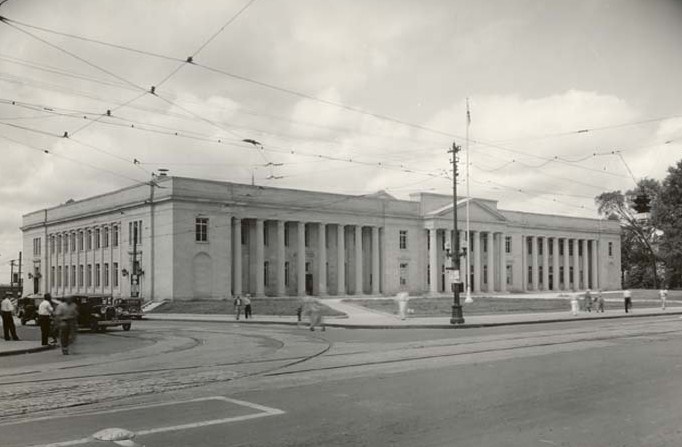
U.S. federal government (individual photographer not identified) · Image source · Public domain · Commons-provided image; no content edits.


The call about the reward
Loomis had offered a $500,000 reward for information leading to the capture of those responsible and recovery of the missing money. The offer was publicized through America's Most Wanted. Norman saw the broadcast and called the advertised number with information about the Chamberses, Guller, the cash, the money orders, and the property purchase. [3]
According to her complaint, the operator responded that investigators were looking for someone other than Steve Chambers. Norman nevertheless maintained that the information she provided helped the investigation. The company later disputed whether that initial call reached law enforcement or caused any arrests. [3]
The disagreement reveals a problem easily lost in a simple story about a tip solving a case. An observer may supply useful information through several contacts over time. A reward offer may attach payment to particular results. Establishing cooperation is not always the same question as establishing that all the conditions of a reward were met. [3]
Norman's later interviews and testimony therefore mattered separately from the disputed first call. Loomis argued that her useful assistance concerned Guller and that he did not count as a perpetrator of the original theft. The court would have to consider both the wording of the promise and the alleged contribution to recovering the stolen property. [3]
Arrests and recovered money
Mexican authorities arrested Ghantt in March 1998 and turned him over to American law enforcement. The FBI credits cooperation involving its Mexico City legal attaché. The museum identifies Playa del Carmen as the arrest location. These accounts establish the cross-border conclusion without requiring a reconstructed escape route from North Carolina. [1][2][4]
The investigation, called CHARLOOT, reached well beyond the employee recorded at the vault. The FBI's historical summary describes seventeen conspirators pleading guilty to charges that included theft, money laundering, and conspiracy to commit murder. It reports recovery of more than thirteen million dollars in cash and another million in assets. Those are the figures and stage of the case described in that account, not a claim that every dollar was eventually returned. [2]
Ghantt pleaded guilty to bank larceny and two money-laundering counts. His sentence was ninety months—seven and a half years. On appeal, he challenged an enhancement tied to the financial benefit attributed to him personally. That challenge brought the original division-of-proceeds agreement back into focus. [1]
Thirty thousand dollars and a four-million-dollar share
Ghantt argued that the amount he actually received and could use should control. The sentencing court accepted that he had received no more than thirty thousand dollars before arrest, but found that his agreed share amounted to four million. The court treated that expected share as a benefit derived through the arrangement with the other participants. [1]
In March 2000, the Fourth Circuit affirmed. Applying the sentencing guideline then at issue, it upheld the finding that Ghantt individually derived more than the one-million-dollar threshold. The decision did not say investigators had found four million dollars in his hotel room. It addressed the significance of the share he had agreed to receive. [1]
The distinction makes the sentencing dispute more revealing than a comparison of two numbers. The promise that had left Ghantt dependent on others while he was a fugitive still had consequences after his arrest. He could not reduce the relevant benefit to the amount he had managed to spend or hold personally. [1]
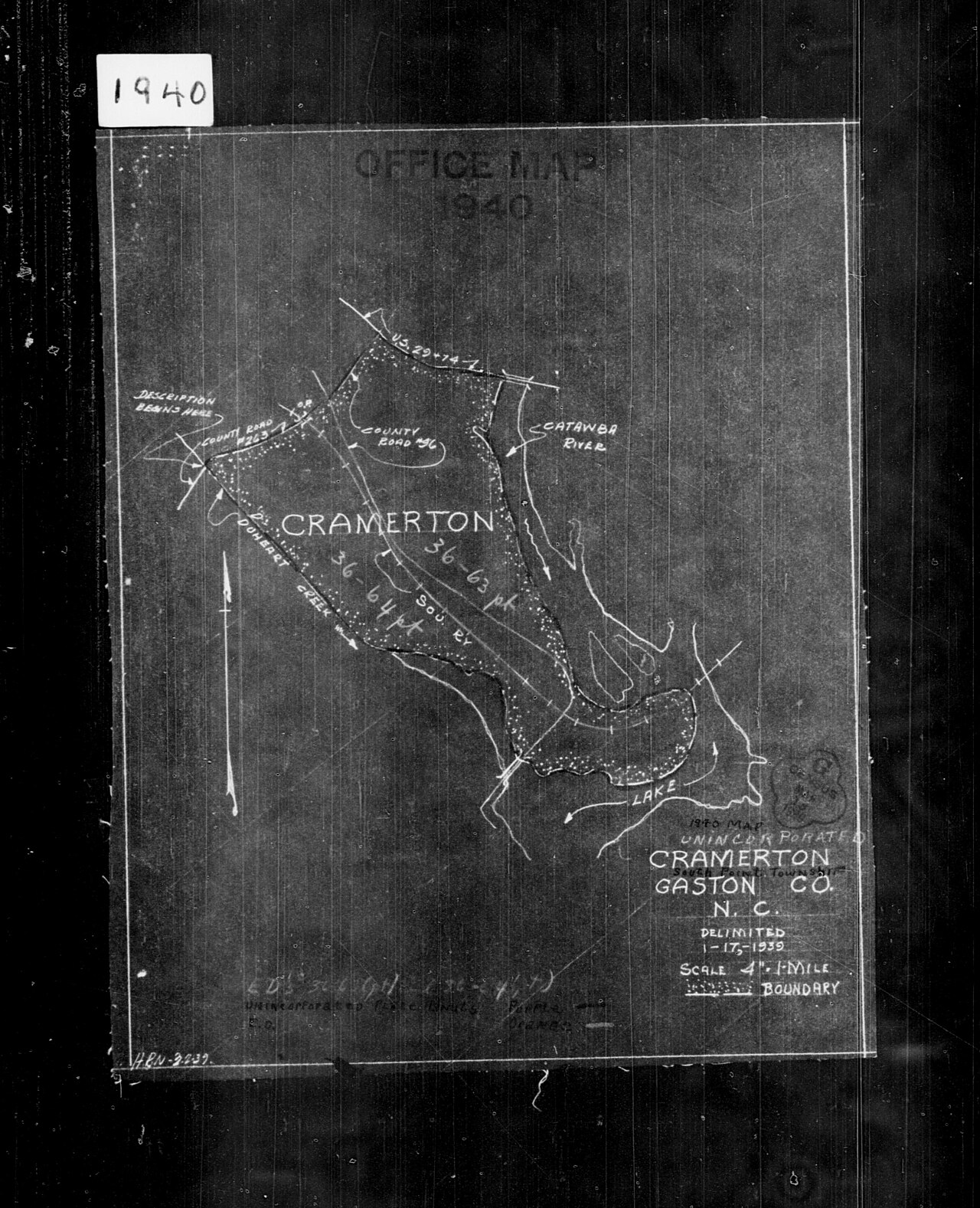
U.S. Census Bureau / National Archives (individual creator not recorded) · Image source · Public domain · Commons-provided image; no content edits.


A second case about a promise
Norman filed her reward lawsuit in August 2000. In November, the federal court allowed her contract claim to proceed, finding that she had alleged enough to support it. The court rejected the separate unfair-and-deceptive-trade-practices claim. Refusing to end the contract case at that stage was not an order awarding her $500,000. [3]
That is where this documented episode ends. The ruling preserved an opportunity to prove a right to payment; it did not establish the ultimate disposition of the reward dispute. An account that simply announces she won the money would turn an intermediate decision into an outcome the source does not provide. [3]
The two court cases leave the heist with an unusual pair of questions. How much had a thief obtained when most of his share remained with other thieves? What had a helpful witness earned when the effect of her first call was disputed? The theft began with cash leaving a vault. Its aftermath required courts to examine the value—and the limits—of the promises that followed. [1][3]
Look closer · 9 visuals
Inside the evidence.
Open a visual to explore what it contributed to the case—and the limits of what it shows. Photographs, historical reproductions and original illustrations are individually labeled. Open the notes for each image’s source, credit, and limitations; setting photographs do not depict crime scenes.
Cash moves beyond the vault
Original editorial illustration — not an actual evidence photograph or exhibit.
Read the evidence notes
The sentencing record connects the loading and handoff to later dispersal of the proceeds.
This is a conceptual sequence, not a reconstructed driving route.
A recording survived
Original editorial illustration — not an actual evidence photograph or exhibit.
Read the evidence notes
The FBI confirms surveillance footage of Ghantt loading the money; the museum describes an overlooked camera.
A generic recording icon, not an authentic surveillance still.
Three amounts, three meanings
Original editorial illustration — not an actual evidence photograph or exhibit.
Read the evidence notes
These figures come from Ghantt’s sentencing appeal and distinguish total theft, cash received, and the share attributed to him.
Other historical accounts round the total differently. The expected share was not cash found in his possession.
What the legal secretary noticed
Original editorial illustration — not an actual evidence photograph or exhibit.
Read the evidence notes
Norman’s complaint described transactions she believed involved stolen money. Her later cooperation and testimony are documented in the ruling.
The detailed initial observations were allegations evaluated at the pleadings stage.
Two kinds of promises
Original editorial illustration — not an actual evidence photograph or exhibit.
Read the evidence notes
Ghantt depended on associates for funds; the FBI later described Chambers’s plot to kill him.
The graphic combines the court’s payment account with the FBI’s plot account; it does not invent a recorded conversation.
A reward claim is not an award
Original editorial illustration — not an actual evidence photograph or exhibit.
Read the evidence notes
The November 2000 ruling allowed Norman’s contract claim to proceed.
It dismissed the separate unfair-trade-practices claim and did not establish final payment of the reward.
Charlotte skyline in 2008
Geographic context photograph — not a crime-scene image.
Read the evidence notes
Charlotte skyline in 2008. City context, photographed years after the 1997 theft; not the Loomis Fargo vault.
Commons-provided image; no content edits. The source and reuse license are linked below.
Daritto7117 · Image source · Public domain
Charles R
Geographic context photograph — not a crime-scene image.
Read the evidence notes
Charles R. Jonas Federal Building in Charlotte. Federal courthouse context; no particular hearing room or proceeding is identified by this photograph.
Commons-provided image; no content edits. The source and reuse license are linked below.
U.S. federal government (individual photographer not identified) · Image source · Public domain
1940 Census enumeration map of Cramerton, held by the National Archives
Archival geographic map — not a crime-scene plan.
Read the evidence notes
1940 Census enumeration map of Cramerton, held by the National Archives. Archival geographic context, decades before the heist; not a robbery plan or a map of the Chambers property.
Commons-provided image; no content edits. The source and reuse license are linked below.
U.S. Census Bureau / National Archives (individual creator not recorded) · Image source · Public domain
★ Key evidence used in a conviction · ✓ Exclusion or reversal · ◇ Disputed evidence · ⊘ Excluded at retrial · ◆ Identity / investigative finding, not a conviction. A symbol does not mean one item proved the whole case.
Follow the locations
Put the story on the map.
Follow the dated entries, then select an event to find its regional setting. Shared-location pins open a group of events. Evidence symbols identify important findings and their limitations.
Open the map in its own window ↗Sources & further reading
- United States v. Ghantt, No. 99-4383 — Fourth CircuitTheft amount in sentencing record, division agreement, payments, Mexico arrest, plea, sentence and enhancement appeal.
- Charlotte field-office history — FBICHARLOOT, surviving footage, abandoned cash, murder plot, cross-border cooperation, pleas and recoveries.
- Norman v. Loomis Fargo, 123 F. Supp. 2d 985Reward offer, plaintiff’s allegations, undisputed cooperation, company defenses and limited procedural ruling.
- Loomis Fargo and Company — Levine Museum of the New SouthOctober 4 theft chronology, overlooked camera and Playa del Carmen arrest location.
Editorial review: 2026-10-02 · 1751 words