The divorce case had been dismissed barely a week before Nancy Dillard Lyon became severely ill. She and her husband, Richard, had tried to reconcile over Christmas. On January 9, 1991, she was admitted to a Dallas emergency room with a rapidly deteriorating condition. Five days later she died. Tests found lethal arsenic exposure. The question at trial was not merely whether poison had killed her, but who had caused the exposure and which of the competing accounts the evidence could support. [1]
Case brief
University Park, Texas · 1991
- Recorded outcome
- Richard Allen Abood Lyon convicted of murder, sentenced to life and a $10,000 fine; judgment affirmed in the 1994 appellate opinion.
Key moments
People in this case
- Nancy Dillard Lyon
Murder victim and architect
Photo at source · Forensic Files Files · labeled archival photograph - Richard Lyon
Convicted of murdering Nancy Dillard Lyon
Photo at source · Forensic Files Files · courtroom still
The prosecution followed a trail of chemical orders and deliveries connected to Richard. The defense argued that there were other explanations and pointed to documents attributed to Nancy. Then a handwriting examiner challenged some of those pages. A case already complicated by separation, an affair and reconciliation acquired another dispute: whether writings used to explain the victim’s state of mind were wholly hers. The documents did not all receive the same answer. [1]

Matthew T Rader · Image source · CC BY-SA 4.0 · This photograph provides setting or historical context. It is not an authentic crime exhibit.

A marriage moving in two directions
Nancy and Richard met while attending Harvard’s design school and married in 1982, according to her father’s trial testimony. They lived in University Park with two young daughters. By the fall of 1989, the marriage was troubled and Richard was involved with another woman. He moved out in February 1990. Nancy’s lawyer filed a divorce petition that September. The record also described Nancy’s professional work as a project manager in property development. [1]
The separation did not proceed in a straight line toward an ending. The couple attempted a reconciliation during a Christmas visit to Richard’s parents in Connecticut. His divorce lawyer filed to dismiss the case in late December, and the action was dismissed on January 2. The calendar matters because it places Richard back in the family’s life immediately before the fatal illness. It does not, by itself, prove that reconciliation was undertaken for a criminal purpose. [1]
Financial arrangements were changing as well. Nancy had restricted Richard’s access to bank accounts and changed the beneficiary of a $500,000 life-insurance policy to the children. A former nanny testified about witnessing that change and about Richard’s later response when told he should not be surprised if the beneficiary had changed. The prosecution argued that he had believed he remained the beneficiary. That was an inference supported by the testimony, not proof that he actually received the policy proceeds. [1]
Suspicion before the final illness
While treating Nancy, a physician heard her describe earlier incidents involving drinks that seemed altered and made her ill. Her divorce attorney also testified that Nancy had voiced concern about poisoning. Those accounts were admitted through witnesses who said she had spoken to them. They should be identified as testimony about her reports, rather than rewritten as scenes the present writer independently witnessed or as confirmed toxicological results from every drink. [1]
One reported incident involved an anonymously delivered bottle of wine. The bottle and a collection of pills were eventually brought to the hospital and passed to investigators. The wine tested negative for a toxic substance. That finding is crucial: a suspicious appearance and an illness reported afterward did not become a positive poison test. Other pills contained a different toxic compound, but the wine itself did not supply the laboratory confirmation of the fatal arsenic exposure. [1]
Nancy also reportedly described Richard encouraging her to take capsules presented as vitamins. Investigators later encountered capsules and prescription containers that became part of the evidentiary argument. The court’s summary contains several different objects found at different times. They cannot responsibly be merged into one “poison bottle” with a simple path from purchase to ingestion. Their contents, discovery histories and evidentiary limits had to be evaluated separately. [1]
The orders that reached Richard
A laboratory-supply manager testified about chemical orders Richard placed in 1990. Payment and shipping records connected the orders to him, and witnesses described packages delivered to his residence and workplace. In late November he ordered items involving arsenic. A receptionist signed for the shipment on December 27. The transaction, delivery and fatal illness were separate events, but together they supplied a link between access to the substance and the period before Nancy died. [1]
Richard’s explanations changed under questioning, according to the lead detective. He initially denied buying chemicals, then described purchases connected to a battery idea and fire-ant experiments. He acknowledged ordering arsenic but said he had disposed of chemicals without using them. At trial, he testified that he never received the arsenic shipment. The receptionist’s signature and the supplier’s account therefore mattered for more than showing that a purchase had been contemplated; they challenged the claim of nonreceipt. [1]
The fire-ant explanation was not dismissed merely because it sounded unusual. Witnesses testified about whether infestations existed and how the landscape business treated them. One employer said the company used an organic product and that Richard had denied purchasing arsenic. Another witness described ant problems at a residence and a work project. The jury heard competing support for the explanation. The prosecution’s argument rested on the chemicals, changing statements and medical evidence, not on treating every unconventional pest-control idea as criminal. [1]
The gallery’s purchase-and-delivery diagram contains no original invoice and no operational poison quantities. It shows the relationship between supplier testimony, a delivery signature and the toxicology result. That is the important comparison. A realistic-looking invented invoice could suggest that the reader was viewing an authentic exhibit; a labeled explanatory sequence preserves the distinction between an object discussed in a court record and a newly made visual guide. [1]
Drumguy8800 at English Wikipedia · Image source · CC BY-SA 3.0 · This photograph provides setting or historical context. It is not an authentic crime exhibit.

What the laboratory could—and could not—show
Postmortem testing revealed markedly elevated arsenic in Nancy’s blood and tissues, and the medical examiner classified the death as a homicide. Experts differed about the timing and pattern of exposure. The prosecution’s toxicologist described an acute poisoning shortly before hospitalization. Other expert testimony drew on hair analysis and suggested earlier exposures as well. The reader should not expect a single unchallenged clock hidden inside a laboratory result. The jury heard the disagreement. [1]
Months after the death, a later tenant at Richard’s former residence found a prescription bottle carrying Nancy’s name. Testing identified an abnormal substance in some capsules. But the toxicologist did not say that the tested amount was lethal and could not specify how many orally ingested capsules would produce a toxic effect. The discovery supported questions about altered medication. It did not establish that this particular bottle contained the fatal arsenic dose. [1]
The defense proposed suicide, accidental exposure and other possible perpetrators. Experts called by the defense offered opinions about Nancy’s emotional state based on writings and other material. Those opinions were disputed, and one psychiatrist acknowledged that he had never met her. This account does not adopt those assessments as a diagnosis or repeat unadjudicated accusations against family members as settled history. Their role was to support a defense theory the jury had to assess against the rest of the evidence. [1]
The handwriting dispute changes the documents
A defense document examiner compared questioned writings with examples attributed to Nancy and identified several as hers. On cross-examination, he acknowledged that the examples came from defense counsel and that he had not examined Richard’s known handwriting. The selection of comparison material mattered. A confident identification can depend on what an examiner has been given and what competing authorship possibilities have actually been tested. [1]
The prosecution’s examiner, Hartford Kittel, compared questioned material with known writings from both Nancy and Richard. He concluded that one note was Nancy’s in part but contained additions by Richard, and that another was entirely in Richard’s handwriting. He attributed a different page to Nancy and could not offer a conclusion about others. The result was not a finding that every personal document was forged. It was a set of document-specific opinions that challenged the defense’s use of particular pages. [1]
An invoice offered to support the claim that Nancy had obtained chemicals was challenged separately. A business witness said he had not made the sale reflected in it, had not known the named business to sell those chemicals, and did not recognize the typed document as produced by his typewriter. The court considered that evidence with the handwriting testimony as indications that documents supporting the defense theory had been fabricated. Neither an invoice nor a personal note could simply be accepted because it appeared to carry Nancy’s name. [1]

Carol M. Highsmith · Lyda Hill Texas Collection, Library of Congress · Image source · Public domain · This photograph provides setting or historical context. It is not an authentic crime exhibit.

The verdict and the later challenge
The trial began in late November 1991. Richard denied murdering Nancy, but the jury convicted him, and the court imposed life imprisonment and a $10,000 fine. On appeal, the court emphasized that credibility belonged to the jury and that its task was to examine whether a rational jury could reach the verdict on the evidence. It identified the chemical purchases, delivery evidence, suspicious capsules, changing statements and contested documents as parts of the combined showing. [1]
The defense also sought a new trial based on additional handwriting material and expert analysis. At a February 1992 hearing, counsel described finding documents Richard had provided before trial and consulting additional experts who said they could challenge Kittel. The appellate court reviewed the request under the rules concerning newly discovered evidence and upheld the denial. More material capable of supporting a defense argument did not automatically require another jury trial. [1]
The 1994 opinion affirmed the judgment, leaving the murder conviction, life sentence and fine in place. The chemical records and the disputed documents had survived the court’s examination of whether a rational jury could reach that verdict. The defense’s competing explanations remained part of the record, but the appellate decision did not require another trial. [1] [2]
Nancy’s illness had first been difficult to explain in the emergency room. The prosecution’s eventual explanation required several kinds of evidence to meet: poison in her body, orders connected to her husband, witnesses to receipt, and writings whose authorship could not be taken for granted. The gallery keeps the negative wine test and the disputed pages visible alongside the incriminating evidence. The map follows the calendar without pretending that every exposure had an exact date. That combination makes the story clearer while allowing Nancy’s reports and her documented life to remain distinct from the theories others offered about her.
Look closer · 9 visuals
Inside the evidence.
Open a visual to explore what it contributed to the case—and the limits of what it shows. Photographs, historical reproductions and original illustrations are individually labeled. Open the notes for each image’s source, credit, and limitations; setting photographs do not depict crime scenes.
A purchase, a delivery, an exposure
Original editorial illustration — not an actual evidence photograph or exhibit.
Read the evidence notes
Separate witnesses connected chemical purchases, receipt and fatal exposure.
This is not an original invoice or a recipe.
Not every item tested positive
Original editorial illustration — not an actual evidence photograph or exhibit.
Read the evidence notes
The tested wine contained no toxic substance; the fatal exposure was proved separately.
Suspicion is not a positive laboratory result.
Whose handwriting was it?
Original editorial illustration — not an actual evidence photograph or exhibit.
Read the evidence notes
The expert reached different conclusions about different documents.
No handwriting facsimile or forged signature is reproduced.
Reconciliation on the calendar
Original editorial illustration — not an actual evidence photograph or exhibit.
Read the evidence notes
The short interval between reconciliation and illness gave context to other evidence.
Sequence alone does not prove causation.
Competing explanations at trial
Original editorial illustration — not an actual evidence photograph or exhibit.
Read the evidence notes
Richard denied murder and offered alternative explanations challenged by other evidence.
Unadjudicated allegations about relatives are not presented as fact.
An altered bottle is not the fatal dose
Original editorial illustration — not an actual evidence photograph or exhibit.
Read the evidence notes
The later capsule discovery supported the investigation with explicit toxicity limits.
No claim that this bottle supplied the fatal arsenic.
Dallas skyline at dusk
Geographic context photograph — not a crime-scene image.
Read the evidence notes
Dallas skyline at dusk. Geographic context photograph; not a crime-scene image or evidence of an event shown on the map.
This photograph provides setting or historical context. It is not an authentic crime exhibit. The source and reuse terms are linked below.
Matthew T Rader · Image source · CC BY-SA 4.0
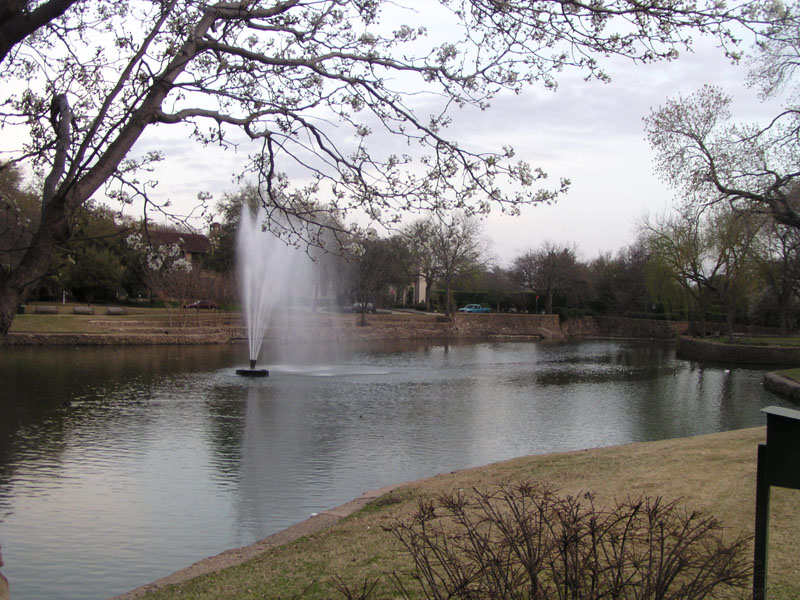
A public park in University Park
Geographic context photograph — not a crime-scene image.
Read the evidence notes
A public park in University Park. Geographic context photograph; not a crime-scene image or evidence of an event shown on the map.
This photograph provides setting or historical context. It is not an authentic crime exhibit. The source and reuse terms are linked below.
Drumguy8800 at English Wikipedia · Image source · CC BY-SA 3.0
Dallas Hall at Southern Methodist University
Geographic context photograph — not a crime-scene image.
Read the evidence notes
Dallas Hall at Southern Methodist University. Geographic context photograph; not a crime-scene image or evidence of an event shown on the map.
This photograph provides setting or historical context. It is not an authentic crime exhibit. The source and reuse terms are linked below.
Carol M. Highsmith · Lyda Hill Texas Collection, Library of Congress · Image source · Public domain
★ Key evidence used in a conviction · ✓ Exclusion or reversal · ◇ Disputed evidence · ⊘ Excluded at retrial · ◆ Identity / investigative finding, not a conviction. A symbol does not mean one item proved the whole case.
Follow the locations
Put the story on the map.
Follow the dated entries, then select an event to find its regional setting. Shared-location pins open a group of events. Evidence symbols identify important findings and their limitations.
Open the map in its own window ↗Sources & further reading
- Lyon v. State, 885 SW2d 506 — Texas Court of AppealsMedical testimony, chemical purchase and delivery records, competing defenses, handwriting testimony and affirmance. Government judicial text.
- Lyon v. State — independent judicial-text archiveCorroborating text of the same opinion; not an independent investigation or a second factual source.
Editorial review: 2026-10-06 · 1693 words