The second plot was meant to silence a woman whose son had already been killed. Kathleen Dorsett, jailed in connection with Stephen Moore’s death, discussed finding someone to murder his mother. She then instructed her own mother to meet the supposed hit man, pay a deposit and provide identifying information. The man was an undercover police officer. The attempted expansion of one family killing into another instead became another part of the prosecution. [1]
Case brief
Ocean Township, New Jersey · 2010
- Recorded outcome
- Kathleen and Thomas Dorsett pleaded guilty to murder in May 2013; Lesley pleaded to conspiracy in the second plot. Sentences imposed August 2013; Kathleen’s later motion denial affirmed June 2018.
Key moments
People in this case
- Kathleen Dorsett
Pleaded guilty to murdering Stephen Moore
Photo at source · CBS News · case photographs
The first crime had begun with a scheduled transfer of a child. On August 16, 2010, Moore arrived at Kathleen’s home with their infant daughter. Kathleen later admitted directing him toward the backyard to retrieve his tools while knowing that her father, Thomas Dorsett, was waiting to kill him. The ordinary reason for the visit supplied the opportunity. The words that ultimately established her role were her own sworn admissions at a guilty-plea hearing. [1]
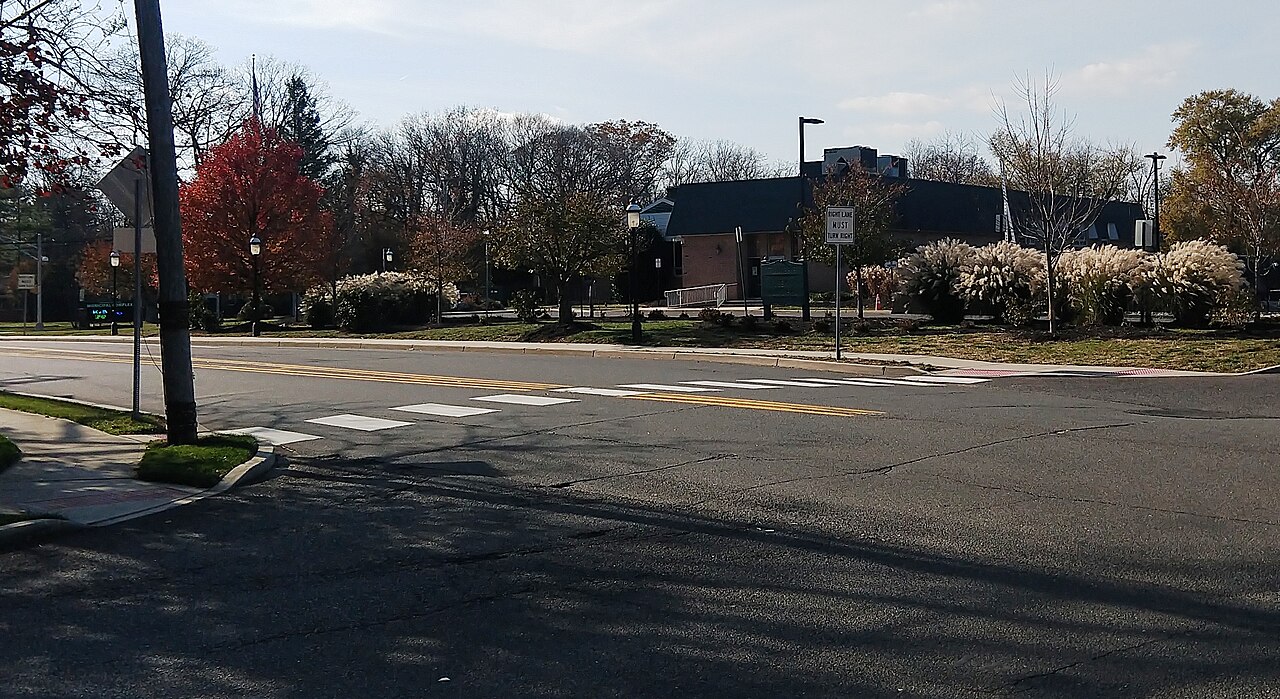
Mr. Matté (if there is an issue with this image, contact me using this image's Commons talk page , my Commons user talk page , or my English Wikipedia user talk page ; I'll know about it a lot faster) · Image source · CC BY-SA 4.0 · This photograph provides setting or historical context. It is not an authentic crime exhibit.

A morning appointment turned into a trap
Moore texted Kathleen about thirty minutes before arriving, according to the statement she read into the plea record. He reached the residence at approximately 7:30 a.m. She told him to retrieve his tools and took the child inside. In the same statement, she acknowledged knowing why Thomas was waiting outside. That knowledge was central to her accomplice liability. The case did not require a finding that she personally struck the fatal blow in order to establish participation in murder. [1]
Kathleen described hearing screams while changing her daughter’s diaper and then going outside after securing the child. Moore was lying in the driveway. A neighbor called out from a window to ask what was wrong. Kathleen admitted sitting beside him to shield him from view and repeatedly assuring the neighbor that everything was all right. The plea transformed what might otherwise have been a disputed explanation of her conduct into an admission of concealment. [1]
Thomas’s plea established his own responsibility for intentional fatal violence. The later appellate record compared what he said at that hearing with a very different account he offered years afterward. Those accounts cannot be blended into one scene. The accepted plea described a killing; the later certification attempted to recast it as the result of an argument and fall. The court found the later explanation inconsistent with the sworn record. [1]
Moving the body did not end the scheme
Kathleen admitted helping her father lift Moore’s body into the trunk of a vehicle belonging to her former mother-in-law. Thomas drove away. She later met him in Long Branch, followed him to where the car was abandoned, and drove him home. Her statement supplied a sequence of cooperative actions after the killing. It did not provide an exact route that can responsibly be plotted street by street. [1]
Back at the residence, father and daughter cleaned the area. Kathleen said she later knew that Thomas disposed of the collected items in a restaurant dumpster. A further concealment effort involved arson for hire, an offense to which Thomas later pleaded guilty. The charged case also involved Anthony Morris, whose role concerned the vehicle and its burning. The record should be followed by offense and participant rather than describing the whole family as responsible for every act in the same way. [1]
The geography gives the sequence a comprehensible shape: the visit and killing in Ocean Township, movement to Long Branch, a return and cleanup. Those are regional references, not verified coordinates for a driveway, dumpster or abandoned vehicle. Monmouth County contains the Ocean Township involved here; another township of the same name lies in a different county. The map uses the correct county reference without revealing the family’s private residence. [1]
The new target was chosen after the arrests
By late December 2010 and early January 2011, Kathleen was having conversations with another inmate about obtaining a killer for Moore’s mother. At the plea hearing, she explained the intended purpose: she wanted the woman unable to speak about plea negotiations in the case concerning her son. The second plan was therefore connected to the pending prosecution rather than merely another violent idea unrelated to the first crime. [1]
Kathleen said the inmate offered to find someone. She then contacted her mother, Lesley Dorsett, by telephone from jail and directed her to meet the supposed hit man, give him a $1,000 deposit, and supply a photograph and address. The designated killer turned out to be an undercover officer. The intended victim was not killed. The attempt and conspiracy charges arose from the steps taken toward that plan, not from a second completed murder. [1]
This difference matters visually as well as legally. An evidence guide showing a payment and an undercover meeting should not resemble a document recording a successful contract killing. The gallery follows the admitted steps and labels the officer’s role. It contains no fabricated jail transcript and no photograph of a target presented as a recovered exhibit. The record itself supplies the twist: the person asked to make a witness disappear was working for the police. [1]
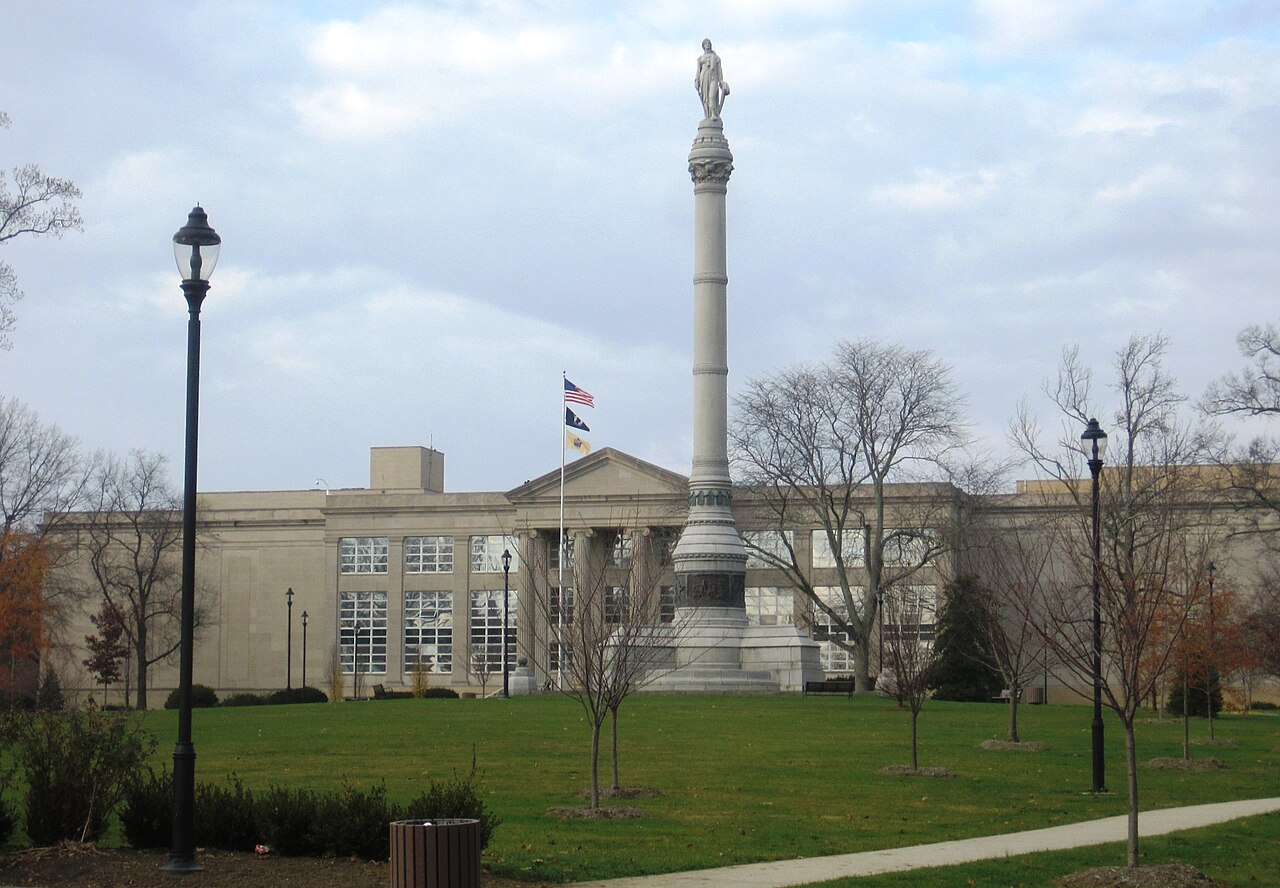
Mr. Matté · Image source · Public domain · This photograph provides setting or historical context. It is not an authentic crime exhibit.


Three pleas with different consequences
On May 9, 2013, Kathleen pleaded guilty to murder, conspiracy to desecrate human remains and attempted murder. Thomas pleaded guilty to murder and arson for hire. Lesley pleaded guilty to conspiracy in the second plot. Their charges were not identical. In particular, Lesley’s plea was not a conviction for murdering Moore. Describing three relatives as “the killers” would collapse legal roles that the court kept separate. [1]
Kathleen’s plea hearing included questions about voluntariness, counsel’s advice, the charges and possible consequences. She said that she understood and that no one had forced or threatened her to plead guilty. She also acknowledged that she could demand a trial at which the state would have to prove each element beyond a reasonable doubt. The judge did not accept only a prepared narrative without checking her understanding and the factual basis. [1]
On August 8, 2013, the court imposed an aggregate fifty-eight-year term on Kathleen, with forty-seven years before parole eligibility. Thomas received forty-five years with a thirty-year parole bar. Lesley received seven years under a rule requiring service of eighty-five percent. Those are distinct sentences with distinct restrictions. Adding the numbers together can produce a dramatic total, but it explains less than identifying why each person received a particular disposition. [1]
Contemporary reporting recorded the surprise guilty pleas and the agreement that avoided the scheduled trial. The later appellate opinion supplies the more detailed account of the admissions and sentencing terms used here. The two records describe different points in the proceedings: the public announcement that the case would not go to a jury, and the subsequent judicial review of whether Kathleen could undo her own plea. [1] [2]
The later account confronted the earlier admissions
Kathleen’s sentence was affirmed in April 2014. She later pursued post-conviction relief, alleging ineffective assistance of counsel and seeking to withdraw her plea. Her claims included pressure concerning her mother’s possible sentence and the loss of her child. She argued that counsel had left her without clear guidance and had pushed her to admit facts she disputed. The court had to assess those claims against the contemporaneous plea record. [1]
Thomas supplied a later certification describing an argument with Moore, a struggle and a fall onto metal items. It gave a date different from the August 16 chronology in Kathleen’s plea and denied her involvement in the fight. The post-conviction judge did not accept that account as a corrected history. It conflicted with Thomas’s own earlier admission of purposeful fatal violence and with Kathleen’s description of knowingly directing Moore into the trap. [1]
The court also rejected the argument that Kathleen’s absence from the fatal blow established a viable defense to the admitted murder. Accomplice liability turned on whether she intended to promote or facilitate the killing and knew what her father was waiting to do. At the plea hearing, the judge had specifically confirmed that bringing Moore into the backyard was her assigned role and that she knew the planned outcome. A later denial of personally striking him did not answer that admission. [1]

Acroterion · Image source · CC BY-SA 4.0 · This photograph provides setting or historical context. It is not an authentic crime exhibit.

Why the plea remained in place
In July 2016, the judge denied relief without an evidentiary hearing. The court found insufficient credible support for the claimed coercion and deficient representation, noting Kathleen’s sworn statements that the plea was voluntary and counsel had answered her questions. It also considered the consequences of undoing an agreement from which she had already received benefits. The decision addressed a post-sentencing request to withdraw, not a fresh presumption that every later assertion required another trial. [1]
The record identified practical changes as well. Lesley was due to complete her sentence, and Morris had served his term and no longer had the same incentive to cooperate. The court weighed potential prejudice and unfair advantage along with the claimed reasons for withdrawal. In June 2018, the Appellate Division affirmed. Its unpublished opinion provides a detailed history of this case but is not presented here as a binding rule for other defendants. [1]
Moore’s daughter had been the reason for the scheduled visit, not a participant in the scheme. His mother became the intended target of a later effort to affect the prosecution, and survived it. Keeping those people visible prevents the story from shrinking to the mechanics of a family plot. The gallery and chronological map distinguish the killing, the concealment, the second plan and the later court challenges. The critical evidence includes the admitted purpose behind a tool request—and the officer waiting at the end of a supposed murder contract. [1]
Look closer · 9 visuals
Inside the evidence.
Open a visual to explore what it contributed to the case—and the limits of what it shows. Photographs, historical reproductions and original illustrations are individually labeled. Open the notes for each image’s source, credit, and limitations; setting photographs do not depict crime scenes.
The tool request was a trap
Original editorial illustration — not an actual evidence photograph or exhibit.
Read the evidence notes
Kathleen admitted knowing why her father was waiting.
Editorial diagram; no photograph of Moore’s actual tools.
The neighbor at the window
Original editorial illustration — not an actual evidence photograph or exhibit.
Read the evidence notes
The plea describes Kathleen’s response to the neighbor.
No invented dialogue or reconstruction of the residence.
A car, a fire, a cleanup
Original editorial illustration — not an actual evidence photograph or exhibit.
Read the evidence notes
The pleas describe coordinated concealment after the killing.
Overlapping actions are not assigned unsupported minutes.
The hit man was an officer
Original editorial illustration — not an actual evidence photograph or exhibit.
Read the evidence notes
The second plot involved an undercover officer, not a successful second killing.
The image is not a genuine jail-call transcript.
Three defendants, different charges
Original editorial illustration — not an actual evidence photograph or exhibit.
Read the evidence notes
Their guilty pleas and sentences involved different offenses.
Lesley’s seven-year sentence did not concern a conviction for Stephen’s murder.
The later story met the sworn plea
Original editorial illustration — not an actual evidence photograph or exhibit.
Read the evidence notes
The court found the later accounts inconsistent with the plea record.
The later account is a rejected claim, not the established event sequence.
Ocean Township municipal building in Monmouth County
Geographic context photograph — not a crime-scene image.
Read the evidence notes
Ocean Township municipal building in Monmouth County. Geographic context photograph; not a crime-scene image or evidence of an event shown on the map.
This photograph provides setting or historical context. It is not an authentic crime exhibit. The source and reuse terms are linked below.
Mr. Matté (if there is an issue with this image, contact me using this image's Commons talk page , my Commons user talk page , or my English Wikipedia user talk page ; I'll know about it a lot faster) · Image source · CC BY-SA 4.0
Battle of Monmouth monument and Monmouth County Courthouse
Geographic context photograph — not a crime-scene image.
Read the evidence notes
Battle of Monmouth monument and Monmouth County Courthouse. Geographic context photograph; not a crime-scene photograph or an authentic exhibit.
This photograph provides setting or historical context. It is not an authentic crime exhibit. The source and reuse terms are linked below.
Mr. Matté · Image source · Public domain
The Asbury Park boardwalk, Monmouth County context
Geographic context photograph — not a crime-scene image.
Read the evidence notes
The Asbury Park boardwalk, Monmouth County context. Geographic context photograph; not a crime-scene image or evidence of an event shown on the map.
This photograph provides setting or historical context. It is not an authentic crime exhibit. The source and reuse terms are linked below.
Acroterion · Image source · CC BY-SA 4.0
★ Key evidence used in a conviction · ✓ Exclusion or reversal · ◇ Disputed evidence · ⊘ Excluded at retrial · ◆ Identity / investigative finding, not a conviction. A symbol does not mean one item proved the whole case.
Follow the locations
Put the story on the map.
Follow the dated entries, then select an event to find its regional setting. Shared-location pins open a group of events. Evidence symbols identify important findings and their limitations.
Open the map in its own window ↗Sources & further reading
- State v. Kathleen Dorsett, A-0311-16T3 — New Jersey Appellate DivisionPlea admissions, second plot, individual sentences, later contradictory accounts and affirmed denial of relief.
- Monmouth murder defendants drop courtroom bombshell — WOBMContemporary plea reporting; identities and initial aftermath. Limited paraphrase.
Editorial review: 2026-10-06 · 1586 words