Michael Renaud said he knew who answered the telephone at Comics Book World on July 13, 1990. What he could not hold steady was the time. His estimates moved from around six in the evening to earlier windows beginning at 5:15. That uncertainty became one of the central disputes in the murder of Barbara George, who was found fatally shot in the back room of the Clinton Township store shortly after six. Her husband, Michael, said he had been somewhere else. [1]
Case brief
Clinton Township, Michigan · 1990
- Recorded outcome
- First conviction in 2008 set aside; retrial convictions in 2011 affirmed May 21, 2013; Michigan Supreme Court denied leave February 28, 2014.
Key moments
People in this case
- Michael George
Convicted of murdering Barbara George
Photo in public profile · Michigan Department of Corrections · enter 684257 and select the matching result
The call was not a recording, a timestamped telephone-company entry or an eyewitness account of the shooting. It was a witness’s recollection of a conversation, revisited when police reopened the case seventeen years later. The prosecution argued that it placed Michael at the store near the critical period and undermined his alibi. The defense argued that the shifting estimates exposed a dangerous gap. Both the importance of the call and its limits belong in the story. [1]
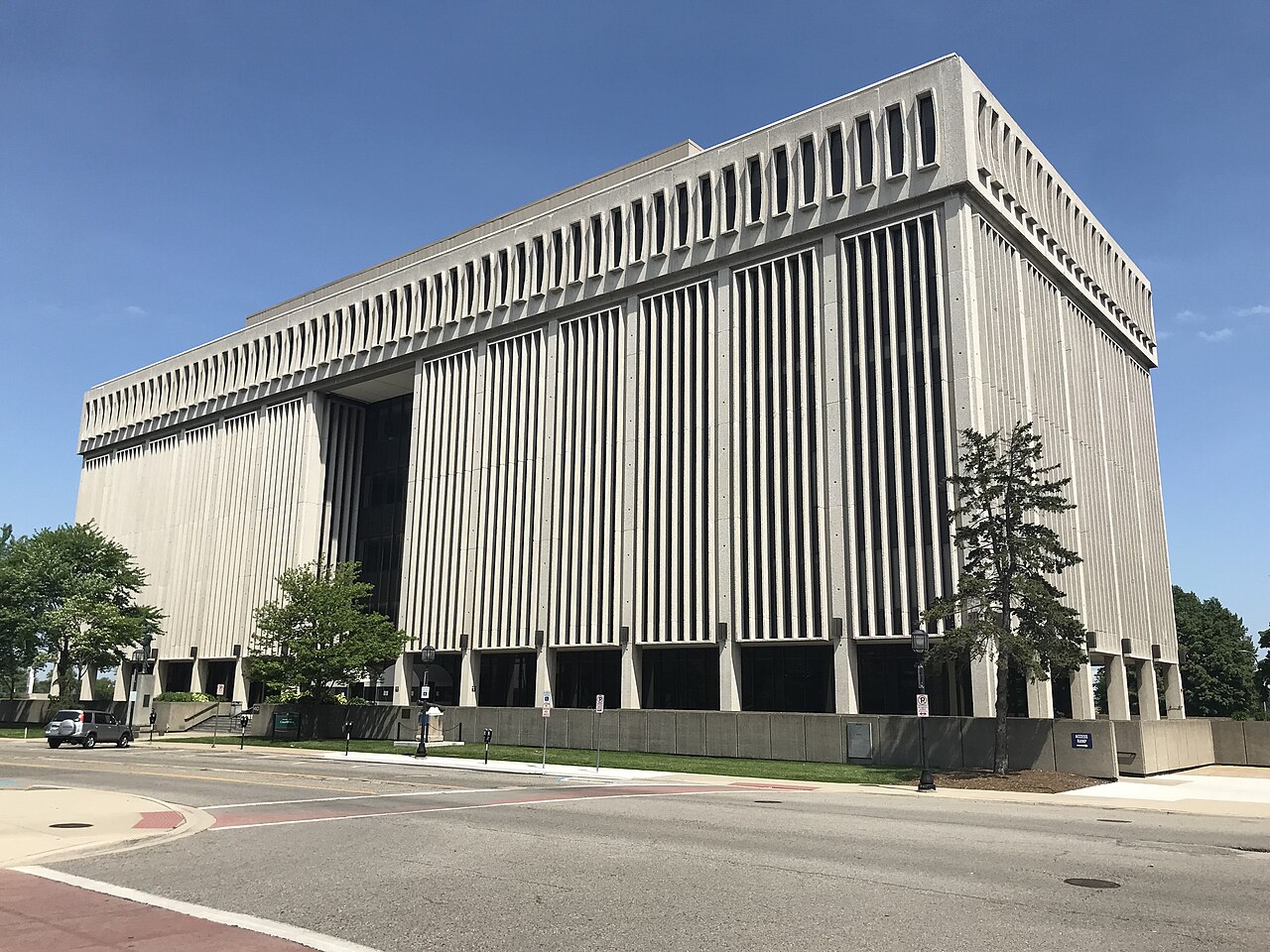
WeaponizingArchitecture · Image source · CC BY-SA 4.0 · This photograph provides setting or historical context. It is not an authentic crime exhibit.

The store and the family
Barbara and Michael owned the comic-book store together and had two young daughters. On the day she died, customers, employees and friends saw or spoke to Barbara at different times. Their accounts helped narrow the period in which she could have been shot. No one witnessed the shooting itself, no one saw Michael at or near the store at that moment, and no physical evidence linked him to the homicide. The later appellate opinion states those limitations plainly. [1]
Michael’s account was that he left the store at roughly 4:30 p.m., took the children to his mother’s home in Hazel Park, and remained there until after Barbara had been shot. His mother, Janet George, corroborated him. The officer in charge of the original investigation was satisfied with that explanation. The 1990 investigation produced no charges. The case therefore began with an accepted alibi rather than an immediate prosecution in which the telephone call had already been resolved. [1]
The prosecution later presented evidence of an unhappy marriage and Michael’s extramarital relationship with Renee Kotula, whom he married in 1992. It also identified financial benefits following Barbara’s death: $125,000 in life-insurance proceeds and a property claim concerning seventy-seven comic books, with an insurance benefit of $12,604. Those figures supplied possible incentives. They could not establish the identity of the shooter by themselves, a point the appellate court expressly recognized when evaluating the combined evidence. [1]
What the robbery explanation had to account for
The defense argued that Barbara had been killed during an attempted robbery. The store’s condition created questions about that explanation. Money in the cash register remained, as did Barbara’s expensive jewelry. The prosecution used those facts to argue that robbery did not adequately explain the scene. The claimed loss of collectible books was a separate matter, eventually tied to the insurance charges on which Michael was convicted. [1]
Investigators also considered access. Many customers entered and left the front of the store during the period near the killing. The prosecution argued that a killer could have used the rear entrance, and evidence identified Michael as the only known person with keys to that door. A key can establish access without establishing that it was used at a particular time. Here, its role depended on the telephone account, the surrounding timeline and the other circumstances the jury heard. [1]
The prosecution also pointed to Michael’s knowledge of where Barbara had been found and the general nature of her injury before others had supplied that information. Witnesses described reactions they regarded as unemotional or inappropriate. Such testimony is part of the court record, but grief does not have one mandatory outward form. The stronger account of the case keeps those impressions in their proper place within the prosecution’s theory rather than treating demeanor as a reliable detector of guilt. [1]
A return trip the jury could infer
When police reopened the investigation in 2007, they reconsidered Renaud’s account. He maintained that he had spoken to Michael at the store on the day of the killing. His initial estimate was around 6 p.m.; later estimates moved to between 5:15 and 5:45, and then most likely between 5:15 and 5:30. The appellate court treated identification and timing as related but separable questions. A jury could believe whom he recognized while remaining uncertain about the minute. [1]
The prosecution’s reconstruction was that Michael took the children to Hazel Park, returned to the store in a different vehicle, entered through the rear and later returned to his mother’s home. The appellate opinion described that as a permissible inference when the evidence was viewed in the prosecution’s favor. It was not a trip observed continuously by a witness. This account therefore does not convert it into a definitive route on the map or assign it a precise travel time. [1]
Janet’s testimony was also subject to challenge. The opinion noted that she had previously told police Michael left her home at 5:30. The jury was not required to accept every part of her account or every part of Renaud’s. It could assess the inconsistencies and decide which portions were credible. For the defense, those conflicts were reasons to doubt the reconstruction; for the prosecution, they allowed the alibi to be tested rather than accepted as a single fixed block of time. [1]
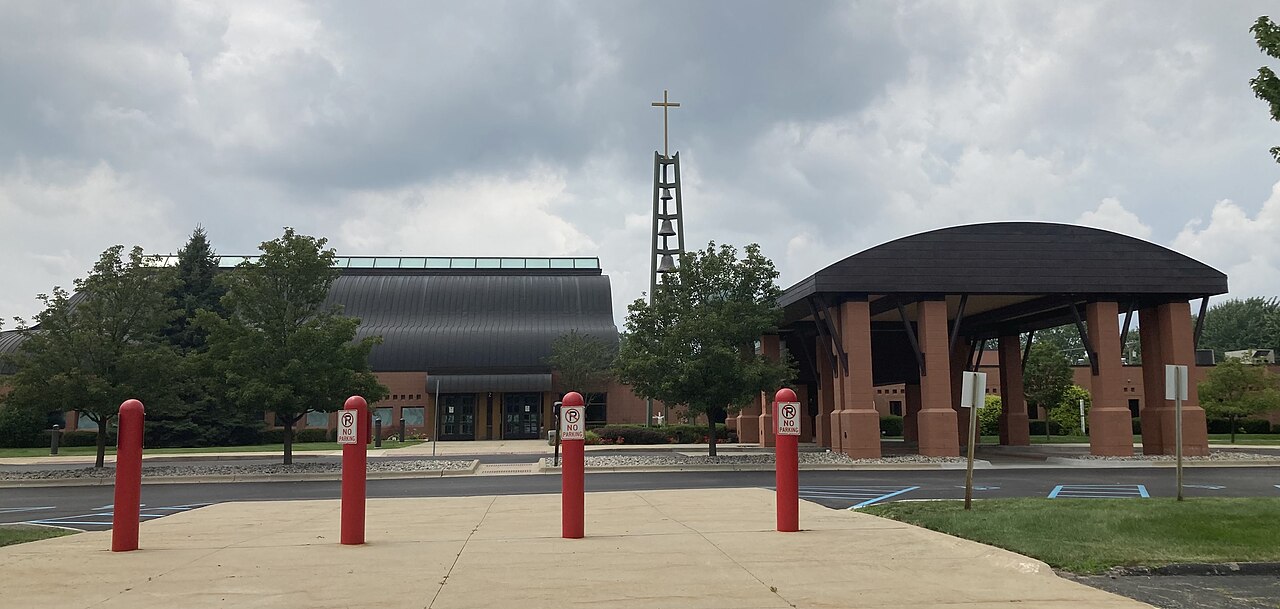
Dclemens1971 · Image source · CC BY 4.0 · This photograph provides setting or historical context. It is not an authentic crime exhibit.

The first verdict did not survive
In 2008, a jury convicted Michael of murder and the associated offenses. But the trial court granted a new trial after problems emerged involving prosecutorial misconduct and undisclosed police tip sheets. Those sheets suggested another possible perpetrator and provided material the defense could have used to challenge the investigation. In May 2010, the Court of Appeals upheld the new-trial order. The first guilty verdict was not the final legal outcome. [1]
One tip recorded an allegation that another man with connections to the store owners might have been involved. It described reported financial need and movements into and out of Michigan. Those allegations were not proof that the man killed Barbara. Their importance at the new-trial stage was that the defense had not received information capable of supporting an alternative theory or exposing gaps in the police work. Evidence can matter to trial fairness without conclusively establishing an alternative killer. [1]
At the retrial, the treatment of alternative-suspect material remained contested. The later opinion explains that some statements were secondhand, that later speakers denied or recanted aspects of the original accusation, and that hearsay restrictions affected questioning. The defense continued to attack the adequacy of the investigation. The court reviewed those restrictions as legal rulings, rather than resolving every old rumor as an independent historical fact. Naming a person in a tip did not turn that person into a convicted accomplice or murderer. [1]
A second jury and a different appeal
The retrial in 2011 again resulted in convictions for first-degree premeditated murder, insurance fraud, false pretenses and felony firearm. Michael received life imprisonment for murder, additional concurrent terms on the fraud-related counts, and a consecutive two-year firearm term. In May 2013, the Court of Appeals affirmed. This was the judgment that followed the new trial, not a reinstatement of the first verdict through a shortcut. [1]
The sufficiency issue was central. The court acknowledged that motive and opportunity alone would not establish murder. It held that the record supplied more: the telephone testimony, the challenge to the alibi, access through the back, knowledge of the scene, the remaining valuables and the financial and personal context. Under the appellate standard, a rational jury could combine those circumstances and find guilt beyond a reasonable doubt. That conclusion did not make every disputed detail suddenly undisputed. [1]
A separate challenge concerned the prosecutor’s suggestion that Michael might have had an accomplice, possibly Kotula, based on a witness’s description of a disguised person. The appellate court permitted the argument as an inference from evidence and noted that jurors were instructed that lawyers’ arguments were not evidence. The ruling was not a conviction of Kotula or a finding that every step of an accomplice theory had been proved. An accurate retelling cannot promote a possible explanation into a settled event. [1]
In February 2014, the Michigan Supreme Court denied the application for leave to appeal. That order declined further review; it did not hold a new trial or make new findings about the telephone call. The reviewed sequence ends with the retrial conviction and the appellate decisions that left it standing. That order is the latest ruling included in the historical record reviewed here. [2]

Michael Tighe · Image source · CC0 · This photograph provides setting or historical context. It is not an authentic crime exhibit.

Why the uncertainty stays visible
Barbara’s case is compelling because the evidence did not arrive as one indisputable image. The same call that challenged an alibi carried changing time estimates. The same investigation that led to a conviction contained undisclosed material serious enough to require another trial. The second jury’s verdict survived, but the failures surrounding the first verdict remain part of the history. Omitting either side would make the case easier to tell and harder to understand. [1]
The map preserves the call’s range and identifies the return trip as an inference. The gallery separates the phone recollection, access evidence, insurance claim and missing tips. Its photographs show the region and legal context, not the store’s original back room or an authentic murder exhibit. The reader can examine how the parts fit without being asked to pretend that a disputed telephone conversation was a timestamped confession.
Look closer · 9 visuals
Inside the evidence.
Open a visual to explore what it contributed to the case—and the limits of what it shows. Photographs, historical reproductions and original illustrations are individually labeled. Open the notes for each image’s source, credit, and limitations; setting photographs do not depict crime scenes.
A phone call with a moving time
Original editorial illustration — not an actual evidence photograph or exhibit.
Read the evidence notes
Renaud maintained who answered but gave different time estimates.
The illustration is not a phone-company log or recording.
An alibi spanning two towns
Original editorial illustration — not an actual evidence photograph or exhibit.
Read the evidence notes
The court described a return trip as a permissible jury inference.
No exact route, driving time or witnessed return is claimed.
What the robbery left behind
Original editorial illustration — not an actual evidence photograph or exhibit.
Read the evidence notes
The remaining valuables challenged the robbery theory alongside insurance evidence.
This is not an inventory photograph.
The missing tips mattered
Original editorial illustration — not an actual evidence photograph or exhibit.
Read the evidence notes
Failure to disclose alternative-suspect material helped undo the first conviction.
The tips did not prove that another named person committed murder.
Evidence and inference
Original editorial illustration — not an actual evidence photograph or exhibit.
Read the evidence notes
The second judgment rested on a combined circumstantial case.
No single diagram makes the disputed call conclusive.
Two juries, two legal stages
Original editorial illustration — not an actual evidence photograph or exhibit.
Read the evidence notes
The final reviewed conviction followed a retrial.
The 2014 leave denial is separately linked.
Macomb County Courthouse in Mount Clemens
Geographic context photograph — not a crime-scene image.
Read the evidence notes
Macomb County Courthouse in Mount Clemens. Geographic context photograph; not a crime-scene image or evidence of an event shown on the map.
This photograph provides setting or historical context. It is not an authentic crime exhibit. The source and reuse terms are linked below.
WeaponizingArchitecture · Image source · CC BY-SA 4.0
St. Paul of Tarsus Church in Clinton Township
Geographic context photograph — not a crime-scene image.
Read the evidence notes
St. Paul of Tarsus Church in Clinton Township. Geographic context photograph; not a crime-scene image or evidence of an event shown on the map. No affiliation with the victim or the case is implied.
This photograph provides setting or historical context. It is not an authentic crime exhibit. The source and reuse terms are linked below.
Dclemens1971 · Image source · CC BY 4.0
The Detroit skyline, regional context
Geographic context photograph — not a crime-scene image.
Read the evidence notes
The Detroit skyline, regional context. Geographic context photograph; not a crime-scene image or evidence of an event shown on the map.
This photograph provides setting or historical context. It is not an authentic crime exhibit. The source and reuse terms are linked below.
Michael Tighe · Image source · CC0
★ Key evidence used in a conviction · ✓ Exclusion or reversal · ◇ Disputed evidence · ⊘ Excluded at retrial · ◆ Identity / investigative finding, not a conviction. A symbol does not mean one item proved the whole case.
Follow the locations
Put the story on the map.
Follow the dated entries, then select an event to find its regional setting. Shared-location pins open a group of events. Evidence symbols identify important findings and their limitations.
Open the map in its own window ↗Sources & further reading
- People v. George, 307879 — Michigan Court of Appeals1990 evidence, contested alibi, missing tips, 2008 and 2011 trials, judgment affirmance. Unpublished opinion.
- People v. George, 495 Mich 946 — Michigan Supreme Court orderDenied application for leave to appeal, rather than a new trial finding.
Editorial review: 2026-10-06 · 1564 words