One piece of the bag found with Michelle Mockbee’s body was tested. Another was discarded. A surveillance recording stayed in the prosecution’s possession through David Dooley’s first trial. Several years later a judge set aside the conviction and ordered another trial. In that second proceeding the state still had the tested fragment, and the defense still had questions about what might have been learned from the piece nobody tested. What happened to the two pieces of evidence produced two different legal answers. [1] [2]
Case brief
Florence, Kentucky · 2012
- Recorded outcome
- David Dooley’s first conviction was set aside. Convicted of murder and tampering in 2019, sentenced to 43 years and affirmed in 2021.
Key moments
People in this case
- Michelle Mockbee
Murder victim
Photo at source · Middendorf-Bullock Funeral Homes · family obituary
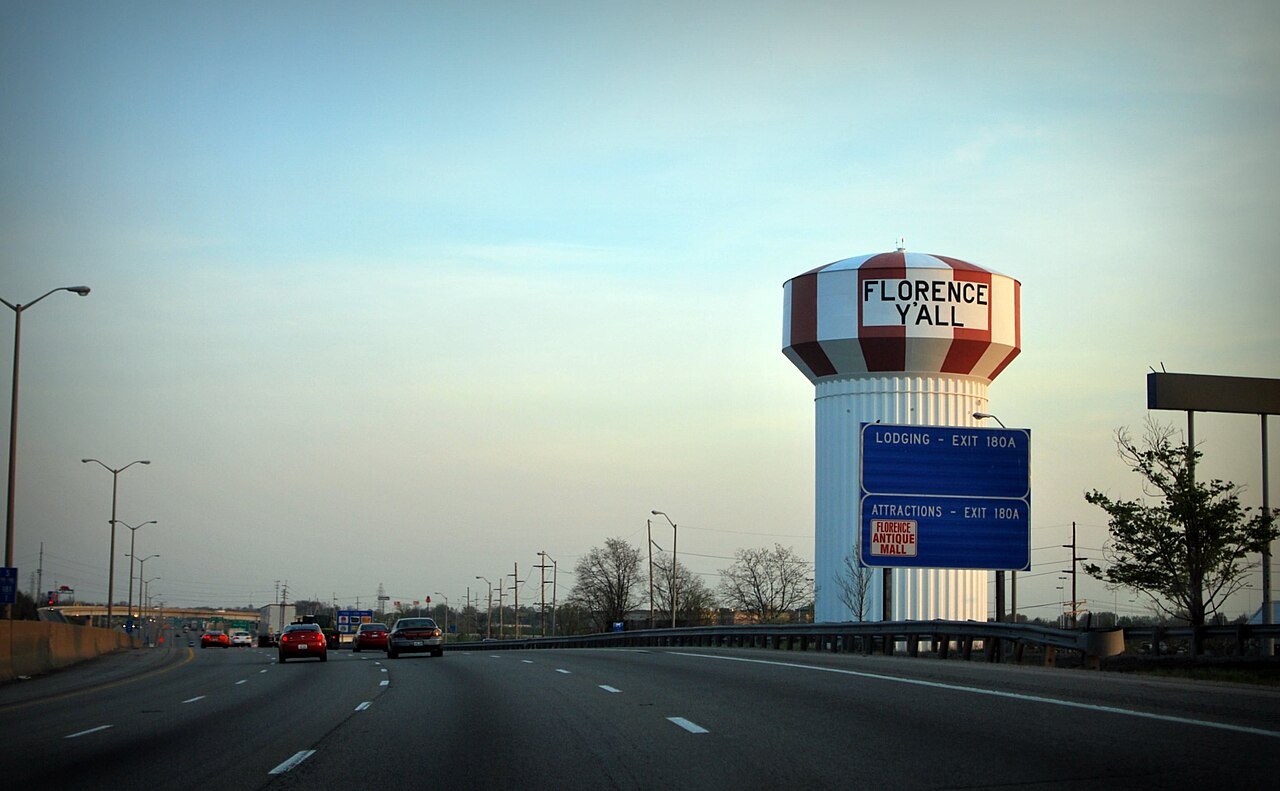
Morgan from Montreal, Quebec, Canada · Image source · CC BY 2.0 · Geographic context; not authentic crime evidence. The building or landscape is public geographic context; no event is assigned to it.

An early start at the warehouse
Michelle Mockbee worked in payroll at Thermo Fisher Scientific in Florence, Kentucky. She arrived early on May 29, 2012. Later that morning she was found dead in a mezzanine inside the workplace. The building was part of a large site with employees and people coming and going on business. The location gave police a defined place to investigate, but it did not narrow the field to a room only one person could enter. No one in the appellate account saw her being killed or saw a perpetrator move the evidence. [1] [4]
The state’s eventual theory took shape around a mundane part of Michelle’s job. Dooley and his wife did cleaning work at the facility. The Kentucky Supreme Court’s summary describes Dooley clocking in for both of them during a period when his wife was sick. Prosecutors argued that the payroll records supplied a reason for him to worry about Michelle discovering the practice. That argument connected an ordinary administrative duty with the alleged motive. It did not establish what she knew that morning or document a confrontation. [1]
A jury hearing a workplace murder case must do more than identify who was unhappy with someone or who had a reason to be in the building. People can enter and leave a large workplace for routine reasons. A cleaner has legitimate reasons to handle cleaning chemicals and tools. A worker who has reported hours inaccurately could have a reason to conceal the hours without ever committing violence. Investigators needed physical evidence or observations that linked those otherwise ordinary circumstances to the killing. [1]
What the retained fragment told investigators
A plastic restaurant carry-out bag was found over Michelle’s head. Investigators cut it into pieces during removal. The piece that went to the laboratory yielded DNA attributed to Dooley as well as Michelle. That was a link between Dooley and a specific item associated with the body, far more particular than his access to the workplace. The Kentucky Supreme Court treated it as significant evidence that he had likely touched the bag at some point. [1]
That last qualification is important. A profile can connect a person to material on an object without placing a clock on the contact. The finding did not show the moment when the bag was handled, who put it on Michelle or how any contact occurred. For a jury, the question was how likely the association was to be innocent in light of where the fragment came from and everything else known about the morning. For a forensic illustration, the proper endpoint is a profile associated with a retained fragment. A drawing showing Dooley using the bag would supply a scene the record does not contain. [1]
The other fragment, described by the court as bloodier, was apparently discarded. It was never tested. Its result cannot be inferred from the retained piece, and it cannot be credited with a result favorable to either side. The defense sought an instruction permitting the jury to draw a favorable inference if it found the required circumstances concerning the loss. The judge refused. On appeal, the state Supreme Court recognized the difficulty of showing bad faith and the fact that the loss was described as a mistake. It held that the prospect of a potentially favorable result was too speculative to require the instruction under the standard it applied. [1]
A morning made of observations
The rest of the case included evidence investigators read as signs of wiping, testimony about the unusual strength of bleach in a closet Dooley used and observations about his exceptionally clean white shoes. The court describes him leaving the workplace around the relevant period, with his explanation that he went to check on his wife. Each observation supplied a detail the prosecution could align with its account of the killing and cleanup. None gave investigators a view of the murder. [1]
Bleach illustrates the problem of interpreting a fact at a place where the substance normally belongs. The state cited the location and unusual strength of the bleach odor as significant. Witnesses could compare that morning with what they routinely observed. The defense could point to the legitimate presence of bleach in a cleaner’s work. The appeal distinguished the evidence from the closet from a separate container recovered elsewhere in the building, which the prosecution said helped document the scope of the search. A strong odor may support a cleanup inference. It does not identify who wiped a particular surface. [1]
The white shoes and the departure had similar limits. Jurors could consider whether co-workers remembered the footwear because it was out of the ordinary and whether the timing of an absence fit an innocent explanation. A shoe that looks unusually clean and a trip home have significance only with context. The record does not describe a shoe-print identification that would let a reader use the shoes like the tested fragment. [1]
w_lemay · Image source · CC0 · Geographic context; not authentic crime evidence. The building or landscape is public geographic context; no event is assigned to it.

The first conviction comes apart
Dooley was convicted in 2014. The first judgment did not settle the case because the defense had not received relevant surveillance footage before trial. It showed an unidentified person on the property. In 2017 the trial court set aside the judgment and granted a new trial. The court’s concern was the defense’s opportunity to examine and use information with possible exculpatory value. The recording did not have to show someone killing Michelle to matter. It could change how the defense investigated access to the site or tested the state’s reconstruction. [1] [2]
The video and the discarded fragment were tempting to lump together as missing evidence. They differed in ways important to the judges. There was an actual recording in the state’s possession and a known image that the defense had not been given. The fragment was gone, and what testing would have shown was unknown. The ruling about the footage gave Dooley a new trial. The ruling about the fragment did not give him an instruction authorizing an inference on the basis of an imagined result. Neither ruling identified the person in the recording as the killer. [1] [2]
A second jury and two objects that should have stayed out
The second jury convicted Dooley of murder and tampering with physical evidence in 2019. He received a forty-three-year sentence. The new judgment made the later appellate issues different from the issue that undid the first trial. The Kentucky Supreme Court examined evidence the second jury had heard, including a red folding knife and latex gloves taken from his truck months after the murder. [1] [3]
The justices held that the prosecution had shown too little connection between those objects and the crime. There was no forensic comparison linking the knife to Michelle’s injuries. A theory that the perpetrator might have worn gloves could not be substantiated just by pointing to limited DNA and a box of gloves in a truck. The fact that both items had been seized did not make them the murder weapon and equipment used at the scene. Dooley had a work-related explanation for possessing them, and the defense had the chance to expose the weak foundation through cross-examination. [1]
The court concluded that their admission was an error but was harmless in the context of the second trial. It also considered a witness issue and the defense’s cumulative-error argument before affirming in February 2021. The finding of harmlessness did not retroactively turn the knife and gloves into relevant exhibits. It meant that the errors did not require overturning the second judgment. That nuance belongs beside the verdict rather than at the end of a footnote. [1]

EEJCC · Image source · CC BY-SA 4.0 · Geographic context; not authentic crime evidence. The building or landscape is public geographic context; no event is assigned to it.

What the two trials reveal about the record
Michelle’s killing generated a file that could support a prosecution while containing investigative mistakes and evidence that was weaker than its appearance suggested. The most direct physical association cited in the appeal was the DNA on the saved fragment. The discarded piece remained untested. A withheld video had enough potential significance to require a new trial. Tools and supplies admitted in the second trial lacked a specific connection to the killing. The case would be difficult to understand if all four were reduced to a list of suspicious objects. [1] [2]
The map puts the two verdicts in order and marks the separate evidence rulings in the proceedings where they mattered. The first jury’s verdict was set aside. The second judgment survived review. Neither event changes what was learned in the laboratory or restores the discarded material. That is why the chain in the gallery stops where the physical evidence stops, even though the history of the case goes on. [1] [2] [3]
Look closer · 9 visuals
Inside the evidence.
Open a visual to explore what it contributed to the case—and the limits of what it shows. Photographs, historical reproductions and original illustrations are individually labeled. Open the notes for each image’s source, credit, and limitations; setting photographs do not depict crime scenes.
The fragment with a result
Original editorial illustration — not an actual evidence photograph or exhibit.
Read the evidence notes
The lab linked Dooley to material on one fragment.
Contact cannot be timed by this result.
The other fragment
Original editorial illustration — not an actual evidence photograph or exhibit.
Read the evidence notes
A second piece was unavailable for testing.
Neither an inculpatory nor an exculpatory result can be assigned.
Footage the defense did not receive
Original editorial illustration — not an actual evidence photograph or exhibit.
Read the evidence notes
The court found potential value to the defense.
The video did not establish the identity of the killer.
The payroll theory
Original editorial illustration — not an actual evidence photograph or exhibit.
Read the evidence notes
The state linked payroll access to a theory of motive.
The evidence does not document a confrontation.
Bleach and white shoes
Original editorial illustration — not an actual evidence photograph or exhibit.
Read the evidence notes
Witness observations supported a circumstantial argument.
There is no shoe-print identification in the reviewed summary.
Items without a specific link
Original editorial illustration — not an actual evidence photograph or exhibit.
Read the evidence notes
The state Supreme Court said the items should not have been admitted.
The error did not overturn the retrial judgment.
The Florence water tower in northern Kentucky
Context photograph — not an actual crime exhibit. The building or landscape is public geographic context; no event is assigned to it.
Read the evidence notes
The Florence water tower in northern Kentucky. Geographic context photograph; not a crime-scene photograph or an original evidence exhibit. The building or landscape is public geographic context; no event is assigned to it.
Geographic context; not authentic crime evidence. The building or landscape is public geographic context; no event is assigned to it. The source and reuse terms are linked below.
Morgan from Montreal, Quebec, Canada · Image source · CC BY 2.0
Boone County Courthouse in Burlington
Context photograph — not an actual crime exhibit. The building or landscape is public geographic context; no event is assigned to it.
Read the evidence notes
Boone County Courthouse in Burlington. Geographic context photograph; not a crime-scene photograph or an original evidence exhibit. The building or landscape is public geographic context; no event is assigned to it.
Geographic context; not authentic crime evidence. The building or landscape is public geographic context; no event is assigned to it. The source and reuse terms are linked below.
w_lemay · Image source · CC0
Covington, Kentucky, in the Northern Kentucky region
Context photograph — not an actual crime exhibit. The building or landscape is public geographic context; no event is assigned to it.
Read the evidence notes
Covington, Kentucky, in the Northern Kentucky region. Geographic context photograph; not a crime-scene photograph or an original evidence exhibit. The building or landscape is public geographic context; no event is assigned to it.
Geographic context; not authentic crime evidence. The building or landscape is public geographic context; no event is assigned to it. The source and reuse terms are linked below.
EEJCC · Image source · CC BY-SA 4.0
★ Key evidence used in a conviction · ✓ Exclusion or reversal · ◇ Disputed evidence · ⊘ Excluded at retrial · ◆ Identity / investigative finding, not a conviction. A symbol does not mean one item proved the whole case.
Follow the locations
Put the story on the map.
Follow the dated entries, then select an event to find its regional setting. Shared-location pins open a group of events. Evidence symbols identify important findings and their limitations.
Open the map in its own window ↗Sources & further reading
- Dooley v. Commonwealth · Kentucky Supreme CourtRetrial record, DNA, bag fragment, harmless errors, prior vacatur and affirmance.
- Northern Kentucky Tribune · Order granting a new trialFirst conviction set aside and reason for new trial.
- WCPO · Verdict in the David Dooley retrialSecond verdict. Sentence also checked in the court opinion.
- WCPO · Retrial hearing coverageDate of the killing and context for hearing.
Editorial review: 2026-11-09 · 1509 words