On an Ohio Turnpike shoulder, a man took a wallet and shot Dr. Gulam Moonda. The account of a robbery was plausible enough to explain why a stranger might pull over behind a car and confront its occupants. What it could not explain was why the gunman had followed this particular car across Ohio, or what the wallet had been doing in Donna Moonda’s hands at a service plaza before the shooting. Investigators compared a short roadside event with hours of records left by two vehicles and the people using them. [1]
Case brief
Ohio Turnpike · 2005
- Recorded outcome
- Donna Moonda convicted in federal court and sentenced to life. Damian Bradford pleaded guilty and testified. His later revocation arose from a separate matter.
Key moments
People in this case
- Damian Bradford
Pleaded guilty in the killing of Dr. Gulam Moonda
Photo at source · CBS Pittsburgh · published photograph - Donna Moonda
Convicted in Dr. Gulam Moonda’s murder
Photo at source · CBS Pittsburgh · labeled case photograph with Damian Bradford
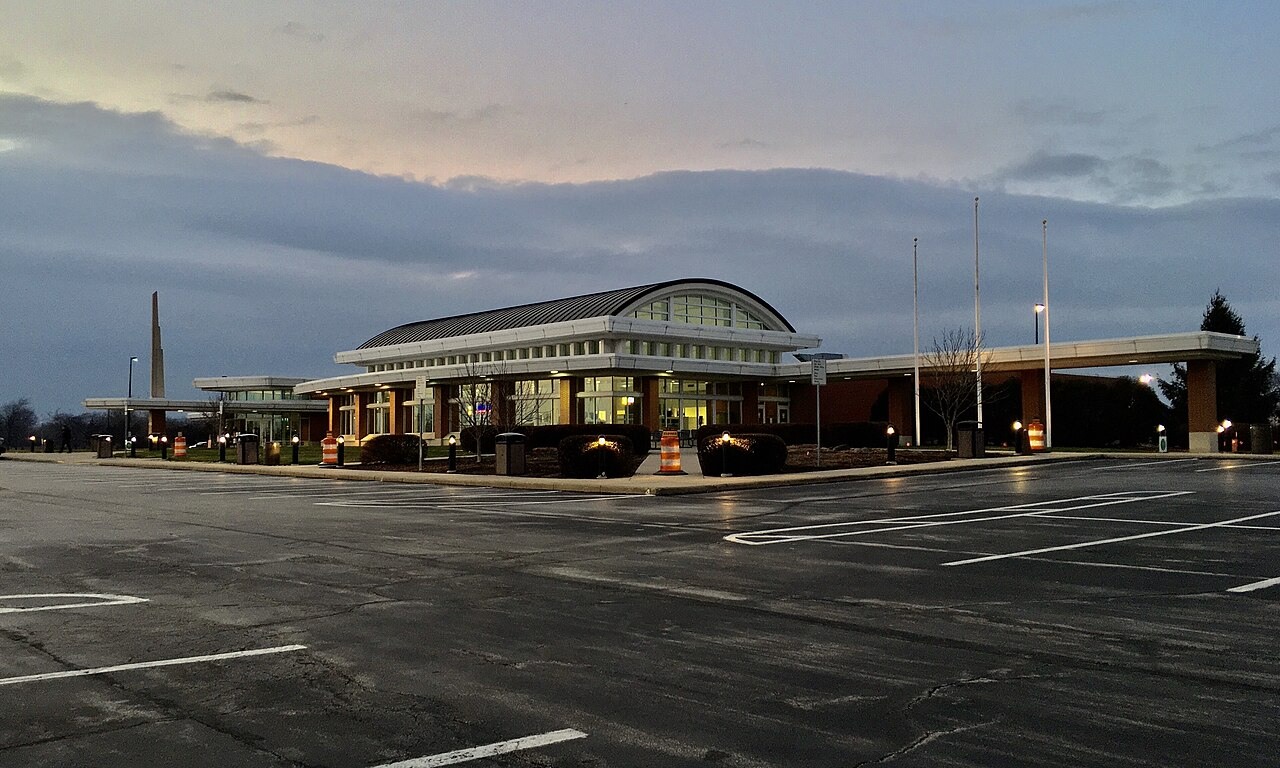
Andre Carrotflower · Image source · CC BY-SA 4.0 · Geographic context; not authentic crime evidence. The image does not show the identified shooting location or the vehicles involved. This is a different plaza from the Portage County stop in the case.

Before the trip
Gulam and Donna Moonda lived in western Pennsylvania. Donna met Damian Bradford in group treatment after a case involving theft of pain medication. Their relationship became intimate. In the account the federal appellate court later reviewed, she gave Bradford gifts, including phones used in the period of the killing. Bradford testified that she wanted her husband killed and offered him a share of an expected inheritance. The payment arrangement was part of the government’s case, and its source was a man describing an agreement he said he had made. [1]
Bradford also described a proposal to attack Gulam in a different setting that was never carried out. Its importance was the sequence. The government was arguing that the turnpike shooting grew out of a plan already under discussion. Evidence of an unexecuted plan could bear on intent if jurors believed the witness. It could not independently prove that the man beside the car was Bradford or that Donna knew how the killing would actually unfold. Those were questions the records from May 13, 2005, helped investigators answer. [1]
Bradford’s eventual plea gave him a strong reason to cooperate. That does not make everything he said either true or false as a block. A jury could compare his description of following the vehicle, his account of communications and his identification of the wallet with evidence that existed before any bargain. The distinction between his later testimony and the earlier records is what makes this case possible to follow without requiring readers to take either participant’s account on faith. [1] [2]
The two cars travel west
On May 13, Gulam, Donna and her mother Dorothy traveled from Pennsylvania into Ohio. The government built part of the sequence around directions printed before the trip, phone activity and turnpike records. The three people in the Moonda vehicle were making a trip together. Evidence of another vehicle near the same places around the relevant times gave investigators a reason to investigate whether the roadside meeting was arranged. It did not put both drivers in continuous view for every mile. [1]
The telephone evidence had two uses. Billing or call records could show when accounts communicated, and the tower information could place activity in a broad area. Neither supplied the words exchanged. Nor does a tower connection tell a reader which lane a car occupied. Toll records had a different geography. They tied a vehicle to an entry or exit rather than describing what happened on an open stretch of pavement. The case drew force from the combination of the two systems with witnesses and video. A route drawn as if it came from live GPS would misstate the precision of the record. [1]
The travelers stopped at a service plaza in Portage County. Surveillance footage showed the wallet in Donna’s possession there. By itself that image could describe one spouse holding a wallet during a stop. Its meaning changed when investigators compared it with the later account of the gunman taking the wallet from Gulam. The footage created a factual question the jury could consider independently of Bradford’s description of why a robbery was staged. It established possession at the stop. It did not show a concealed agreement made earlier or the act of transferring a wallet later. [1]
An encounter at the shoulder
Later that evening the Moonda vehicle was on the shoulder in the vicinity of the turnpike’s Exit 161. Bradford pulled in behind, according to his testimony and the government’s reconstruction. A wallet was taken and Gulam was shot. Dorothy was present. Accounts from the people at the scene and passing motorists helped investigators place the encounter. The event occurred on a high-speed road where bystanders had only brief views. The various clocks and estimates do not support a synchronized second-by-second replay. [1]
The prosecution’s interpretation gave the theft of the wallet a different purpose. Taking it made a targeted killing look like a robbery. Investigators later recovered discarded material along the turnpike. That mattered in conjunction with the earlier video and Bradford’s statements about what he did after leaving the shoulder. The wallet evidence worked in stages. First there was footage of possession, then the reported taking, then physical recovery and testimony. The camera at the service plaza captured only the first part of the sequence. [1]
There were two distinct questions about identification. One was whether Bradford was the shooter. Another was whether Donna participated in arranging the killing. Witness accounts and the vehicle and phone evidence made it possible to test where Bradford was and whether he followed the travelers. To establish Donna’s role, the government needed more than proximity to her husband at the scene. It used Bradford’s account of their relationship and agreement, their communications and the conduct and statements that prosecutors interpreted as coordinated. [1]
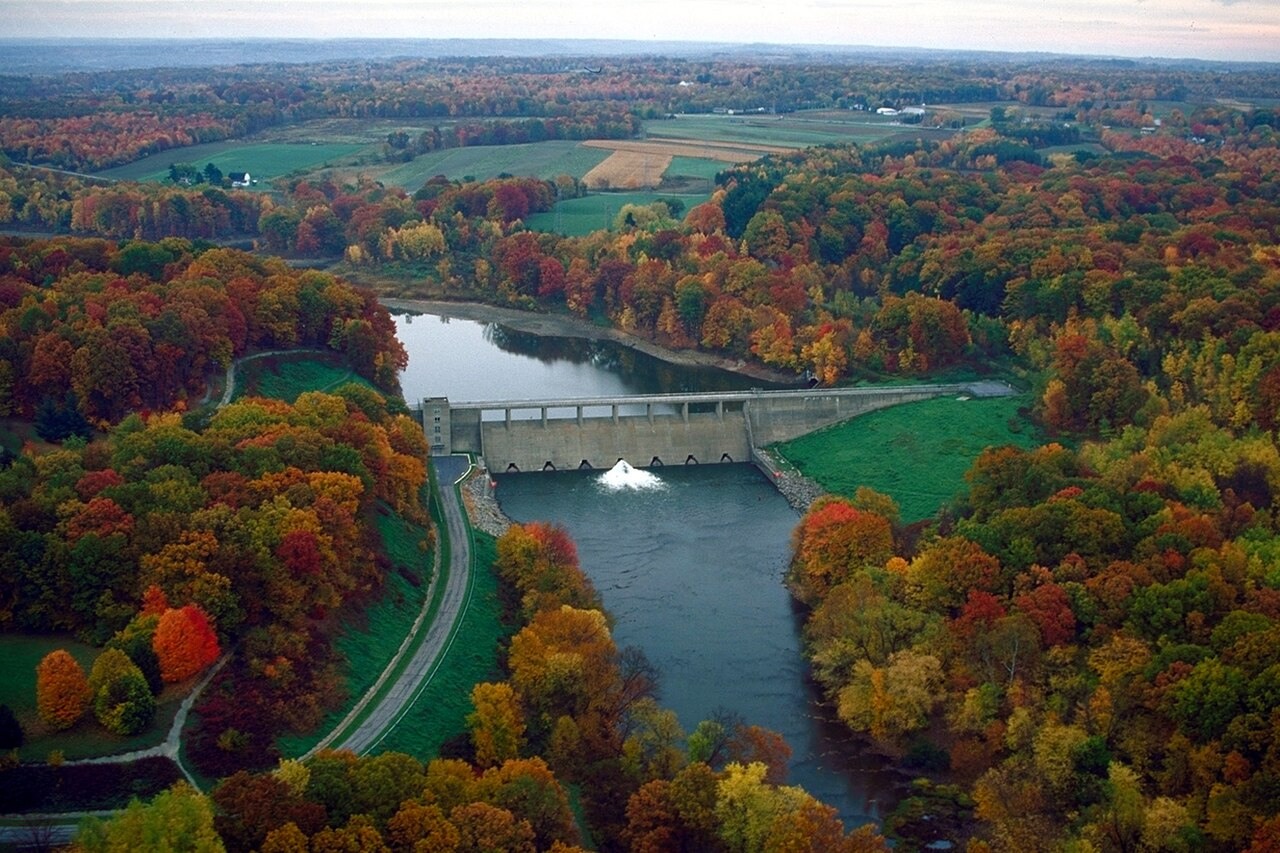
Margaret Luzier, U.S. Army Corps of Engineers · Image source · Public domain · Geographic context; not authentic crime evidence. The building or landscape is public geographic context; no event is assigned to it.


The phones turn into physical evidence
The travelers’ route gave the phone and toll evidence practical value. Detectives could test whether the timing supported the claim that Bradford followed the car from Pennsylvania rather than encountering it by chance at the shoulder. The further the vehicles traveled through separate record systems, the more observations there were to compare. The records could narrow where to look for corroboration even when a single observation could not establish identity or intent. [1]
The government obtained phones during a search connected to Bradford. The court’s description ties the devices and call evidence to the wider relationship and the day of the shooting. That is different from treating a handset as a transcript. A device can associate a number with someone and the records can show that communication took place. To establish what a communication meant, prosecutors needed testimony or another fact giving it context. No record here supplies complete dialogue for the people in the two cars. [1]
The direction of travel, activity at the service plaza and toll evidence came from sources with different limitations. A witness could recall a car but have a loose estimate of time. A system could register a time without showing who sat behind the wheel. A video could identify a person and object without showing intent. The parts of the reconstruction were strongest where multiple sources pointed to the same event. Where they did not fix an exact minute, the chronology retains a broad date or part of the evening. [1]
Two participants, different proceedings
Bradford pleaded guilty in federal court and testified against Donna. The later federal record gives his original prison term as 210 months, followed by supervised release. A guilty plea is his own legal admission to the counts resolved in his case. His testimony about Donna had to be evaluated in hers. The government could use it to explain the planned payment and the reason for staging a robbery, but the verdict required the jury to decide whether the evidence as a whole proved the charged crimes. [1] [2]
In 2007 a jury found Donna guilty of murder for hire, interstate stalking resulting in death and two firearms offenses. The jury’s sentencing decision led to life imprisonment, and the court imposed prison terms on the other counts as reflected in the appellate record. The case was federal because of the offenses charged and their interstate features. The fact that Gulam was shot in Ohio is only one part of why investigators and the jury had to consider conduct in more than one state. [1]
The Sixth Circuit affirmed in 2009. One issue was whether jurors should have been allowed to visit the turnpike site. The trial judge had considered safety and the alternatives available to illustrate the shoulder. Photos, video and diagrams could show relevant features without placing a jury alongside active traffic. The appellate ruling upheld the handling of the request. That ruling concerned the conduct of the trial, and the sources of the evidence about the crime remained the records and testimony admitted there. [1]
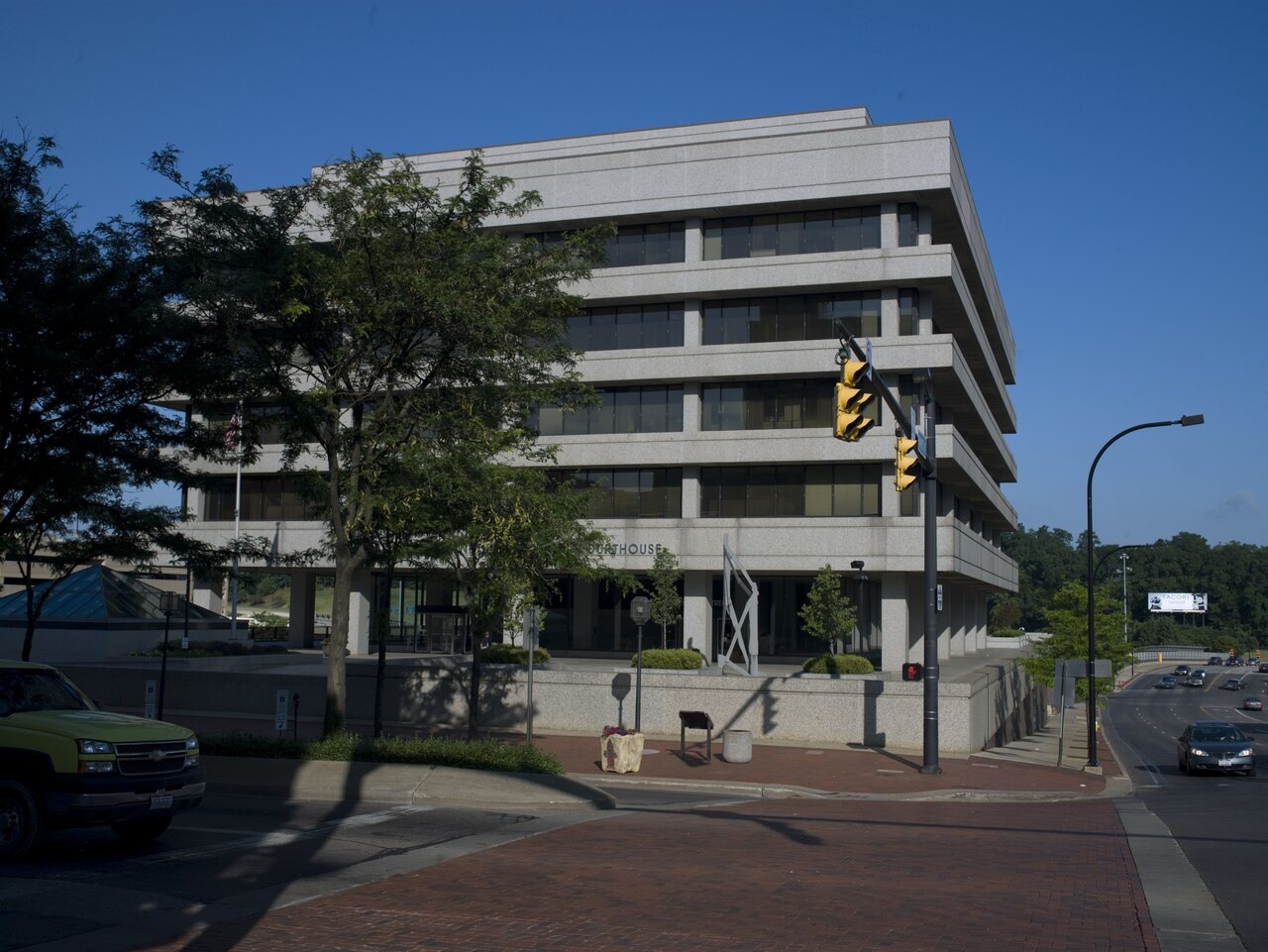
Carol M. Highsmith · Image source · Public domain · Geographic context; not authentic crime evidence. The building or landscape is public geographic context; no event is assigned to it.
A later sentence with a separate cause
A later federal order and a Justice Department release describe Bradford’s supervised release and the consequences of a separate Pennsylvania prosecution. In 2023 the federal court imposed a ten-year revocation sentence consecutive to the state term, according to the department. Those proceedings belong on the chronology because they explain a later change in his legal history. They did not reopen the Moonda jury’s findings or replace the original federal sentence for his involvement in Gulam’s death. [2] [3]
The account begins on the shoulder because that is where Gulam was killed. It takes shape at the service plaza because a camera recorded something ordinary enough to miss. Taken together with the later taking, the phone and toll records and the testimony, the wallet’s earlier appearance made the random-robbery story harder to sustain. It is the timing and corroboration that give that object its evidentiary value. A photograph of another wallet could never carry the same information. [1]
Look closer · 9 visuals
Inside the evidence.
Open a visual to explore what it contributed to the case—and the limits of what it shows. Photographs, historical reproductions and original illustrations are individually labeled. Open the notes for each image’s source, credit, and limitations; setting photographs do not depict crime scenes.
The wallet changes meaning
Original editorial illustration — not an actual evidence photograph or exhibit.
Read the evidence notes
Possession at the plaza gave investigators a check on the robbery story.
The footage does not record the roadside attack.
Three kinds of travel evidence
Original editorial illustration — not an actual evidence photograph or exhibit.
Read the evidence notes
The records made it possible to compare the timing of the two vehicles.
The record does not trace each car continuously.
Bradford’s testimony
Original editorial illustration — not an actual evidence photograph or exhibit.
Read the evidence notes
The jury could compare the cooperating witness with earlier records.
An incentive to cooperate does not establish accuracy.
Handsets versus words
Original editorial illustration — not an actual evidence photograph or exhibit.
Read the evidence notes
The phones helped relate communications to people.
Billing and tower data do not record the words exchanged.
Visiting the shoulder
Original editorial illustration — not an actual evidence photograph or exhibit.
Read the evidence notes
The trial court used safer alternatives to a site visit.
The appeal addressed trial management.
Separate judgments
Original editorial illustration — not an actual evidence photograph or exhibit.
Read the evidence notes
The two people had distinct federal outcomes.
The later revocation is not a new sentence for Gulam’s killing.
Blue Heron Service Plaza on the Ohio Turnpike in Ottawa County
Context photograph — not an actual crime exhibit. The image does not show the identified shooting location or the vehicles involved.
Read the evidence notes
Blue Heron Service Plaza on the Ohio Turnpike in Ottawa County. Geographic context photograph; not a crime-scene photograph or an original evidence exhibit. The image does not show the identified shooting location or the vehicles involved. The Portage County stop in the case was at a different plaza.
Geographic context; not authentic crime evidence. The image does not show the identified shooting location or the vehicles involved. This is a different plaza from the Portage County stop in the case. The source and reuse terms are linked below.
Andre Carrotflower · Image source · CC BY-SA 4.0
The Shenango River in western Pennsylvania
Context photograph — not an actual crime exhibit. The building or landscape is public geographic context; no event is assigned to it.
Read the evidence notes
The Shenango River in western Pennsylvania. Geographic context photograph; not a crime-scene photograph or an original evidence exhibit. The building or landscape is public geographic context; no event is assigned to it.
Geographic context; not authentic crime evidence. The building or landscape is public geographic context; no event is assigned to it. The source and reuse terms are linked below.
Margaret Luzier, U.S. Army Corps of Engineers · Image source · Public domain
Public art outside the Seiberling Federal Building in Akron
Context photograph — not an actual crime exhibit. The building or landscape is public geographic context; no event is assigned to it.
Read the evidence notes
Public art outside the Seiberling Federal Building in Akron. Geographic context photograph; not a crime-scene photograph or an original evidence exhibit. The building or landscape is public geographic context; no event is assigned to it.
Geographic context; not authentic crime evidence. The building or landscape is public geographic context; no event is assigned to it. The source and reuse terms are linked below.
Carol M. Highsmith · Image source · Public domain
★ Key evidence used in a conviction · ✓ Exclusion or reversal · ◇ Disputed evidence · ⊘ Excluded at retrial · ◆ Identity / investigative finding, not a conviction. A symbol does not mean one item proved the whole case.
Follow the locations
Put the story on the map.
Follow the dated entries, then select an event to find its regional setting. Shared-location pins open a group of events. Evidence symbols identify important findings and their limitations.
Open the map in its own window ↗Sources & further reading
- United States v. Donna Moonda · Sixth CircuitTrial record, wallet, phone and toll evidence, sentence and affirmance.
- United States v. Bradford · Western District of PennsylvaniaOriginal plea, 210-month sentence and release history.
- Justice Department · Bradford revocation sentenceTen-year federal revocation term consecutive to separate state sentence.
Editorial review: 2026-11-09 · 1560 words