The online seller called himself Orb Robinson. He offered lunar material to a Belgian collector, who became suspicious and contacted authorities. The people who eventually agreed to buy were undercover investigators posing as the collector’s American relatives. Before the meeting, the seller supplied sample numbers. Those numbers matched the inventory of a NASA scientist whose safe had disappeared from Johnson Space Center. The supposed anonymity of the sale had collided with the way scientific material is tracked. [2] [3]
Case brief
Orlando / Houston, Florida · 2002
- Recorded outcome
- Thad Roberts pleaded guilty; original 100-month sentence vacated, 90-month resentencing affirmed November 2005. Co-conspirators faced separate proceedings.
Key moments
People in this case
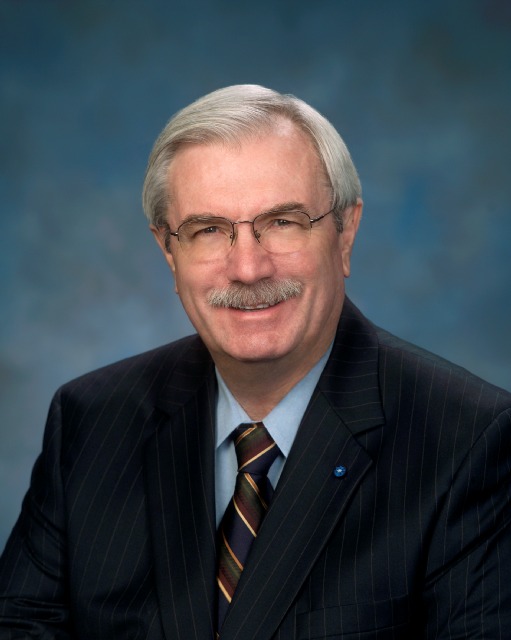
Everett Gibson The NASA scientist whose Johnson Space Center laboratory held the safe stolen in 2002. NASA published this portrait after the theft.
Official portrait · NASA via Wikimedia Commons · U.S. public domain- Thad Roberts
Pleaded guilty in the NASA moon-rock theft
Photo at source · CBS News · interview and photographs
On July 20, 2002, the thirty-third anniversary of the first Moon landing, the operation reached a restaurant in Orlando. The seller was Thad Roberts, a NASA intern. The later NASA account describes investigators returning with him and two associates to their hotel, retrieving the samples and arresting them in the parking lot. A scheme intended to turn government-held extraterrestrial material into private profit ended with buyers who had never intended to complete the sale. [3]
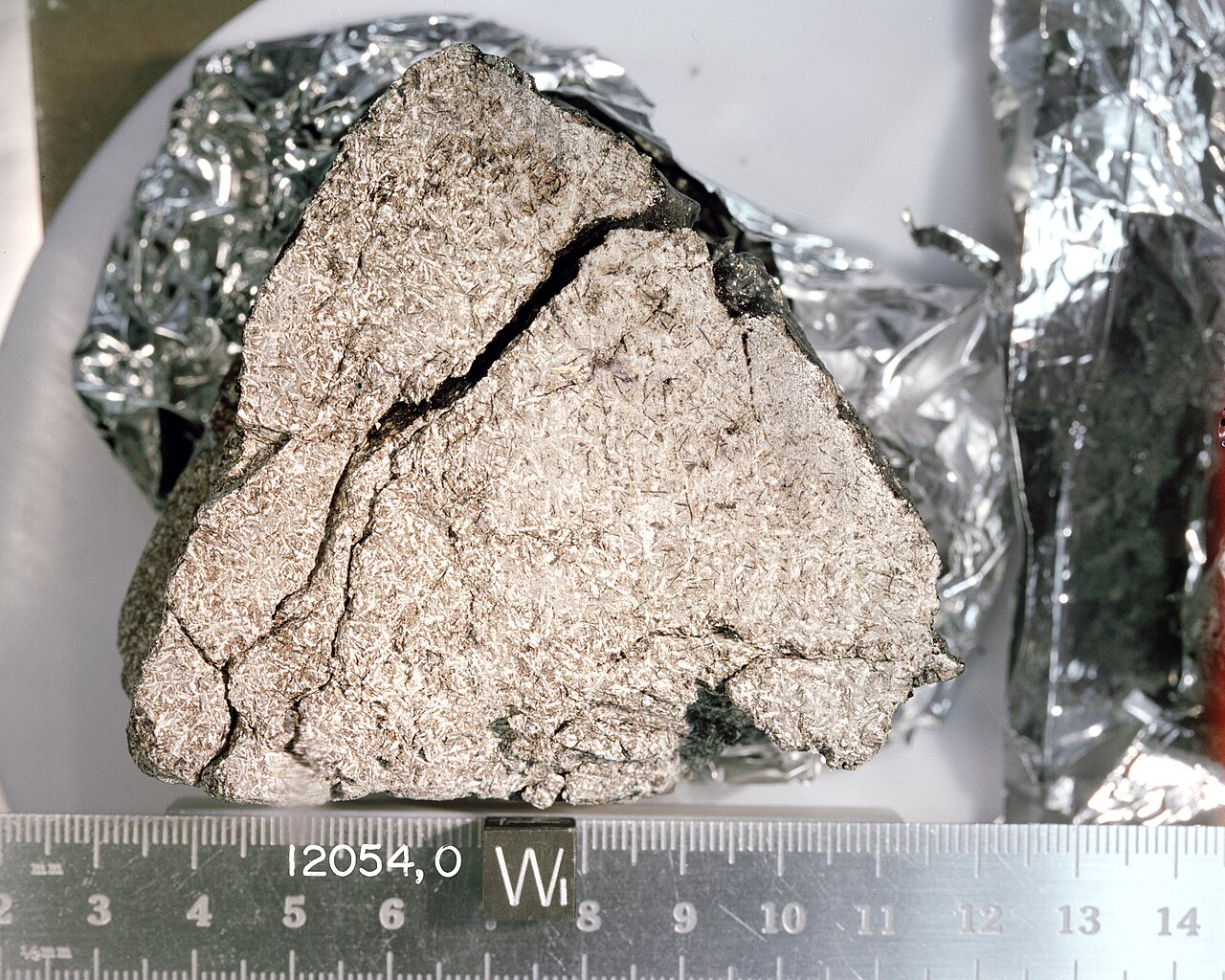
NASA · Image source · Public domain · This photograph provides setting or historical context. It is not an authentic crime exhibit.

The promise came before the safe disappeared
NASA’s Office of Inspector General, in a 2026 retrospective, dates the FBI referral to June 2002. Orb Robinson had advertised through the Mineralogy Club of Antwerp and exchanged emails with a collector in Belgium. Undercover investigators then negotiated quantity and price and arranged a meeting. The chronology is striking because the missing-safe report would come in July: while agents were preparing to test the offer, the conspirators were preparing to obtain the material they had promised. [3]
The seller’s identity was not initially known. Emails nevertheless created a trail, and the later government account describes connections to servers at Johnson Space Center and the University of Utah, where Roberts was a student. A server connection alone does not tell a complete story of authorship or intent. Here, it was one part of an investigation that also acquired matching inventory numbers, a face-to-face meeting and the material itself. [3]
The gallery’s digital-trail illustration is consequently a sequence of relationships, not a fabricated email screenshot. It does not invent a subject line or recreate negotiations word for word. The important fact is that an alias did not remove the sample identifiers or the electronic traces linking the offer to the institutions involved. A visually plausible false message would add apparent evidence rather than explain the evidence the record actually describes. [3]
A heavy safe full of small treasures
On the night of July 13, Roberts and fellow interns Tiffany Fowler and Shae Saur used their NASA identification to enter Johnson Space Center. The OIG account says they removed a safe from scientist Everett Gibson’s laboratory. It weighed about 600 pounds. That figure describes the container, not the weight of the lunar material. Confusing the two would turn a difficult theft of a safe into an impossible-sounding claim about the quantity of moon rocks stolen. [3]
Inside were lunar samples associated with the Apollo landing missions, meteorite material and records authenticating and documenting the specimens. Gibson’s handwritten research notebooks were part of the loss. The safe therefore held more than objects with a spectacular origin. It held the information that connected individual samples to a history of custody, handling and scientific investigation. The importance of those records became clearer during the later sentencing proceedings. [1] [3]
On July 15, Gibson reported the safe missing. Two days later, the seller gave undercover agents sample numbers that matched Gibson’s inventory. The numbers transformed a general offer of “Moon rocks” into an offer connected to identified material. A fraudster could claim to possess extraterrestrial specimens without having them. A match to a missing scientist’s records made this offer a different problem: the identifiers supported the conclusion that actual stolen material was being marketed. [3]
The meeting closed the distance
Roberts, Fowler and another conspirator, Gordon McWhorter, met the undercover buyers in Orlando on July 20. Roberts disclosed his real name at the meeting. The 2026 OIG account places the subsequent retrieval at the hotel and the arrests in its parking lot. Saur was arrested separately in Houston that day. The older FBI summary compresses portions of the operation; this article follows the more explicit later chronology without pretending the short summaries describe every movement identically. [2] [3]
The investigation recovered lunar samples, but recovery did not mean every item from the safe came back or every scientific use could resume. The 2005 appellate record gives a more qualified account than the satisfying image of a safe’s contents simply being restored. Gibson believed the lunar samples had been recovered, but without the missing notebooks he could not be certain. Some meteorite material and its storage container remained unaccounted for in that record. [1]
The map uses Houston and Orlando as regional references for the theft and sting, and a Florida county reference for the investigators’ Kennedy Space Center context. It does not draw a verified route taken by the conspirators across the country. The source establishes that the material moved in interstate commerce; it does not supply a continuous travel log. Keeping the map at the documented level avoids adding a road story to a case whose strongest connection was the inventory trail. [1] [3]
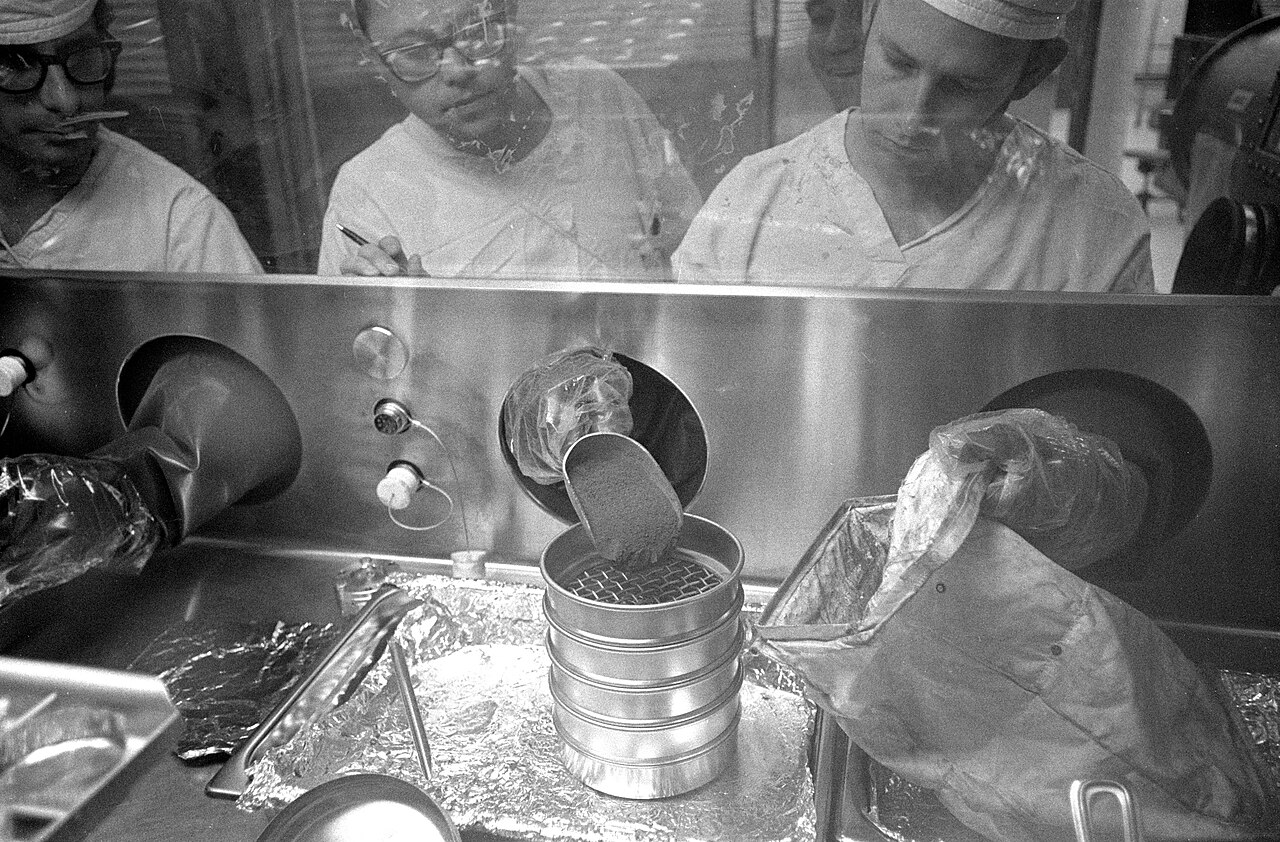
NASA Johnson Space Center · Image source · Public domain · This photograph provides setting or historical context. It is not an authentic crime exhibit.

Why a returned rock may still be damaged evidence
At resentencing, Gibson described samples separated and stored under curatorial standards. Some relatively pristine material had been mixed with material already degraded or used in research. The loss of notebooks also broke the recorded history for individual specimens: weights, uses, amounts consumed and material remaining. A rock can still exist while the information needed to interpret it reliably has been lost. The distinction is central to the scientific harm described in court. [1]
Gibson said some research recorded in the notebooks had never been published elsewhere and could not be replicated. The notebooks were not just a duplicate of articles already available in a library. Their disappearance affected the ability to reconstruct prior work and the chain of custody. For certain samples, NASA personnel spent substantial time rebuilding records. For other material, the loss prevented completion of funded studies or collaborative projects. [1]
The court record also describes funding consequences. Gibson’s laboratory had lost $200,000 since October 2003, and scientists devoted months to the investigation and preparation for a conspirator’s trial. NASA curtailed some public displays and reconsidered aspects of the internship program. Those effects required testimony; they could not be assumed solely because the stolen objects were famous. The sentencing dispute eventually turned on whether the government had proved meaningful disruption beyond the dollar value assigned to the property. [1]
Three numbers that should not become one
Government publicity used a roughly $21 million value for the caper. The sentencing record, however, identified a stipulated loss of $6,987,002 for guideline calculations. The scientist described further harms that were difficult to reduce to a sale price. These measures answer different questions: a public estimate of valuable material, an agreed figure used in a criminal proceeding, and the disruption of research dependent on records and provenance. [1] [2] [3]
The first sentencing court initially treated the scientific loss in broad terms and imposed 100 months on Roberts in October 2003. On appeal, that sentence was vacated because the record did not adequately support the stated government-disruption justification. The reversal did not erase the guilty plea. It required the court to support the departure with evidence rather than allowing the phrase “priceless national treasure” to do the work of specific findings. [1] [2]
At the February 11, 2005 resentencing, Gibson explained what was missing, what had been contaminated, which projects were affected and how the loss consumed time and funding. Roberts maintained, among other things, that he had tried not to damage the material and had not removed the notebooks. The judge evaluated the testimony and again found a substantial disruption. The resulting total sentence was ninety months. [1]
A revised sentence, separate defendants
The Eleventh Circuit affirmed the ninety-month sentence in November 2005. It found support for the disruption findings in the unrecovered information, reduced research value, interrupted studies, lost funding and institutional effects. The opinion explains why a scientific collection cannot always be valued as a pile of marketable objects. The records and controlled history can be as important as the physical samples a buyer wants to own. [1]
Roberts’s proceedings also included a separate government-property case involving specimens taken while he worked at a Utah museum; the cases were consolidated for sentencing. The federal opinion identified those materials as belonging to government agencies. The broader record was therefore not limited to one lunar-sample transaction. It did not, however, authorize this article to assign Roberts’s sentence to every person involved in the NASA scheme. Each defendant had a separate legal disposition. [1]
The FBI archive records guilty pleas by Roberts, Fowler and Saur and a trial conviction for McWhorter. The later NASA feature adds a retrospective view of the operation and its institutional significance. Neither account replaces the more precise sentencing history in the appellate opinion. Where an older summary says roughly eight years, the chronology here retains the initial 100 months, the vacatur and the affirmed ninety-month term. [1] [2] [3]
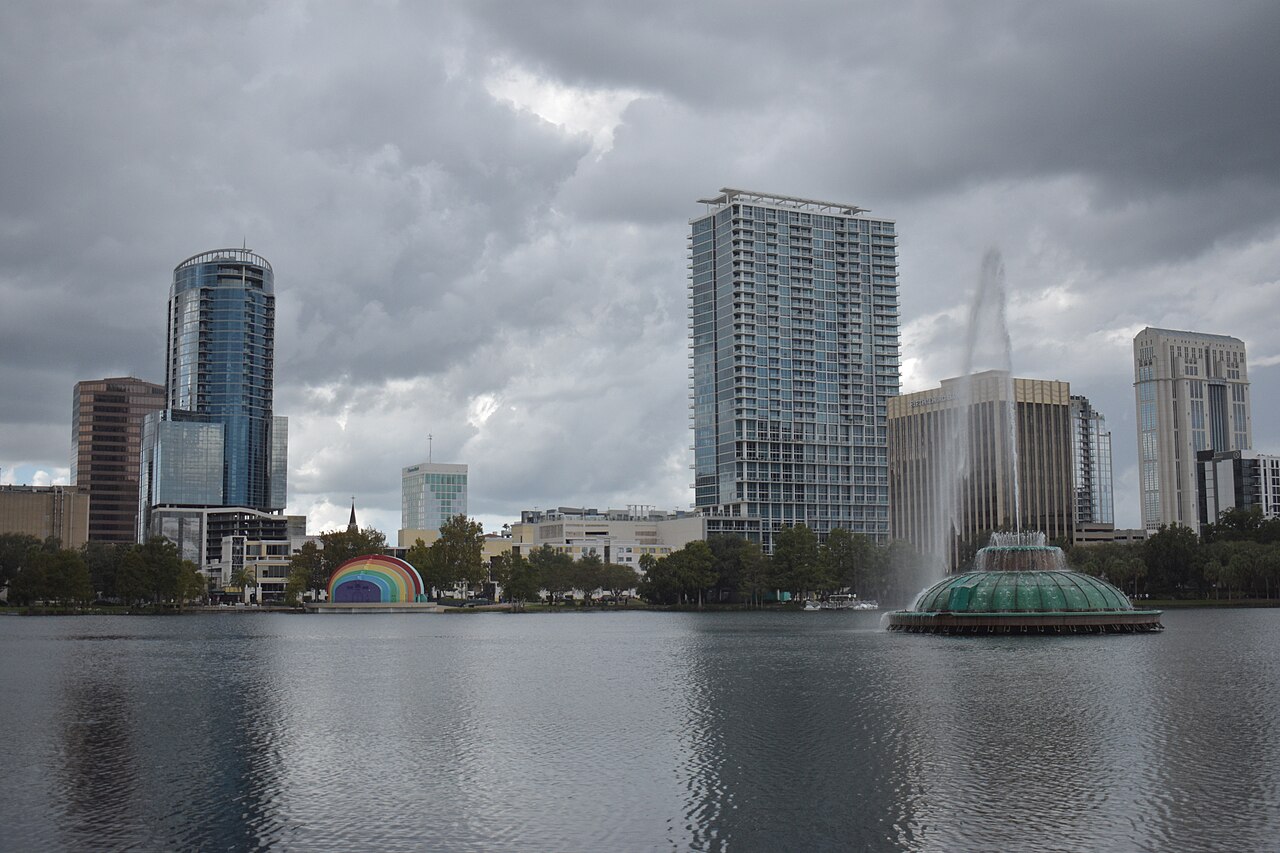
JER3L1337 · Image source · CC BY 4.0 · This photograph provides setting or historical context. It is not an authentic crime exhibit.

The information was part of the treasure
The photographs in this story include a real NASA image of Apollo 17 sample 70035 and a real 1971 laboratory photograph of technicians handling Apollo 14 material. Neither is identified as a stolen specimen or a photograph of the 2002 theft. The images illustrate what lunar research and sample care can look like. Their archive status and the limits of their connection to the case are labeled beside them, rather than asking the reader to infer that they are police exhibits.
The strongest twist is not merely that the buyers were agents. It is that the material carried identifiers that outlasted the seller’s alias, while the theft damaged the records scientists needed after the arrests. The same culture of documentation that helped connect the offer to NASA also explains why returning the rocks could not fully restore what was lost. The gallery and map follow those two stories together: an inventory that helped prove the crime, and missing information that continued to matter after the criminal case ended. [1] [3]
Look closer · 9 visuals
Inside the evidence.
Open a visual to explore what it contributed to the case—and the limits of what it shows. Photographs, historical reproductions and original illustrations are individually labeled. Open the notes for each image’s source, credit, and limitations; setting photographs do not depict crime scenes.
A number broke the alias
Original editorial illustration — not an actual evidence photograph or exhibit.
Read the evidence notes
Matching sample numbers connected the advertised material to the missing safe.
A comparison diagram, not an authentic inventory printout.
The safe was heavy; the samples were small
Original editorial illustration — not an actual evidence photograph or exhibit.
Read the evidence notes
The court describes a safe, not 600 pounds of moon rocks.
Generic safe illustration; dimensions are not reconstructed.
The sale led to Orlando
Original editorial illustration — not an actual evidence photograph or exhibit.
Read the evidence notes
Agents posed as buyers and followed the samples across state lines.
No invented email wording or suspect travel route.
Recovery did not restore the science
Original editorial illustration — not an actual evidence photograph or exhibit.
Read the evidence notes
Gibson described why returned material could lose research usefulness without its records.
Some material remained missing; not a claim that all returned rocks had zero use.
Three different measures of loss
Original editorial illustration — not an actual evidence photograph or exhibit.
Read the evidence notes
The widely reported $21 million figure was not the same as the sentencing loss amount.
These values are dated and measure different things.
A sentence revised, a plea preserved
Original editorial illustration — not an actual evidence photograph or exhibit.
Read the evidence notes
The first sentencing reversal did not undo Roberts’s guilty plea.
The diagram tracks Roberts, not the other defendants’ sentences.
Apollo 17 lunar sample 70035, NASA context
NASA archival context — not the stolen samples or a theft photograph.
Read the evidence notes
Apollo 17 lunar sample 70035, NASA context. NASA archive photograph; not identified as a stolen specimen or a view of the 2002 theft.
This photograph provides setting or historical context. It is not an authentic crime exhibit. The source and reuse terms are linked below.
NASA · Image source · Public domain
Technicians handle Apollo 14 material in 1971
NASA archival context — not the stolen samples or a theft photograph.
Read the evidence notes
Technicians handle Apollo 14 material in 1971. NASA archive photograph; not identified as a stolen specimen or a view of the 2002 theft.
This photograph provides setting or historical context. It is not an authentic crime exhibit. The source and reuse terms are linked below.
NASA Johnson Space Center · Image source · Public domain
Orlando skyline beyond Lake Eola
Geographic context photograph — not a crime-scene image.
Read the evidence notes
Orlando skyline beyond Lake Eola. Geographic context photograph; not a crime-scene image or evidence of an event shown on the map.
This photograph provides setting or historical context. It is not an authentic crime exhibit. The source and reuse terms are linked below.
JER3L1337 · Image source · CC BY 4.0
★ Key evidence used in a conviction · ✓ Exclusion or reversal · ◇ Disputed evidence · ⊘ Excluded at retrial · ◆ Identity / investigative finding, not a conviction. A symbol does not mean one item proved the whole case.
Follow the locations
Put the story on the map.
Follow the dated entries, then select an event to find its regional setting. Shared-location pins open a group of events. Evidence symbols identify important findings and their limitations.
Open the map in its own window ↗Sources & further reading
- United States v. Roberts, 05-10995 — Eleventh CircuitPlea, stipulated loss, missing notes and material, disputed government disruption, resentencing and affirmance.
- The case of the stolen moon rocks — FBI archiveBelgian tip, alias, undercover purchase, recovered samples and separate prosecutions.
- Cracking the $21 million NASA moon-rock caper — NASA OIGJuly 2002 chronology, identities, matching sample numbers, email trail and arrest location. Government account.
Editorial review: 2026-10-06 · 1665 words