Edward Sherman was away on a boat when the first medical estimate placed his wife’s death. That appeared to answer the question of opportunity: a man sailing with friends could not have strangled someone at home. But the estimate depended on conditions in a bedroom that had been unusually cold when Ellen Sherman was found. Reconsidering that room changed the possible time of death—and the meaning of the trip. [1]
Case brief
East Lyme, Connecticut · 1985
- Recorded outcome
- Edward Sherman convicted of murder; conviction affirmed July 11, 1995. Historical court outcome, not current custody certification.
Key moments
People in this case
- Ellen Sherman
Murder victim
Photo at source · Forensic Files · published episode photographs - Edward Sherman
Convicted of murdering Ellen Sherman
Photo at source · Forensic Files Files · courtroom still
The murder remained uncharged for years. When it eventually reached a jury, the prosecution had to connect a troubled marriage, the condition of the house and a revised medical opinion. The defense challenged both the science and the fairness of the proceedings. The result was a murder conviction, followed by an appeal that exposed the uncertainty behind a seemingly simple question: when had Ellen died? [1]

Pi.1415926535 · Image source · CC BY-SA 3.0 · Geographic or historical context; not authentic crime evidence.

A home left behind
Ellen and Edward were married, and both had been involved in extramarital relationships. The Connecticut Appellate Court described their marriage as contentious. Ellen was five and a half months pregnant when she died. Those facts establish the family circumstances; they do not make the affairs themselves an explanation for murder. The state still had to prove that Edward caused her death intentionally. [1]
A later case report by forensic scientist Henry Lee and his coauthors places the investigation in East Lyme and describes Ellen as the owner and operator of a graphic-design business. It recounts her considering divorce. That retrospective account supplies a glimpse of a working woman assessing her future; its calendar contains an inconsistency, so the dates here follow the court opinion. [2]
On Friday, August 2, 1985, both spouses returned from work at approximately four in the afternoon. Several hours later, Edward departed for a weeklong sailing trip with four friends. The court’s account does not give an independently established minute at which Ellen died. Instead, the hours before departure became the contested opening in the prosecution’s timeline. [1]
That distinction would matter throughout the case. Evidence that a defendant was elsewhere during one interval can be powerful. Its strength, however, depends on whether the crime can be reliably confined to that interval. Edward’s presence on the trip and the estimated time of Ellen’s death were separate questions, even though the first investigation had made them appear inseparable.
The call from the boat
On Sunday, August 4, Edward made a ship-to-shore telephone call to Ellen’s friend Barbara LeValley. He said he had been unsuccessful in reaching his wife for two days and asked that someone check on her. LeValley sent another friend, Len Fredriksen, to the house. He found it locked, pried open a window and went inside. [1]
Fredriksen discovered Ellen in the master bedroom. She had been strangled, by both manual pressure and a ligature. The air conditioner was running and the bedroom door was closed. The room was markedly cold. This observation later became important because the condition of a body cannot be interpreted without considering the surroundings in which it has remained. [1]
The discovery involved a complicated witness. Fredriksen had previously had an affair with Ellen. That relationship was known to Edward and became material for questioning Fredriksen’s credibility. It would also become part of a later dispute about what investigators disclosed. A witness’s relationship with a victim can warrant scrutiny without proving that the witness committed the crime. [1]
The locked house, the call and the cold bedroom formed the opening facts of the investigation. None identified a killer by itself. The call demonstrated that Edward asked for a welfare check. It did not establish that Ellen was alive when he left or when he tried to contact her. The condition of the bedroom raised a forensic question that the first estimate had not fully incorporated.
Two windows for one death
Chief medical examiner Catherine Galvin examined Ellen’s body at seven in the morning on August 5. Her initial estimate put death twenty-four to thirty-six hours before that observation. Edward had left on the sailing trip more than sixty hours earlier. Under that estimate, his departure preceded the possible killing by a considerable margin. [1]
Galvin subsequently learned how cold the bedroom had been when Fredriksen entered. She revised her estimate to forty-eight to ninety-six hours before her observation. The wider, earlier range included time before Edward departed. It removed the initial timing barrier to charging him, but it did not transform an estimate into an exact clock reading. [1]
At trial, Galvin explained that cold affects the development and persistence of bodily rigidity. Her original assessment had relied heavily on the rigidity she observed. She acknowledged that determining a time of death becomes less precise as the interval before examination grows. She also acknowledged that there were no established numerical standards for the slowing effect under the particular cold conditions at issue. [1]
The defense attacked this gap. No one had supplied Galvin with a reliable measurement of the bedroom temperature at discovery. Nor did she know whether the air conditioner could actually cool the room to the lower temperatures she considered possible. The defense argued that these uncertain assumptions left the revised opinion without a proper foundation. [1]
The appellate court upheld its admission. It reasoned that the jury could understand the assumptions, hear cross-examination and decide how much weight the estimate deserved. This was a ruling about whether the opinion could be considered. It was not a finding that a precise temperature had been recorded or that Ellen’s death could be placed at a particular minute.
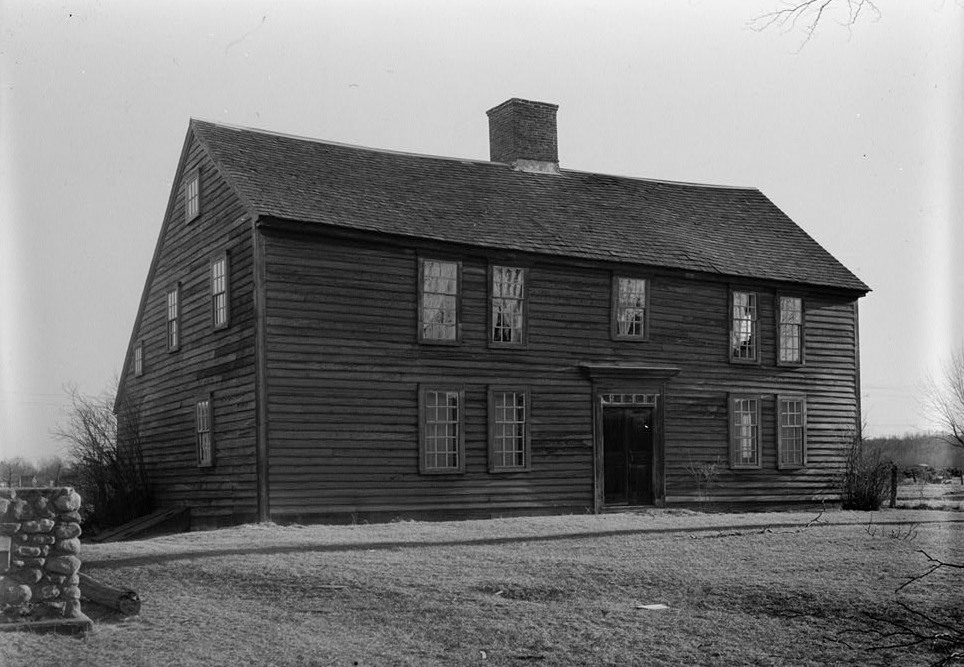
Stanley P. Mixon · Image source · Public domain · Geographic or historical context; not authentic crime evidence.


The food in the refrigerator
Investigators searched the house again under a warrant on August 9. They collected containers of linguine and red clam sauce from the refrigerator and photographed them. Galvin had testified that linguine and clam sauce were present in Ellen’s stomach. The prosecution offered the refrigerator evidence as one more piece of the disputed chronology. [1]
Edward challenged its relevance. He had returned to the house after police surrendered custody late on August 5; the food was seized several days later. The existence of containers on August 9 did not, on its own, demonstrate when Ellen had eaten. The defense also disputed the state’s handling of an additional medical witness who was mentioned but never called. [1]
The court allowed the evidence. Its reasoning was narrower than a claim that the leftovers solved the murder: the food tended to bear on the time of death and the credibility of Edward’s description of the afternoon before he left. Jurors could consider the delay before seizure when assessing its strength. Relevant evidence can be incomplete without becoming conclusive.
This part of the case is easy to flatten into a clever forensic reveal. The record instead describes a contested combination of stomach contents, refrigerator contents and testimony. The prosecution drew an inference from their relationship. The defense had a legitimate basis for asking whether the recovered food had been sufficiently connected to Ellen’s final meal. [1]
A telephone conversation questioned
Lee’s retrospective report recounts another challenge to the alibi: a child at a friend’s house said she listened on an extension while Edward appeared to speak to Ellen before departure. According to the report, the child heard a ringing line rather than Ellen answering. The report presents that account as an important late lead. It is not an audio recording, and the 1995 opinion does not supply the same detailed reconstruction. [2]
The significance of such testimony is straightforward but limited. A person can witness someone apparently making a call without hearing both ends of the conversation. If the second voice was absent, an apparent confirmation that a victim was alive may be less reliable than observers originally thought. Whether that is what occurred depends on the credibility of the witness and the surrounding evidence.
Edward was arrested in March 1990. A fourteen-day probable-cause hearing preceded the eventual jury trial. The long interval between the discovery and the arrest makes the case a story of reexamined assumptions, rather than a rapid arrest prompted by the spouse’s marital conduct. The conviction followed consideration of the evidence at trial. [1]
The defense the jury heard
The trial’s disputes went beyond the revised medical estimate. Edward argued that the prosecution had withheld material he could use to question witnesses. Some documents were disclosed before trial; others arrived during it. The appellate court examined whether their timing prevented effective use, rather than treating every late disclosure as automatically harmless. [1]
One report concerned a statement that the marital differences had been repaired. Edward argued it could undermine Fredriksen’s testimony about Ellen considering divorce. The appellate court acknowledged the disclosure problem but found it insufficiently material to require reversal in the context of the whole proceeding. Fredriksen had already been extensively questioned about his relationship with Ellen and his belief about Edward’s responsibility. [1]
The defense also called forensic pathologist Louis Roh to challenge the timing evidence. Before testifying, Roh had received a transcript of Galvin’s trial testimony despite a sequestration order. The trial court barred his substantive opinion about this death as a sanction. It still permitted him to explain general principles concerning temperature, rigidity and other postmortem observations. The appellate court upheld that ruling. [1]
That restriction should not be described as the defense having no expert at all. Nor should it disappear from the story: the ability to present a competing case-specific opinion mattered when the prosecution’s timeline depended on medical interpretation. The appeal records both the defense objection and the court’s reason for rejecting it.
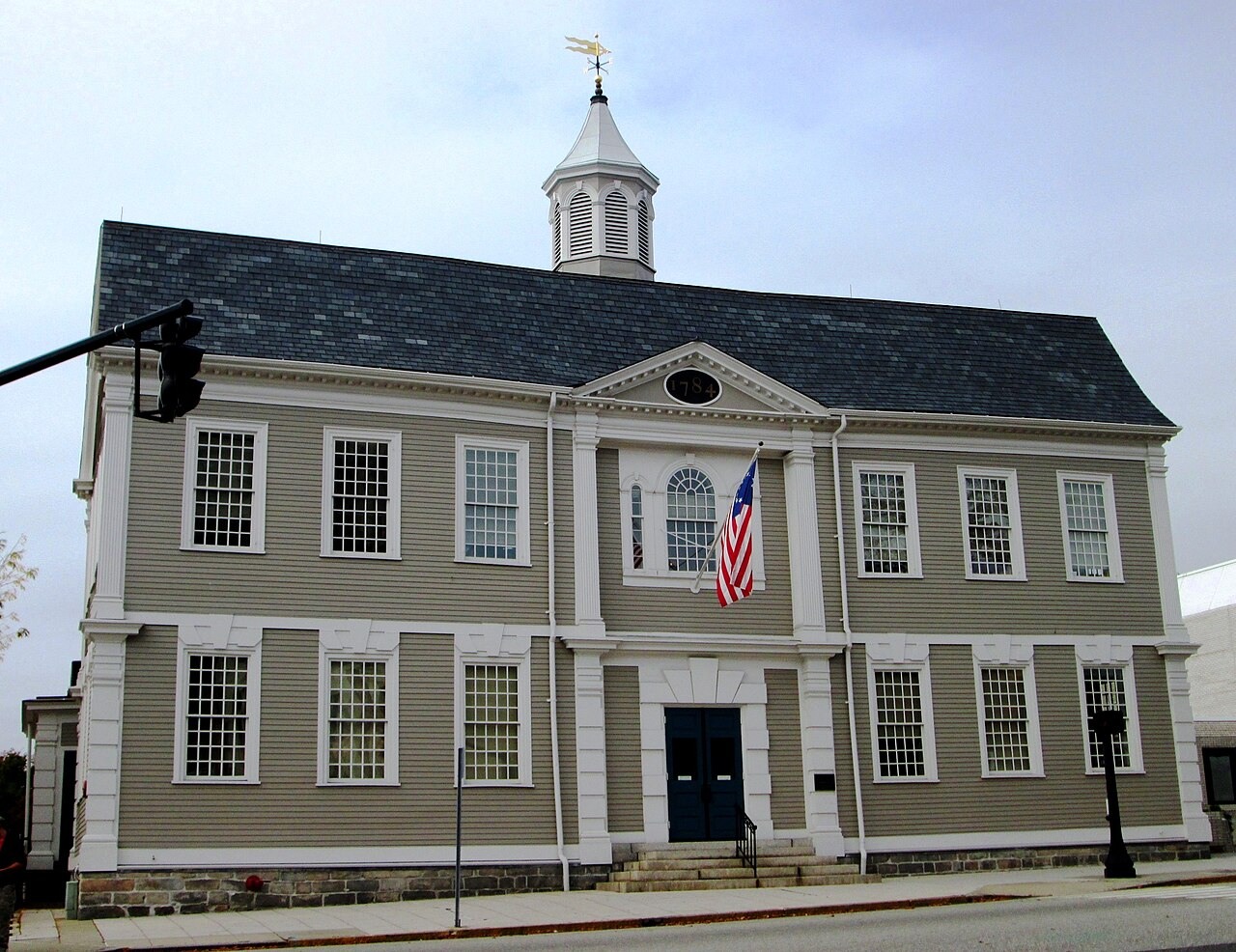
Beyond My Ken · Image source · CC BY-SA 4.0 · Geographic or historical context; not authentic crime evidence.

What the judgment established
On July 11, 1995, the Connecticut Appellate Court affirmed Edward Sherman’s murder conviction. It also rejected his challenges to the denial of acquittal and a new trial. The court concluded that the defense had not shown the state’s account to be physically impossible. Its decision preserved the verdict; it did not erase the uncertainties aired at trial. [1]
Ellen’s case illustrates the difference between an alibi and the assumptions used to evaluate it. Edward’s trip was real. The first estimate appeared to place the death during that absence. Once the bedroom’s condition was incorporated, that apparent separation no longer held. The jury ultimately accepted the prosecution’s case against him.
The cold room remains the story’s defining detail because it altered a crucial question of opportunity. Behind that detail was Ellen: pregnant, working and living through a difficult marriage. Her death required more than an intriguing explanation. It required a case strong enough to survive the defense’s challenges, and a telling that preserves the limits of the evidence alongside the conviction.
Look closer · 9 visuals
Inside the evidence.
Open a visual to explore what it contributed to the case—and the limits of what it shows. Photographs, historical reproductions and original illustrations are individually labeled. Open the notes for each image’s source, credit, and limitations; setting photographs do not depict crime scenes.
The alibi meets a revised interval
Original editorial illustration — not an actual evidence photograph or exhibit.
Read the evidence notes
The earlier interval overlapped a period before the sailing departure.
Expert ranges, not a clock recording the killing.
A cold room changes interpretation
Original editorial illustration — not an actual evidence photograph or exhibit.
Read the evidence notes
Cooling was central to reconsidering the postmortem interval.
No continuous temperature log or exact thermostat setting is recreated.
Food evidence has its own dates
Original editorial illustration — not an actual evidence photograph or exhibit.
Read the evidence notes
These steps were separated in time and must not be collapsed into one search.
Illustration, not photographs of stomach contents or seized meals.
What a sailing trip establishes
Original editorial illustration — not an actual evidence photograph or exhibit.
Read the evidence notes
The trip was real evidence of absence during part of the period; timing was the dispute.
No invented sailing track or boat photograph is presented.
Experts and the defense
Original editorial illustration — not an actual evidence photograph or exhibit.
Read the evidence notes
The appeal addressed expert and disclosure issues in the particular trial.
Affirmance does not make an estimate a precise timestamp.
Two accounts, one calendar caution
Original editorial illustration — not an actual evidence photograph or exhibit.
Read the evidence notes
The court chronology controls where the retrospective calendar conflicts.
The retrospective is not independent proof of a new event.
Niantic Beach and the Niantic River Bridge in East Lyme
Context photograph — not an actual crime exhibit.
Read the evidence notes
Niantic Beach and the Niantic River Bridge in East Lyme. Geographic context photograph; not a crime-scene photograph or an original evidence exhibit.
Geographic or historical context; not authentic crime evidence. The source and reuse terms are linked below.
Pi.1415926535 · Image source · CC BY-SA 3.0
The historic Thomas Lee House in East Lyme
Context photograph — not an actual crime exhibit.
Read the evidence notes
The historic Thomas Lee House in East Lyme. Geographic context photograph; not a crime-scene photograph or an original evidence exhibit.
Geographic or historical context; not authentic crime evidence. The source and reuse terms are linked below.
Stanley P. Mixon · Image source · Public domain
New London County Courthouse
Context photograph — not an actual crime exhibit.
Read the evidence notes
New London County Courthouse. Geographic context photograph; not a crime-scene photograph or an original evidence exhibit.
Geographic or historical context; not authentic crime evidence. The source and reuse terms are linked below.
Beyond My Ken · Image source · CC BY-SA 4.0
★ Key evidence used in a conviction · ✓ Exclusion or reversal · ◇ Disputed evidence · ⊘ Excluded at retrial · ◆ Identity / investigative finding, not a conviction. A symbol does not mean one item proved the whole case.
Follow the locations
Put the story on the map.
Follow the dated entries, then select an event to find its regional setting. Shared-location pins open a group of events. Evidence symbols identify important findings and their limitations.
Open the map in its own window ↗Sources & further reading
- State v. Sherman, 38 Conn. App. 371 — Connecticut Appellate CourtJudicial record of alibi, cooled room, expert estimates, food evidence, trial challenges and affirmance. Government opinion mirrored by CaseMine.
- A Case Study: Homicide Investigation Using Forensic Science — Lee and colleaguesLimited attributed background and retrospective account; fewer than 200 derived words. Discovery weekday inconsistency not adopted.
Editorial review: 2026-10-06 · 1746 words