At 3:03 in the morning, Barbara Raber sent Eli Weaver a message about being unable to see in the dark. He later advised her to take a light. Minutes after that, she asked whether she could drive behind the pines. The messages became part of the prosecution’s reconstruction of a murder planned around Eli’s departure for a fishing trip. His wife, Barbara Weaver, was at home with their children. [1]
Case brief
Wayne County, Ohio · 2009
- Recorded outcome
- Barbara Raber convicted of aggravated murder with firearm specification; judgment affirmed August 30, 2010. Opinion describes aggregate twenty-three-year sentence.
Key moments
People in this case
- Eli Weaver
Pleaded guilty to complicity in Barbara Weaver’s murder
Photo at source · A&E · case photographs
By morning, a child had found her dead. The investigation uncovered an affair, discussions of several ways to kill her and an attempt to manufacture a threatening message that would point elsewhere. The case did not depend solely on a lover accusing another lover: their phones, weapon access, forensic findings and changing explanations supplied evidence that could be compared. [1]
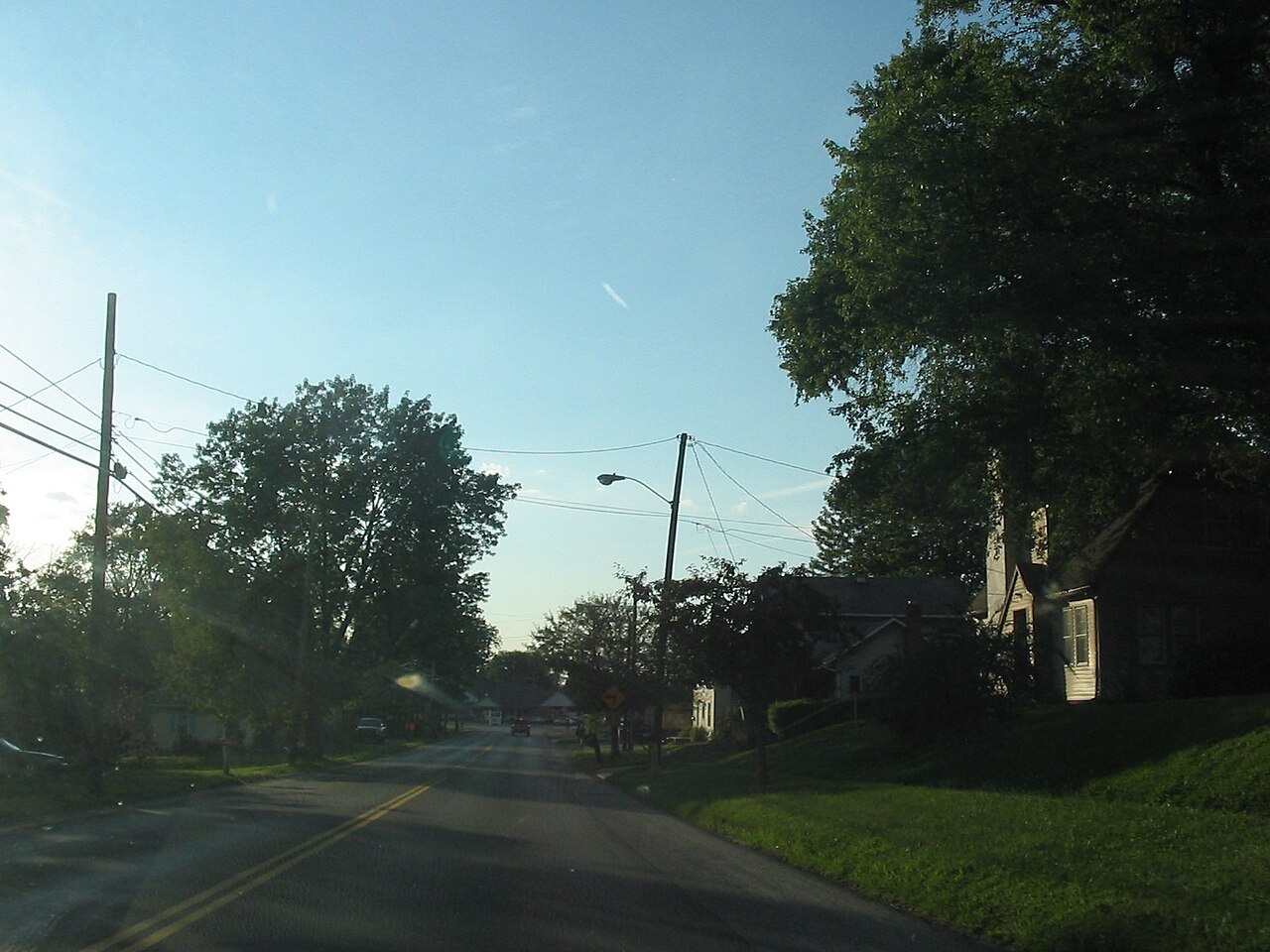
Ser Amantio di Nicolao at English Wikipedia · Image source · CC BY 3.0 · Geographic or historical context; not authentic crime evidence.

The woman in the household
Barbara and Eli Weaver had five children and belonged to an Amish community in Ohio. The appellate record is much fuller about the conspiracy and trial than about Barbara’s work, interests or friendships. It establishes her place in a family whose children were present when she was killed. It does not justify inventing a domestic scene or assigning her private thoughts. [1]
Eli’s conduct had already troubled the marriage. He admitted having multiple affairs, meeting women online and leaving his home and faith more than once because he wanted greater freedom. He had been shunned and subsequently welcomed back. The religious setting explains circumstances recorded in the case; it does not make the conduct representative of Amish people generally. [1]
Raber had met Eli through her own husband. According to Eli’s trial testimony, their relationship began about six years before Barbara’s death. Raber supplied the cellular phone he used, as part of her phone plan. That arrangement helped sustain the relationship and would later help investigators recover communications about the killing. [1]
The two women shared a first name, a detail that can make accounts confusing. Barbara Weaver was the victim. Barbara Raber was the defendant whose conviction the Ohio appellate court reviewed. Keeping those identities distinct matters throughout the story, particularly when recounting statements that Raber made about entering the Weaver home.
A relationship becomes a plan
Eli testified under a plea agreement. He said that after he expressed wanting to be rid of his wife, Raber developed suggestions for killing her. Those included poison, suffocation and a firearm. He described accepting purported poison pills a few weeks before the eventual shooting but not following through with that plan. His account required scrutiny because he was an admitted participant with an incentive to cooperate. [1]
Other evidence supported planning beyond his word. Police recovered a notebook from Raber’s home listing poisons. Her computer showed searches about ways of killing a person. Witnesses established her access to .410 shotguns: one man had lent her such a gun years earlier, and a store owner testified that she purchased another on November 15, 2008. Access did not prove which individual firearm fired the fatal shot. [1]
The fishing trip provided the planned opportunity. Eli told Raber that he would go to Lake Erie with friends on June 2, 2009. Their exchanged messages discussed his departure and leaving the basement entrance unlocked. The communications tied the proposal to a particular morning and a means of entering the house. [1]
What made the digital evidence important was its relationship to actions. It described the absent husband, the open entrance and the visitor’s difficulties in darkness. Investigators could place those exchanges alongside the trip and the eventual discovery. The prosecution’s argument rested on that convergence, rather than on a generalized claim that an affair made murder inevitable.
The early-morning exchanges
Eli left shortly after three in the morning and testified that he left the bottom basement door unlocked. While traveling toward Lake Erie, he exchanged messages with Raber. At 3:20, he advised her to use a light. Messages at 3:25 and 3:26 expressed fear and asked where he was. He replied that he was in Wooster and told her not to leave anything behind. [1]
At 3:29, Raber asked about driving behind the pines. The court treated the messages as evidence placing her at the scene during the period in which she had an opportunity to kill Barbara after Eli departed. They did not contain a recorded gunshot or establish the precise minute of death. Their value came from the coordinated activity they described. [1]
Later, one of the Weaver children went to a neighbor after finding his mother in bed. The neighbor checked on Barbara, medical assistance arrived and the coroner pronounced her dead that morning. Eli received a call at about six telling him she was unresponsive and headed home. He initially denied involvement, while acknowledging his relationship with Raber. [1]
The coroner estimated death between midnight and six. A death certificate listed two in the morning, but the coroner explained that a specific entry was required and that the estimate was inexact. Two o’clock must not become a supposedly established time that contradicts the later messages. The source itself preserves a range.
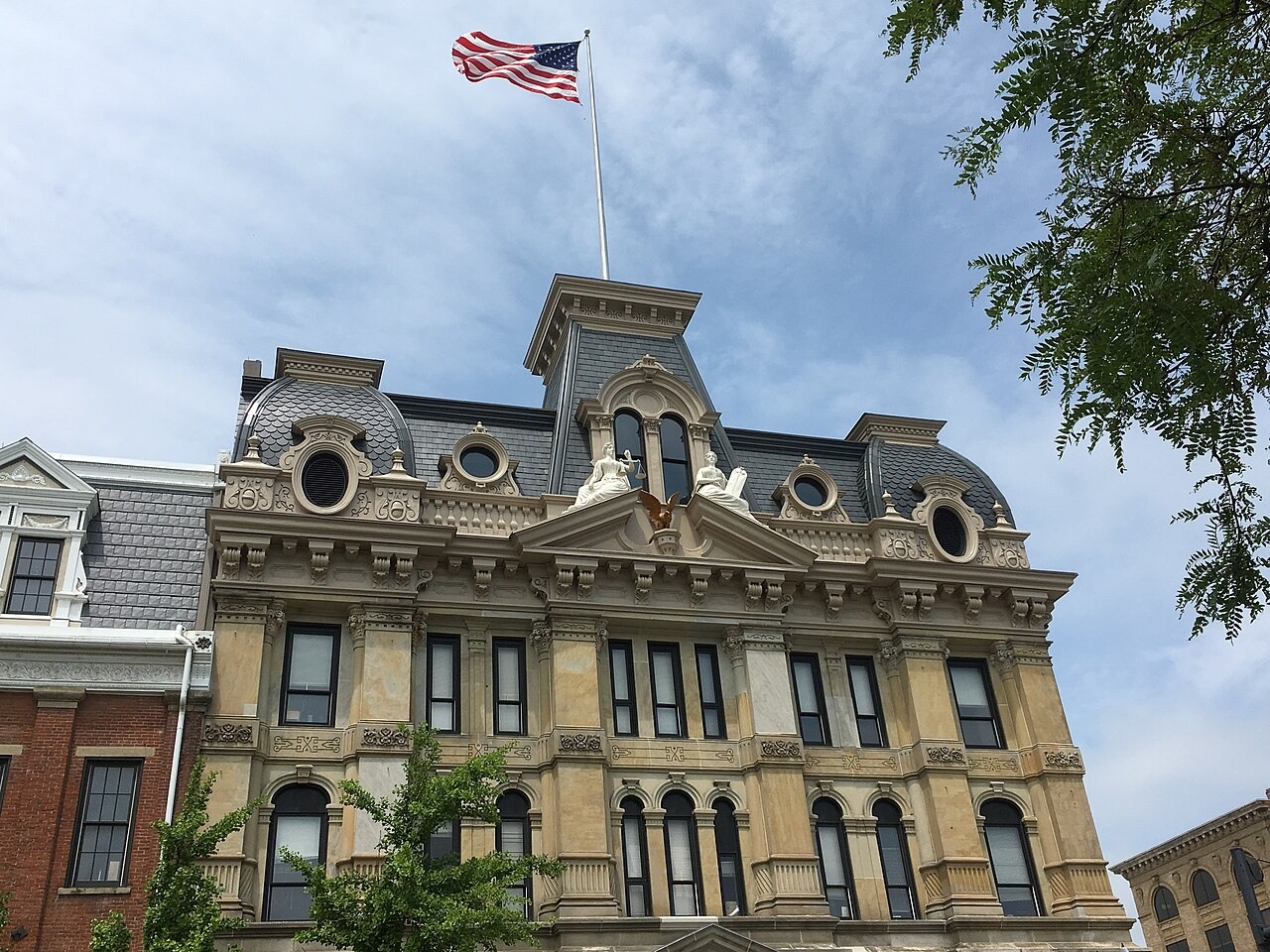
wilson44691 · Image source · CC0 · Geographic or historical context; not authentic crime evidence.

What the physical evidence could show
Barbara died from one shotgun wound to the chest. The medical and firearms witnesses examined the wound, recovered pellets and holes in the bedspread. The firearms examiner concluded from the holes that a .410 shotgun was involved. The pellets alone were a common type used in several gauges, so the conclusion depended on more than simply naming the ammunition. [1]
The medical examiner addressed why certain shotgun components were absent despite evidence of close-range firing. A shot passing through a bedspread or comforter could produce that combination. This testimony helped challenge Raber’s later account of standing in a bedroom doorway when a gun accidentally discharged. The explanation was an expert interpretation of the evidence presented at trial. [1]
Police also found money left on the Weaver kitchen counter. A detective testified that this would be unlikely in a robbery. It did not identify the shooter, but it helped investigators test whether the scene fit a theft. The prosecution eventually presented a planned killing supported by communications and testimony rather than a burglary that had unexpectedly turned violent. [1]
The gun evidence has a limit worth keeping visible. Witnesses described more than one .410 firearm available to Raber, and investigators did not recover the particular gun she claimed to have returned to her husband’s cabinet. The conviction was supported by her access, her admission and the rest of the record. The appeal does not supply a uniquely matched recovered murder weapon.
An effort to confuse the investigation
On the afternoon of June 2, Raber urged Eli not to give up his phone. She also asked about changing their numbers to avoid tracing, and later changed his number on the plan she controlled. The communications after the death became another part of the case: they concerned the same device that had carried the planning messages. [1]
A message on a phone outside Eli’s gun shop purported to suggest that someone had killed the wrong person. Linda Yoder checked the voicemail on June 3. Police identified the caller as David Weaver, a friend of Raber’s family. David testified that Raber had asked him to leave it. His shared surname with the victim does not, by itself, establish a family relationship. [1]
That evidence gave the prosecution a concrete explanation for an apparent alternative lead. A threatening voice might sound like an independent clue to outsiders seeking Eli. The caller’s testimony instead linked the message to Raber. Its creation became evidence of an effort to shape the investigation after Barbara’s death. [1]
About a week after the murder, according to Eli, Raber visited his barn, described entering the house and asked how to clean a gun so it would appear unused. Those assertions came from a cooperating participant. They were evaluated alongside the independently recovered messages, the witness who made the voicemail and the forensic account of the shooting.
Admission, accident and the right to counsel
Officers arrested Raber on June 10 at her Millersburg home. During questioning, she first characterized the messages as a joke intended to see how far Eli would go. She then admitted going to the house with a gun, saying she intended to frighten Barbara and that the discharge was accidental. She declined to make a written statement. [1]
The next day, officers questioned her again about inconsistencies. She clearly demanded a lawyer, and questioning stopped. An earlier question about having an attorney became a central issue on appeal. The majority held that the earlier exchange, viewed in context and followed by clarification, had not been an unequivocal invocation requiring the interview to end. [1]
Presiding Judge Eve Belfance disagreed with that reasoning while concurring in the judgment. She considered Raber’s earlier request clear and found the handling of it troubling. She nevertheless concluded that any admission error was harmless beyond a reasonable doubt given the other evidence. The court agreed on affirming the conviction but did not speak with one voice about the interrogation. [1]
That disagreement belongs in the story. A confession can be important evidence while its admissibility remains contested. Here, the messages and supporting testimony mattered to the concurring judge precisely because they supplied a substantial case apart from the challenged admission.

Tysto · Image source · Public domain · Geographic or historical context; not authentic crime evidence.


The verdict and the surviving record
A jury convicted Raber of aggravated murder and found the firearm specification proved. The appellate opinion describes an aggregate twenty-three-year sentence. On August 30, 2010, the Ninth District affirmed the judgment, rejecting challenges to the confession, electronic evidence and weight of the case. The sentence description here follows that opinion and does not promise a present release date. [1]
The reviewed decision concerns Raber. Eli admitted his role and testified under a separate plea agreement; his precise punishment is not supplied as a finding of this appeal. Reducing the case to the girlfriend’s actions alone would omit the husband’s assistance, while treating the two defendants’ legal outcomes as identical would go beyond the source.
The defining evidence was a trail that crossed the killing: planning messages, exchanges in the darkness, demands concerning the phone and a fabricated voicemail. Together with forensic testimony and admissions, that trail supported the verdict. Barbara’s five children had lost their mother while adults around them tried to construct a different explanation. The record exposes that explanation without requiring a reconstruction of her final moments.
Look closer · 9 visuals
Inside the evidence.
Open a visual to explore what it contributed to the case—and the limits of what it shows. Photographs, historical reproductions and original illustrations are individually labeled. Open the notes for each image’s source, credit, and limitations; setting photographs do not depict crime scenes.
Two women named Barbara
Original editorial illustration — not an actual evidence photograph or exhibit.
Read the evidence notes
Names must remain distinct throughout the story.
A name guide; no invented portraits or case photographs.
The messages surround the departure
Original editorial illustration — not an actual evidence photograph or exhibit.
Read the evidence notes
Planning communications supplied important evidence of opportunity and intent.
Not an authentic phone screenshot or a transcription of every message.
An interval, not a known minute
Original editorial illustration — not an actual evidence photograph or exhibit.
Read the evidence notes
The death certificate time did not establish exactly when the shot was fired.
No precise murder timestamp is claimed.
Shotgun evidence has limits
Original editorial illustration — not an actual evidence photograph or exhibit.
Read the evidence notes
Physical findings supported the prosecution alongside planning evidence.
Common pellet sizes and firearm access are not unique identification.
The wrong-target voicemail
Original editorial illustration — not an actual evidence photograph or exhibit.
Read the evidence notes
The caller testified that Raber asked him to leave the message.
Not a recording or invented quotation.
One judgment, differing counsel analysis
Original editorial illustration — not an actual evidence photograph or exhibit.
Read the evidence notes
Judges differed about an earlier counsel statement while agreeing on affirmance.
No general advice about police interviews or Miranda rights.
Apple Creek in Wayne County, Ohio
Context photograph — not an actual crime exhibit.
Read the evidence notes
Apple Creek in Wayne County, Ohio. Geographic context photograph; not a crime-scene photograph or an original evidence exhibit.
Geographic or historical context; not authentic crime evidence. The source and reuse terms are linked below.
Ser Amantio di Nicolao at English Wikipedia · Image source · CC BY 3.0
Wayne County Courthouse in Wooster
Context photograph — not an actual crime exhibit.
Read the evidence notes
Wayne County Courthouse in Wooster. Geographic context photograph; not a crime-scene photograph or an original evidence exhibit.
Geographic or historical context; not authentic crime evidence. The source and reuse terms are linked below.
wilson44691 · Image source · CC0
Architectural detail of Wayne County Courthouse
Context photograph — not an actual crime exhibit.
Read the evidence notes
Architectural detail of Wayne County Courthouse. Geographic context photograph; not a crime-scene photograph or an original evidence exhibit.
Geographic or historical context; not authentic crime evidence. The source and reuse terms are linked below.
Tysto · Image source · Public domain
★ Key evidence used in a conviction · ✓ Exclusion or reversal · ◇ Disputed evidence · ⊘ Excluded at retrial · ◆ Identity / investigative finding, not a conviction. A symbol does not mean one item proved the whole case.
Follow the locations
Put the story on the map.
Follow the dated entries, then select an event to find its regional setting. Shared-location pins open a group of events. Evidence symbols identify important findings and their limitations.
Open the map in its own window ↗Sources & further reading
- State v. Raber, 2010-Ohio-4066 — Ohio Ninth District Court of AppealsOfficial opinion: family and relationship, planning messages, firearms, false voicemail, confession, counsel issue, conviction and appellate affirmance.
Editorial review: 2026-10-06 · 1727 words