On December 13, 2001, Tracey Richter shot and killed Dustin Wehde inside her house in Early, Iowa. The identity of the shooter was never the central mystery. Richter acknowledged firing the shots. She said intruders had attacked her and threatened her family, forcing her to defend herself. Almost ten years later, a murder jury had to decide whether that account explained the physical evidence—or concealed what had actually happened. [1]
Case brief
Early, Iowa · 2001
- Recorded outcome
- Tracey Richter convicted of first-degree murder and sentenced to life; conviction affirmed January 2013; postconviction denial affirmed March 2017.
Key moments
People in this case
- Dustin Wehde
Murder victim
Photo at source · Oxygen · case photograph - Tracey Richter
Convicted of murdering Dustin Wehde
Photo at source · Oxygen · labeled case photograph
One of the prosecution’s most important exhibits was a pink notebook found in the vehicle left in Richter’s driveway. Its entries implicated her former husband, Dr. John Pitman, in a plan to have Richter and her son killed. Read as a confession, it appeared to supply a motive for a home invasion. But investigators had withheld its contents from the public, and a friend testified that Richter knew those contents anyway. The notebook’s apparent explanation became evidence against the woman it seemed designed to protect. [1]
The resulting case involved a custody dispute, conflicting accounts of a shooting, and a document whose significance depended on the difference between knowing it existed and knowing what it said. The courts did not find that Pitman had commissioned a murder. Prosecutors argued that the accusations against him were part of Richter’s own scheme. Keeping that distinction clear is essential to understanding why the pink notebook mattered. [1][2]
Bill Whittaker ( talk ) · Image source · CC BY-SA 3.0 · Geographic or historical context; not authentic crime evidence.

The shooting and the account that followed
Richter told police that two, or in some versions three, men had entered her home. She described being choked with pantyhose until she lost consciousness, then reaching a gun safe in the master bedroom and firing blindly over her shoulder. One intruder was shot; the other man or men fled. Police found no signs of forced entry. That absence was a circumstance to evaluate, rather than proof that an unwanted visitor could never have entered the house. [1]
Her son Bert, eleven at the time, later gave testimony supporting the defense. He described hearing his mother call for help, noises in the hallway, and choking sounds. He said Wehde, whom he knew from previous interactions, came to his bedroom door and threatened him. According to Bert, his mother eventually appeared with her wrists bound and a gun in each hand. He followed her and saw Wehde on the floor. [1]
Bert testified that Wehde moved, that Richter warned him to stay down, and that further shots followed. Those details were important because self-defense can turn on the danger a person reasonably perceives at the moment force is used. The prosecution’s account instead maintained that the shooting continued after Wehde had ceased to present a threat. The trial therefore concerned a sequence of actions, rather than simply whether Richter had experienced fear at some earlier point. [1]
On cross-examination, Bert agreed that the police interview given within hours of the shooting represented his most accurate recollection. That early account omitted several details he later described, including the choking sounds, hallway struggle, Wehde moving on the floor, and his mother’s warning. The omissions did not make the earlier interview a film of the incident. They gave the jury a concrete reason to compare the accounts, instead of treating the later version as an uncontested record. [1]
What the physical evidence could say
The autopsy established that Richter had used two guns and fired nine shots that struck Wehde. Crime-scene reconstructionist Rodney Englert testified about the positions from which different shots could have been fired. Some of the later trajectories indicated firing from above Wehde, and evidence of congealed blood supported the opinion that at least one shot came after he was incapacitated or dead. These were expert interpretations of the scene and medical evidence, not observations by a witness watching every shot. [1]
The jury also heard a medical examiner’s assessment of photographs showing a red mark on Richter’s neck. She attributed it to strangulation. The examiner considered the mark inconsistent with the reported ligature attack and more consistent with friction from something rubbed against the skin. Its position also challenged the claim that the described pressure had rendered her unconscious. The prosecution used that testimony to argue that evidence of an assault had been staged. [1]
This was not a general rule that visible injuries must look a particular way before an assault can be believed. It was a case-specific comparison between Richter’s account and the expert’s interpretation of photographs. The court’s later opinion treated it as one element of a larger evidentiary picture, alongside the shot sequence and her knowledge of the notebook. [1]
A conversation after a trip
Mary Higgins had been Richter’s good friend in Early. Shortly after the shooting, Richter and her family went to Australia for several weeks. Higgins testified that when Richter returned in February, she described what happened. The conversation supplied the prosecution with an account different in important respects from a moment of blind defensive shooting. [1]
According to Higgins, Richter described finding the body while checking on her children, standing over Wehde when he moved, warning him, and firing until he stopped moving. Higgins also testified about Bert becoming distressed during his mother’s telling of the story and questioning why she had gone back upstairs. The court recorded those recollections as witness testimony. They should not be presented as independently recorded dialogue or a narrator’s direct access to what happened inside the house. [1]
Higgins’s testimony about the pink notebook became still more consequential. Richter told her that police had found an older computer and the notebook in the vehicle left outside. She described information about Pitman and said the notebook would show that her former husband was involved. Law enforcement had not publicly disclosed the contents. Prosecutors argued that her detailed knowledge revealed participation in creating the story the notebook told. [1]
In 2004, Higgins said, Richter told her to forget about the pink notebook. That instruction did not itself prove who wrote each entry. In combination with the earlier conversation, however, it gave the jury evidence about Richter’s awareness of the document and her interest in another person’s memory of it. The custody conflict supplied the prosecution’s proposed motive: implicating Pitman could help Richter in proceedings over Bert. [1]
User:Magicpiano · Image source · CC BY-SA 4.0 · Geographic or historical context; not authentic crime evidence.

The accusation inside the notebook
The notebook must be read in two different ways. As text, it alleged that Pitman had arranged an attack. As an exhibit in Richter’s prosecution, it helped establish what she knew and what prosecutors said she had helped manufacture. The prosecution did not offer it to prove that its allegations against Pitman were true. A later appellate opinion explicitly explained that distinction when rejecting a hearsay argument. [2]
The state’s theory was that Richter had caused Wehde to write fictitious entries, staged a home invasion, and killed him in a plan to frame her former husband. The notebook did not magically establish that entire theory by itself. Its force came from its relationship to the withheld information, Higgins’s recollection, the physical evidence, and the weaknesses the prosecution identified in the self-defense account. [1][2]
For Wehde, the document created another danger beyond the shooting: it could leave him remembered as the author of a genuine murder-for-hire confession. The judicial record instead describes prosecutors treating those assertions as false material used in a scheme. A responsible account cannot repeat the purported confession as though the court verified it. [2]
Almost ten years before a murder trial
The formal trial information charging first-degree murder was filed in Sac County on August 5, 2011. The trial moved to Webster County. The elapsed time is striking, but the record should not be stretched into an invented decade-by-decade account of investigative work. The later ruling notes that a different county attorney revisited the case after additional information emerged. The opinions provide the evidence litigated at trial, rather than a complete daily history of every investigative decision. [1][2]
Richter pleaded not guilty and raised justification. That defense did not require her to prove innocence. Under the Iowa law described in the appellate opinion, the state had to prove beyond a reasonable doubt that the shooting was not justified. Evidence that the incident continued after Wehde was incapacitated, that immediate danger no longer existed, or that the force was unreasonable could defeat the defense. The jury convicted Richter of first-degree murder, and she received life imprisonment. [1]
The defense also offered psychologist David Grove, who had interviewed Richter about a month before trial and diagnosed acute stress syndrome and post-traumatic stress disorder connected to the shooting. The trial court excluded the proposed testimony because it crossed into endorsing her credibility and would open questions about other intervening events. On January 9, 2013, the Iowa Court of Appeals upheld that decision and the conviction. That evidentiary ruling did not establish that PTSD is fictitious or that a person with PTSD must be guilty. [1]
Robert W. Wood · Image source · CC BY-SA 3.0 · Geographic or historical context; not authentic crime evidence.

The misplaced blue dot
Richter’s later postconviction challenge identified an actual error in a visual exhibit: a colored dot on a model put a bullet exit on the wrong shoulder. This is the kind of detail that can sound decisive when isolated from its setting. On March 8, 2017, the court examined who introduced the exhibit and what the witnesses had actually said. [2]
The flawed exhibit had been offered by the defense, not the prosecution. Englert and the medical examiner correctly identified the left shoulder in their testimony, and the medical examiner’s report and photographs showed the correct location. The court found no basis for concluding that the misplaced dot had changed the reconstruction opinion or prejudiced the verdict. The error deserved explanation; it did not become a finding that investigators had fabricated the shooting evidence. [2]
Another claim returned to the pink notebook. Richter’s criminal attorney had previously represented her in the Wehde family’s wrongful-death action and learned through civil discovery that the notebook existed. Richter argued that he could have explained her knowledge by testifying. The court found the crucial limitation: he had not learned its contents and therefore could not have supplied the detailed information Higgins described. Knowing an object existed was not the same as knowing its withheld allegations. [2]
The 2017 ruling affirmed the denial of postconviction relief. The historical judgments leave the case centered on a disturbing reversal: a document that seemed to identify a threat became evidence of a manufactured explanation. The gallery below marks that notebook and the shooting reconstruction as important prosecution evidence, while separately showing the contested accounts and the corrected exhibit error. Its drawings are explanatory illustrations, not photographs of the original notebook, the bedroom, or trial exhibits. [1][2]
Look closer · 9 visuals
Inside the evidence.
Open a visual to explore what it contributed to the case—and the limits of what it shows. Photographs, historical reproductions and original illustrations are individually labeled. Open the notes for each image’s source, credit, and limitations; setting photographs do not depict crime scenes.
The notebook’s contents were withheld
Original editorial illustration — not an actual evidence photograph or exhibit.
Read the evidence notes
Her detailed knowledge supported the prosecution’s staging theory.
Illustration, not the original notebook or a reproduced confession.
An accusation is not a verified plot
Original editorial illustration — not an actual evidence photograph or exhibit.
Read the evidence notes
The court did not find the allegations against the ex-husband true.
No real confession by Pitman is claimed.
The first account and later testimony
Original editorial illustration — not an actual evidence photograph or exhibit.
Read the evidence notes
Omissions in the early account affected assessment of the defense.
No invented transcript or accusation that a child fabricated everything.
The sequence of force mattered
Original editorial illustration — not an actual evidence photograph or exhibit.
Read the evidence notes
Expert interpretation challenged continuation of force after incapacitation.
No graphic images or exact second-by-second reconstruction.
A real model error, correctly bounded
Original editorial illustration — not an actual evidence photograph or exhibit.
Read the evidence notes
The 2017 court acknowledged the error but found no prejudicial change to the opinions.
No prosecution fabrication finding is asserted.
Existence is different from contents
Original editorial illustration — not an actual evidence photograph or exhibit.
Read the evidence notes
Counsel could not supply the detailed knowledge Higgins described.
The civil-discovery explanation was examined and rejected on this distinction.
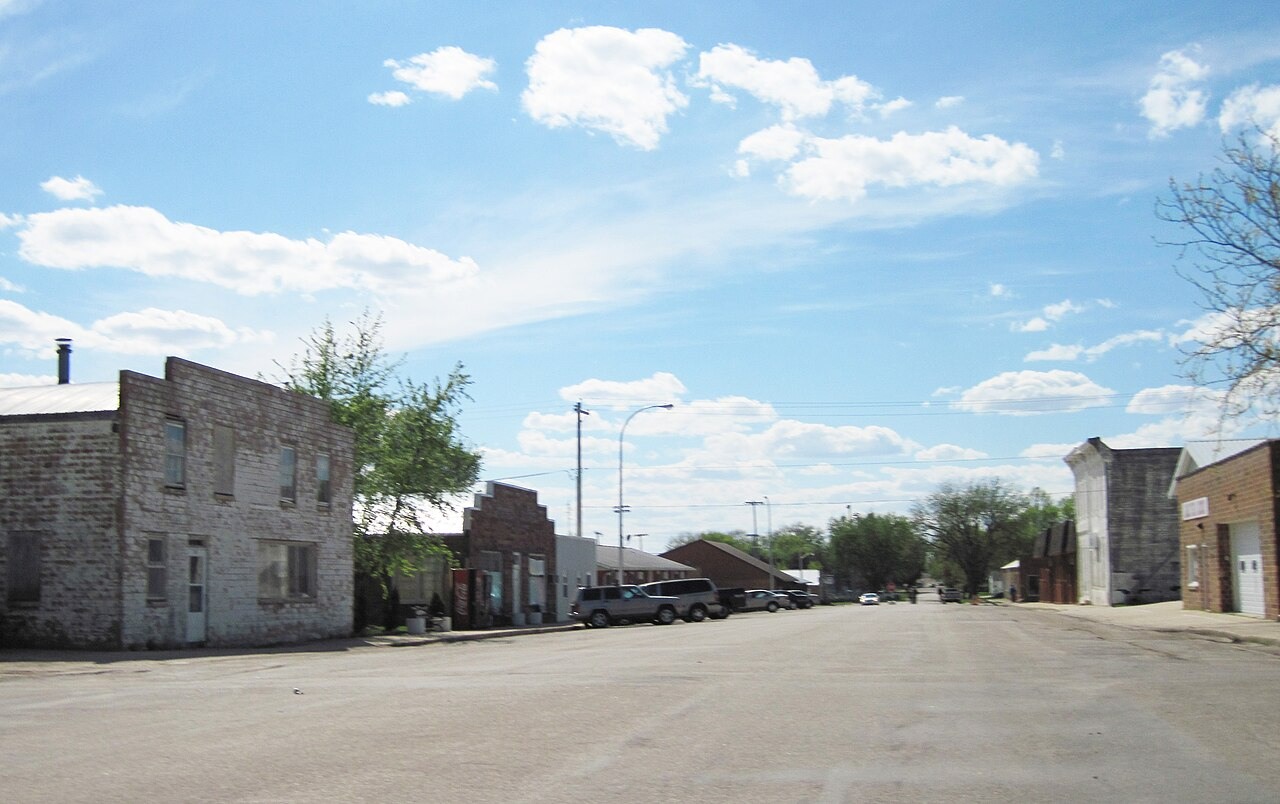
A street in Early, Iowa
Context photograph — not an actual crime exhibit.
Read the evidence notes
A street in Early, Iowa. Geographic context photograph; not a crime-scene photograph or an original evidence exhibit.
Geographic or historical context; not authentic crime evidence. The source and reuse terms are linked below.
Bill Whittaker ( talk ) · Image source · CC BY-SA 3.0
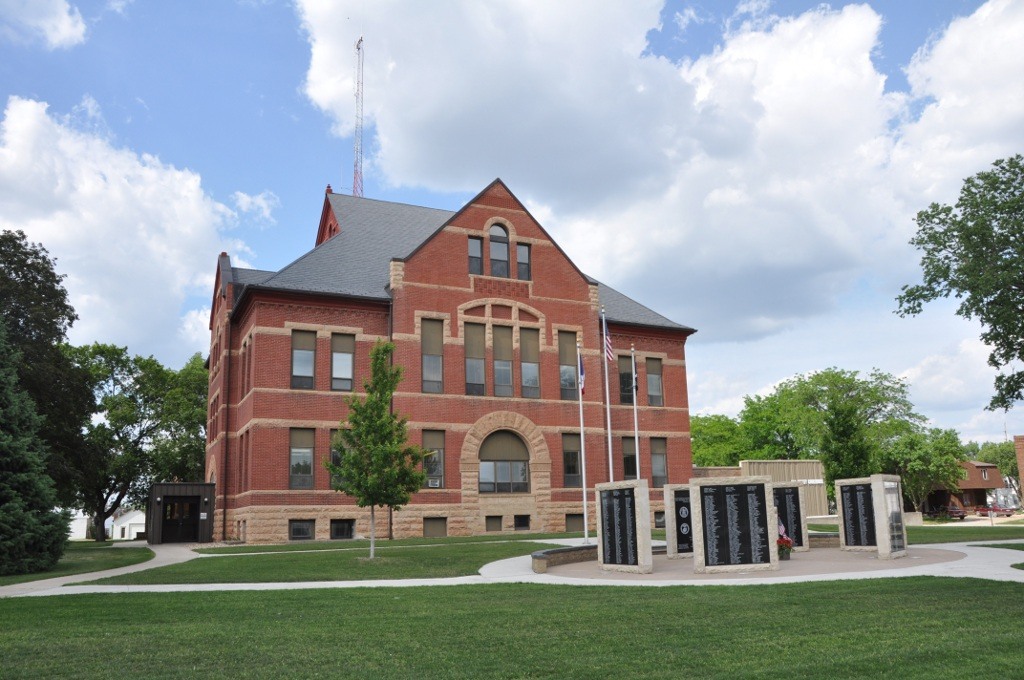
Sac County Courthouse in Sac City
Context photograph — not an actual crime exhibit.
Read the evidence notes
Sac County Courthouse in Sac City. Geographic context photograph; not a crime-scene photograph or an original evidence exhibit.
Geographic or historical context; not authentic crime evidence. The source and reuse terms are linked below.
User:Magicpiano · Image source · CC BY-SA 4.0
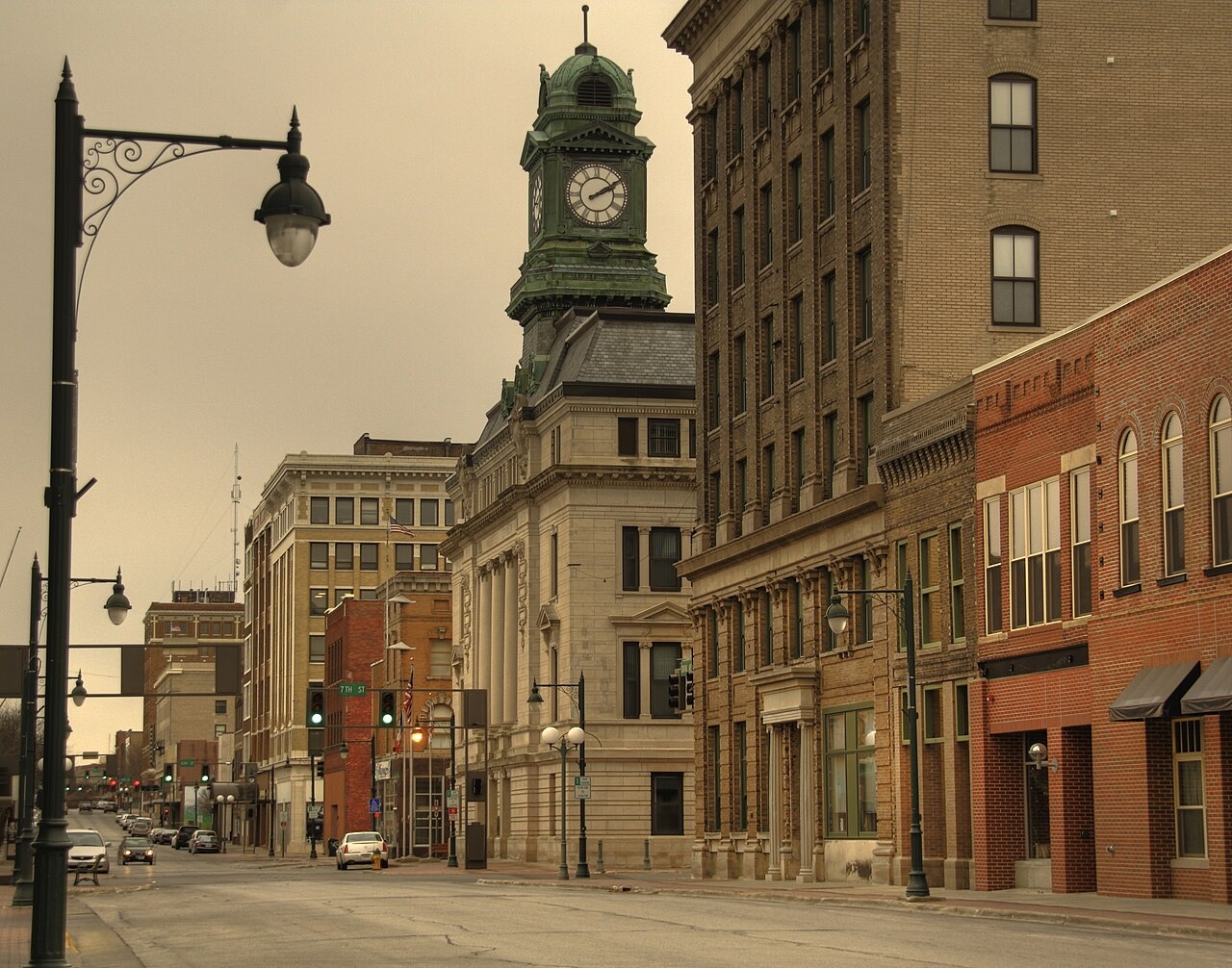
Historic downtown Fort Dodge in Webster County
Context photograph — not an actual crime exhibit.
Read the evidence notes
Historic downtown Fort Dodge in Webster County. Geographic context photograph; not a crime-scene photograph or an original evidence exhibit.
Geographic or historical context; not authentic crime evidence. The source and reuse terms are linked below.
Robert W. Wood · Image source · CC BY-SA 3.0
★ Key evidence used in a conviction · ✓ Exclusion or reversal · ◇ Disputed evidence · ⊘ Excluded at retrial · ◆ Identity / investigative finding, not a conviction. A symbol does not mean one item proved the whole case.
Follow the locations
Put the story on the map.
Follow the dated entries, then select an event to find its regional setting. Shared-location pins open a group of events. Evidence symbols identify important findings and their limitations.
Open the map in its own window ↗Sources & further reading
- State v. Richter — Iowa Court of AppealsShooting, conflicting accounts, physical interpretation, Higgins, withheld notebook contents, justification burden, psychologist ruling, life sentence and affirmance.
- Richter v. State — Iowa Court of AppealsPostconviction ruling: defense exhibit’s wrong dot, correct testimony, civil attorney’s knowledge of existence only, notebook use and denial affirmed.
Editorial review: 2026-10-06 · 1750 words