Thousands of stolen books formed a collection impressive enough to obscure what it really was: property missing from other institutions. The federal court described Stephen Blumberg’s thefts as extending over fifteen years and more than 150 libraries and other institutions, with books worth over $5 million. When the collection was found in Ottumwa, Iowa, the problem did not end at seizure. Recovering physical objects and establishing where each belonged were different tasks. [1]
Case brief
Ottumwa, Iowa · 1990
- Recorded outcome
- Blumberg convicted of four federal offenses, sentenced to 71 months and a $200,000 fine; conviction and sentence affirmed April 1992, rehearing denied May 1992.
Key moments
People in this case
- Stephen Blumberg
Convicted of transporting stolen books
Photo at source · Creighton University · university archive
Blumberg did not deny the charged acts at trial. His defense was that he was not criminally responsible by reason of insanity. Experts disagreed, jurors asked a question about delusion and severe mental disease, and the court left the ultimate decision to them. The case combines two difficult forms of identification: the legal assessment of a collector’s responsibility and the librarians’ work reconnecting displaced books with their owners. [1]
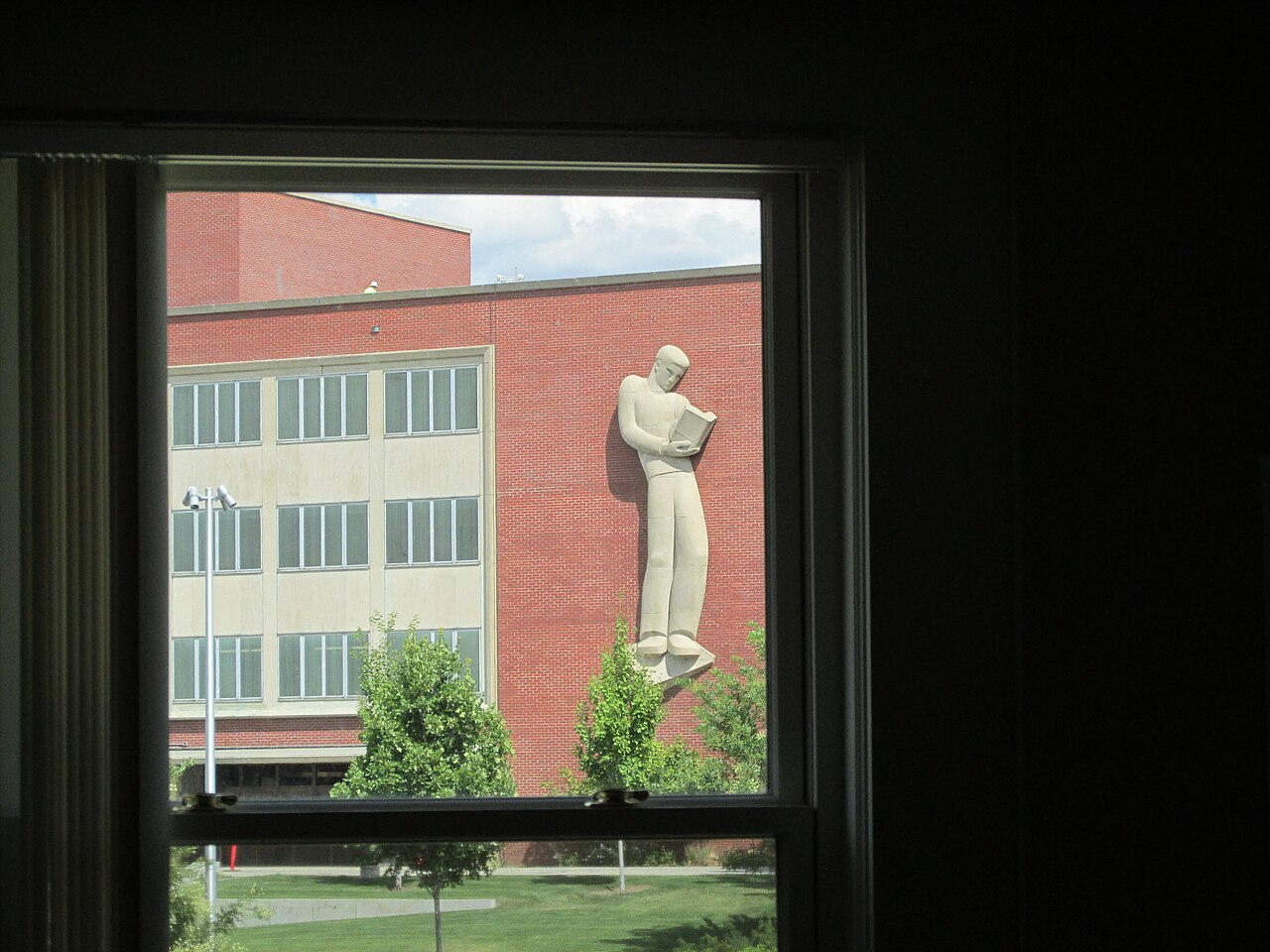
Robert Ashworth from Bellingham, WA., USA · Image source · CC BY 2.0 · This photograph provides setting or historical context. It is not an authentic crime exhibit.

A collection spread across institutions
The appellate opinion calls the defendant Steven Carrie Blumberg; institutional accounts generally use Stephen. Both refer to the man whose collection included stolen books, stained glass and other objects. Keeping that spelling difference visible is useful when readers follow the sources. More important is the scope of the charges. This was not a federal indictment composed simply of four separate counts for four stolen books or four libraries. [1]
The government charged conspiracy to transport and possess stolen property, two transportation counts, and possession and concealment of property that had crossed a state boundary after theft. The conspiracy and transportation charges involved stained-glass hangings and musical equipment as well as the broader context of the collection. The possession count covered books and other objects. The case’s legal structure therefore followed interstate conduct and possession, not the entire history of every book on a shelf. [1]
That distinction helps explain why a vast collection and a short list of charges can appear in the same proceeding. The appellate court considered the scale of the book thefts when assessing Blumberg’s role and the extent of the activity. It did not say that every loss at every institution had been separately charged and adjudicated. A court can evaluate an extensive course of relevant conduct without converting one indictment into a comprehensive inventory of all the harmed collections. [1]
Librarians noticed the gaps
Washington State University discovered missing rare material in 1988. The university’s later interviews describe investigator J. Stephen Huntsberry learning from librarians as he pursued the losses. Their knowledge helped him understand the collection and the institution’s systems. This was a kind of investigation in which recognizing an absence from a cataloged collection could be as important as recognizing a suspect. [2]
The university’s account supplies a local institutional perspective rather than a universal explanation for every theft. Different libraries held different material, and the federal record establishes a broader series over many years. The important connection is that the objects were not interchangeable merchandise. An institution’s knowledge of its holdings could identify both what had gone missing and what evidence might distinguish a returned volume from another copy of the same title. [1] [2]
In March 1990, FBI agents found the collection in Blumberg’s Ottumwa home. Material was moved to Omaha for identification. Creighton’s account describes librarians using catalog records and surviving ownership clues, including removed marks retained in scrapbooks, to connect books with institutions. Some items remained unclaimed and later reached Creighton in 1993. [3]
An owner is more specific than a title
The contemporary Abbey Newsletter described the recovery and identification problem. It emphasized that locating the books did not make their original owners immediately obvious. That specialist perspective is useful beside the court record: the criminal case concerned knowing possession and interstate conduct, while the return effort had to distinguish particular copies, not merely identify what a book was called. [4]
A title match tells a reader which work is present. Ownership evidence answers a different question about the particular object. A removed bookplate can matter because it once connected that object to a collection; a surviving catalog clue can lead to a record that warrants further checking. The gallery illustrates that distinction with generic labels and books, not invented photographs of Blumberg’s actual volumes. Its source notes identify the recovery account behind the comparison. [3] [4]
The scale described by the court also explains why seizure was not equivalent to a completed return. Thousands of objects drawn from many institutions require many separate determinations. Even where criminal responsibility can be established collectively, a particular institution’s claim to a particular volume may need its own evidence. The map therefore gives the sorting effort an entry distinct from the seizure and the verdict. It does not imply that all objects were returned on the day agents found them. [1] [3]
The defense admitted conduct but disputed responsibility
At trial, two defense experts testified that Blumberg had a delusional disorder. A government expert testified that he did not have delusions or a severe mental disease or defect. Those conflicting opinions were evidence for the jury to assess, rather than an agreed diagnosis. The jury had to evaluate the testimony under the legal insanity test, and the appellate court later examined whether the process used to present that evidence was constitutionally permissible. [1]
Under the statute applied in the case, the defense had to establish a severe mental disease or defect that prevented him from appreciating the nature and quality or wrongfulness of his acts. The legal question was narrower than whether he had unusual collecting habits or whether a psychiatrist could attach a diagnostic label. The evidence needed to address how the claimed condition related to the charged behavior. [1]
A federal evidence rule prevented experts for either side from simply telling jurors whether he met that ultimate legal criterion. They could discuss diagnoses, characteristics, motivation and mental condition, but could not supply the jury’s final answer about criminal responsibility. Blumberg argued that the restriction impaired his defense. The appellate court held that the rule left the underlying expert evidence available and reserved the ultimate decision for the factfinder. [1]

Tony Webster from Minneapolis, Minnesota, United States · Image source · CC BY 2.0 · This photograph provides setting or historical context. It is not an authentic crime exhibit.

A note from the jury
During deliberations, jurors asked whether “severe mental disease or defect” was synonymous with delusion as used in the case. The defense proposed an additional instruction explaining that a finding of delusional disorder could, but need not, support a finding of severe mental disease. The trial court instead directed jurors to resolve the question from the evidence. Its concern was that an additional answer would intrude on their factual role. [1]
The Court of Appeals upheld that response. It characterized the nature of the condition as a factual and medical question for jurors to decide after considering the conflicting experts. The jury rejected the insanity defense and convicted Blumberg. That outcome establishes the legal result. It does not require the reader to adopt the government expert’s opinion as a universal diagnosis for the defendant or for anyone with an intense interest in books. [1]
The jury note is illustrated in the gallery as a paraphrased question. It is not a facsimile of the original paper. A visually convincing false exhibit could make the legal question feel immediate while blurring its provenance. The linked opinion supplies the actual account, and the explanatory image lets the reader compare the question, the proposed instruction and the court’s decision without mistaking newly created artwork for a surviving trial document. [1]
How extensive was the offense?
The sentencing court increased the offense level for Blumberg’s leadership role in criminal activity involving at least five participants and found the activity otherwise extensive. The appellate opinion describes him recruiting others to drive to libraries and transport books and identifies help moving stolen material from Minnesota to Iowa. Those findings challenged an image of the case as a solitary collector whose actions affected only his own shelves. [1]
The appeal also raised a timing issue concerning sentencing rules. Blumberg argued that a later guideline commentary change should not be used against earlier conduct. The appellate court concluded it did not need to resolve that constitutional question because the sentencing court’s assessment was supported under the earlier framework as well. Theft and interstate movement could be considered in relation to the charged possession offense. The ruling connected the collection’s assembly to its later possession rather than treating every stage as unrelated. [1]
The fifteen-year span, the number of institutions and the value above $5 million supported the finding of extensive activity. Public accounts have used other totals and valuations for the seized collection. This story retains the court’s qualified figures instead of presenting the largest estimate as an exact inventory certified at every stage. A number can change because an investigation is incomplete, a collection is reassessed or a legal proceeding measures a different category of loss. [1]
A sentence and its boundaries
The district court imposed seventy-one months in prison and a $200,000 fine. Blumberg challenged the treatment of an older burglary conviction involving doorknobs and stained glass. The court found that prior incident separate from the offenses charged here: it occurred earlier, involved another victim and another accomplice. A recurring interest in collectible objects did not make every earlier crime part of the same present offense for sentencing purposes. [1]
He also sought credit for time spent under pretrial house arrest. The appellate court distinguished restrictions imposed as a condition of release from official detention under the applicable statute and upheld the refusal to award that credit. The outcome again depended on a legal classification that could be lost in a short account of time “confined.” In April 1992, the court affirmed both conviction and sentence; rehearing was denied that May. [1]
Those decisions complete the reviewed federal sequence. They do not certify every subsequent episode in Blumberg’s life or the disposition of every unclaimed volume. The libraries’ identification work and the criminal judgment answered overlapping but different questions. A conviction could establish responsibility while leaving practical work to recover an institution’s holdings unfinished. [1] [4]
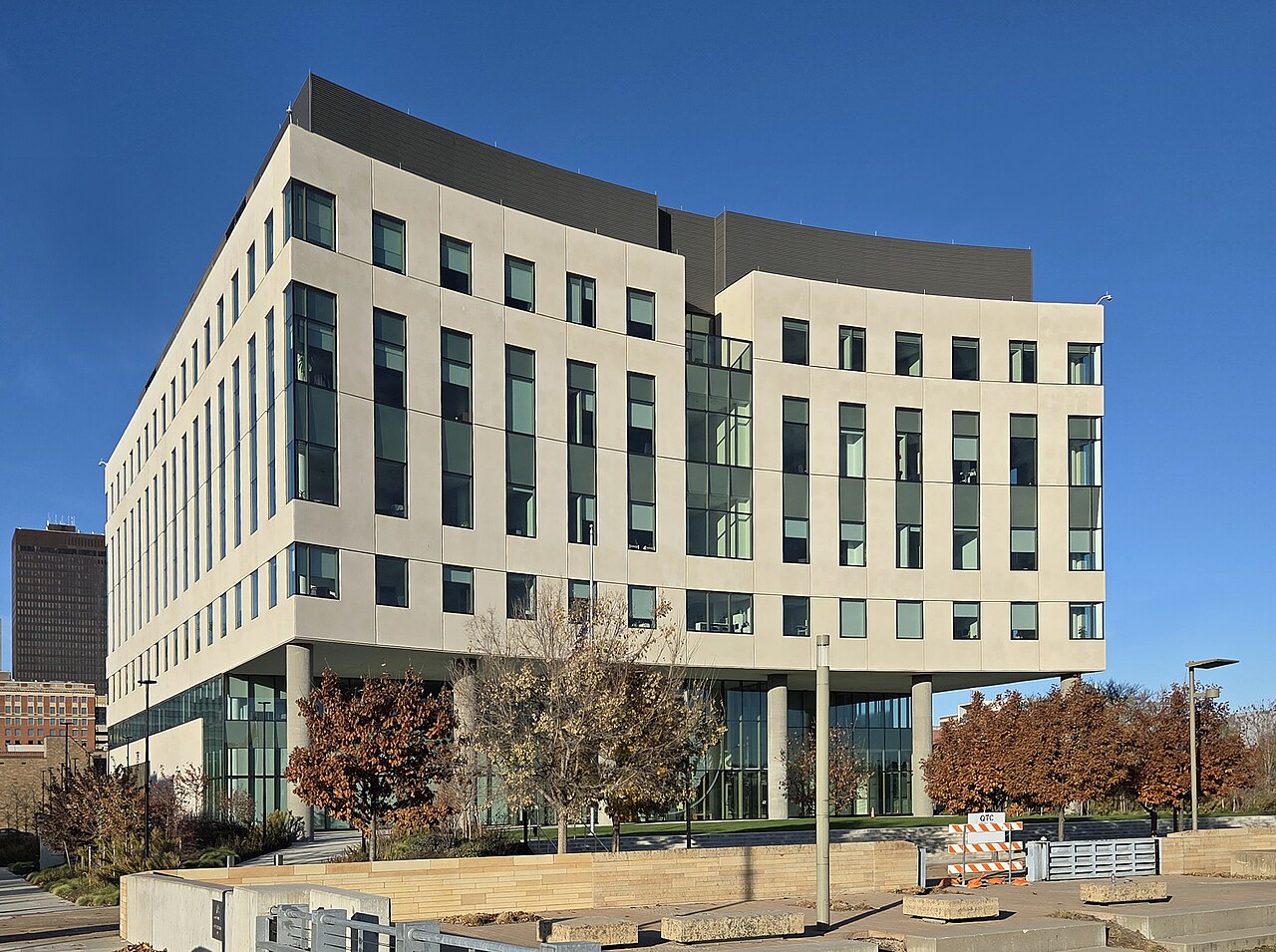
McGhiever · Image source · CC BY 4.0 · This photograph provides setting or historical context. It is not an authentic crime exhibit.

What a returned book carries
The photographs show library and regional settings, not Blumberg’s private house or a verified stolen volume. The map identifies Ottumwa, the Omaha recovery effort and the trial’s Iowa context, with regional precision notes. It does not plot a supposed route through every institution the court described. The gallery keeps expert disagreement marked as disputed and ownership clues distinct from a criminal verdict.
The case’s lasting interest comes from that combination. A person may possess an object while lacking the right to possess it, and a recovered object may still need the records that identify its owner. The court assessed the first problem through the charged conduct and rejected defense. Librarians addressed the second through the particulars of books and collections. The shelves were part of the evidence, but the information connecting their contents to other places was what made recovery meaningful. [1] [4]
Look closer · 9 visuals
Inside the evidence.
Open a visual to explore what it contributed to the case—and the limits of what it shows. Photographs, historical reproductions and original illustrations are individually labeled. Open the notes for each image’s source, credit, and limitations; setting photographs do not depict crime scenes.
Books without their ownership marks
Original editorial illustration — not an actual evidence photograph or exhibit.
Read the evidence notes
The recovery effort had to establish provenance, not merely find a matching title.
Generic book and label illustration; no actual stolen volume is pictured.
A scrapbook became a clue
Original editorial illustration — not an actual evidence photograph or exhibit.
Read the evidence notes
Surviving identifying material could reconnect stolen volumes to institutions.
Not a reproduction of Blumberg’s actual scrapbooks.
Four counts, more than books
Original editorial illustration — not an actual evidence photograph or exhibit.
Read the evidence notes
The federal indictment included other stolen property as well as the book collection.
Not four separate counts for four libraries.
Experts described different conditions
Original editorial illustration — not an actual evidence photograph or exhibit.
Read the evidence notes
Psychiatric testimony conflicted; the jury rejected the legal insanity defense.
No diagnosis is assigned by this publication.
The jury’s question
Original editorial illustration — not an actual evidence photograph or exhibit.
Read the evidence notes
The judge directed jurors to assess the evidence rather than supply the requested new factual conclusion.
This is a paraphrase, not a facsimile of the jury note.
Recovery extended beyond a verdict
Original editorial illustration — not an actual evidence photograph or exhibit.
Read the evidence notes
Librarians’ work continued independently of the criminal trial.
The diagram does not assert that every item was returned.
Holland Library at Washington State University in Pullman
Geographic context photograph — not a crime-scene image.
Read the evidence notes
Holland Library at Washington State University in Pullman. Geographic context photograph; not a crime-scene image or evidence of an event shown on the map.
This photograph provides setting or historical context. It is not an authentic crime exhibit. The source and reuse terms are linked below.
Robert Ashworth from Bellingham, WA., USA · Image source · CC BY 2.0
Des Moines River and Bridge View Center in Ottumwa
Geographic context photograph — not a crime-scene image.
Read the evidence notes
Des Moines River and Bridge View Center in Ottumwa. Geographic context photograph; not a crime-scene image or evidence of an event shown on the map.
This photograph provides setting or historical context. It is not an authentic crime exhibit. The source and reuse terms are linked below.
Tony Webster from Minneapolis, Minnesota, United States · Image source · CC BY 2.0
The modern federal courthouse in Des Moines
Modern setting — not the 1991 trial courthouse.
Read the evidence notes
The modern federal courthouse in Des Moines. Modern geographic context; this is not the building in which the 1991 trial took place.
This photograph provides setting or historical context. It is not an authentic crime exhibit. The source and reuse terms are linked below.
McGhiever · Image source · CC BY 4.0
★ Key evidence used in a conviction · ✓ Exclusion or reversal · ◇ Disputed evidence · ⊘ Excluded at retrial · ◆ Identity / investigative finding, not a conviction. A symbol does not mean one item proved the whole case.
Follow the locations
Put the story on the map.
Follow the dated entries, then select an event to find its regional setting. Shared-location pins open a group of events. Evidence symbols identify important findings and their limitations.
Open the map in its own window ↗Sources & further reading
- United States v. Blumberg, 961 F2d 787 — Eighth CircuitCharged offenses, admitted acts, disputed psychiatric evidence, jury question, leadership role and affirmance.
- The collectors — Washington State MagazineInstitutional interviews about WSU losses and the 1988 investigation; derived text under 200 words.
- A book bandit, Omaha Project and Creighton detectives — Creighton UniversityParticipant memories, sorting work, provenance and the returned collection; derived text under 200 words.
- Stephen Blumberg and his stolen books — Abbey NewsletterContemporary library recovery report; short limited paraphrase.
Editorial review: 2026-10-06 · 1787 words